Odisha CM Majhi to revamp 49 century-old heritage schools
Synopsis
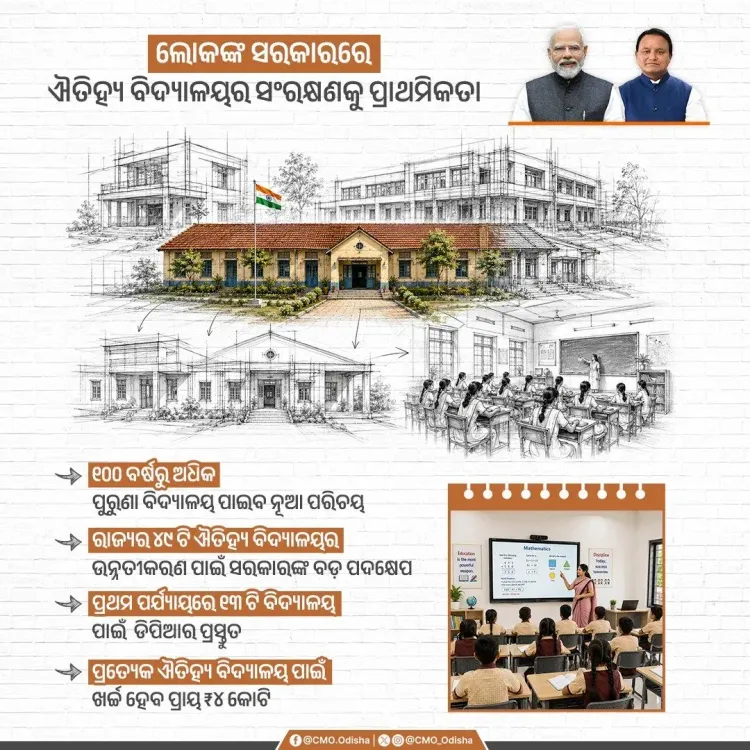
Odisha CM Mohan Charan Majhi has launched a phased overhaul of 49 government schools over 100 years old, spending ₹4 crore per school to modernise infrastructure while preserving heritage. DPRs are ready for the first 13 schools, with the rest to follow in subsequent phases.
Key Takeaways
49 heritage government schools over 100 years old have been identified for phased redevelopment across Odisha. ₹4 crore per school will be spent on comprehensive transformation, blending heritage preservation with modern infrastructure.
DPRs for 13 schools have been completed in the first phase; the remaining 36 will follow in later phases.
The initiative is framed around three pillars: heritage conservation, quality education, and future-ready school infrastructure.
The programme aligns with the National Education Policy 2020 's mandate to upgrade school infrastructure while respecting institutional heritage.
The Prime Minister's Office was tagged in the announcement, signalling alignment with national education priorities.
Forty-nine schools older than a century are about to get a second life — and Odisha Chief Minister Mohan Charan Majhi wants to make sure they keep their soul while gaining a modern spine. The Chief Minister's Office of Odisha announced on Thursday, 30 July 2026 that the state government has launched a phased overhaul of its most storied government schools, committing roughly ₹4 crore per school for comprehensive redevelopment.
The post, written in Odia, states that CM Majhi is 'always committed to the preservation and modernisation of Odisha's educational heritage.' In the first phase, Detailed Project Reports (DPRs) have already been prepared for 13 of the 49 schools. The remaining 36 schools are slated for development in subsequent phases, with the state government tagging the Prime Minister's Office to signal alignment with national education priorities.
What ₹4 crore per school is meant to do
Each school in the programme will receive a full-spectrum upgrade — not a cosmetic coat of paint, but what the government describes as 'samgra rupantaran' (comprehensive transformation). The plan holds heritage character intact while layering in modern classrooms, sanitation, libraries, and digital infrastructure. At ₹4 crore a school across all 49 institutions, the total outlay would touch roughly ₹196 crore if fully executed — a meaningful bet on public schooling in a state where government schools serve the majority of students.
A national pattern, an Odisha push
Odisha's move fits squarely into a broader trend sweeping Indian state capitals: the targeted rehabilitation of pre-independence and early post-independence schools that carry institutional memory but crumbling infrastructure. The National Education Policy 2020 explicitly calls for upgrading school infrastructure while integrating heritage conservation — and Odisha is now operationalising that mandate with rupees and DPRs, not just policy language.
The government's framing is deliberate: heritage preservation, quality education, and future-ready infrastructure are named as the three pillars. That sequencing matters — it tells communities that the old school their grandparents attended will not be demolished in the name of progress.
Phase one's 13 schools: the real test
With DPRs ready for the first 13 schools, the clock now moves to tendering, contractor selection, and actual ground-breaking. How quickly those 13 sites move from paper to construction will determine the credibility of the larger 49-school promise. Completion timelines and budget releases for the remaining 36 have not yet been announced — those disclosures will be the next milestone to watch.
For students sitting in classrooms built before independence, the wait has already been long. The government's task now is to make sure the blueprints become buildings.
Point of View
The state is also positioning the initiative within the Centre-state cooperative framework of NEP 2020, which could unlock additional funding channels. The phased DPR approach is prudent, but the real political and policy test comes at execution: if the first 13 schools are delivered on time and to quality, the remaining 36 become a credible electoral asset; if they stall, the announcement risks becoming another infrastructure promise trapped in tendering limbo.
NationPress
13 Sept 2026
Frequently Asked Questions
How many heritage schools will be redeveloped in Odisha?
49 government schools that are more than 100 years old have been identified for redevelopment under this initiative by the Odisha state government.
How much money will be spent on each heritage school in Odisha?
Approximately ₹4 crore will be spent on the comprehensive redevelopment of each heritage school, covering modern infrastructure while preserving the school's historical character.
What is the first phase of Odisha's heritage school project?
In the first phase, Detailed Project Reports (DPRs) for 13 schools have been prepared. The remaining 36 schools will be taken up in subsequent phases.
Which Odisha CM announced the heritage school modernisation plan?
Chief Minister Mohan Charan Majhi , who has led the Odisha government since June 2024, is behind the heritage school modernisation initiative announced on 30 July 2026.
How does Odisha's heritage school plan relate to the National Education Policy?
The National Education Policy 2020 calls for upgrading school infrastructure while integrating heritage conservation — Odisha's programme directly operationalises this mandate with dedicated funding and phased DPRs.