Passengers from Muscat Report Normalcy Amid West Asia Tensions

Synopsis
Despite rising tensions in West Asia, passengers returning from Muscat report a normal and stable situation in Oman, highlighting their smooth travel experiences. This article explores the ongoing flights and the current state in the region.
Key Takeaways
Oman remains stable despite regional tensions.
Travelers report smooth experiences.
Airlines are resuming operations gradually.
Support systems for stranded passengers are in place.
Rebooking options are available for affected travelers.
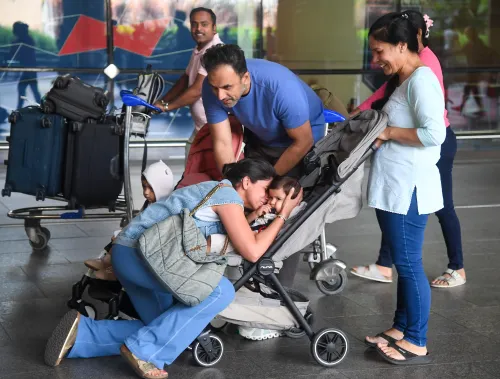
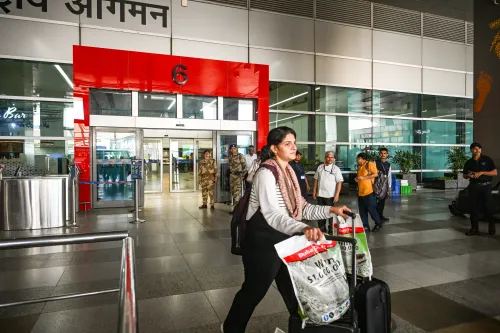
New Delhi, March 6 (NationPress) Travelers arriving in Delhi from Muscat on Friday reported that life in Oman remains undisturbed despite escalating tensions in various regions of West Asia. They emphasized that they encountered no issues during their travel or stay.
One traveler stated that everyday activities in Oman proceed without interruption.
“Life is continuing as normal. All schools and offices are operational, and people are supporting one another, so we didn't encounter any difficulties,” the traveler shared with IANS.
Another passenger mentioned that Muscat has become a preferred transit hub for travelers from neighboring nations.
“Individuals from Dubai and Qatar are traveling to Muscat to board flights due to excellent connectivity,” the traveler noted.
A third individual described the atmosphere as peaceful. “Everything is very good, and life is proceeding as usual,” the traveler commented.
In contrast, another passenger recounted his travel experience, noting that his flight on February 28 was redirected due to missile strike alerts. “My flight was diverted from Doha to Turkey, where the situation was less stable. Eventually, we secured a flight from Turkey to Muscat, where all was calm, and we faced no issues,” he explained.
On Friday, domestic airlines, including IndiGo, Air India, and SpiceJet, began gradually resuming limited flight services to and from the Middle East, although numerous flights remain canceled due to ongoing airspace restrictions linked to the US-Israel and Iran conflict.
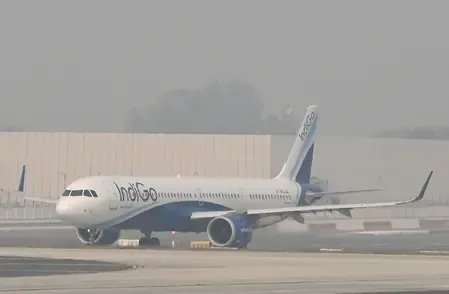
IndiGo announced it would operate 17 departures (34 sectors) on Friday to eight destinations in the Middle East and is collaborating with governmental authorities to ensure safe service resumption.
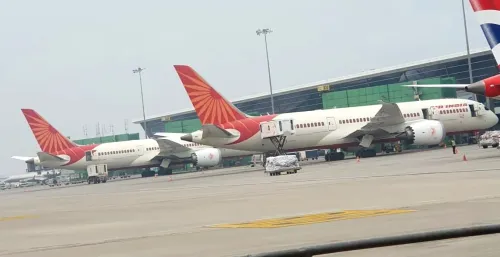
Air India and Air India Express confirmed the resumption of flights to Jeddah and Muscat after receiving confirmation that Saudi Arabia's and Oman's airspaces were open, according to multiple reports.
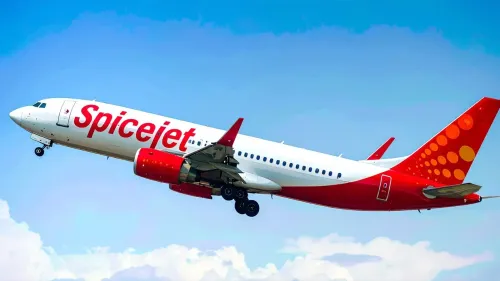
SpiceJet indicated it would conduct special flights from the UAE to India on March 6 and 7, with additional services on March 8 to facilitate passenger movement amid the ongoing conflict.
IndiGo advised that passengers booked on its flights would be contacted directly and should proceed to airports only after receiving confirmation.
Air India also announced ad-hoc repatriation flights from hubs like Dubai, Ras Al Khaimah, and Fujairah on March 6, contingent on regulatory approvals.
They noted that scheduled flights to other West Asia destinations are suspended until March 10, and passengers with tickets purchased before March 4 for travel between February 28 and March 8 can rebook within one month without incurring extra fees or fare differences.
Recent industry data indicates that traffic at Dubai International Airport nearly doubled on Thursday compared to the prior day, reaching 25 percent of normal levels.
Data further revealed that between February 28 and March 5, over 44,000 flights were projected to operate in and out of the Middle East, with more than 25,000 flights canceled to date.
The Directorate General of Civil Aviation had previously stated that it was working with airlines and relevant agencies and had activated a Passenger Assistance Control Room to aid stranded travelers.
The Ministry is in ongoing communication with airlines and is closely monitoring airfares to ensure that ticket prices do not experience undue surges during this period, as stated in an official release.
Point of View
It is imperative to highlight the resilience of Oman amidst the broader West Asia tensions. Passengers' experiences reflect a stable environment that contrasts with the regional unrest, emphasizing the importance of accurate information in such times.
NationPress
9 Oct 2026
Frequently Asked Questions
What is the current situation in Oman?
Travelers returning from Muscat report that life in Oman remains normal, with no disruptions to daily activities despite regional tensions.
Have flights resumed to and from Oman?
Yes, airlines like IndiGo, Air India, and SpiceJet are gradually resuming limited flights to and from the Middle East, including Oman.
Are there any travel restrictions in Oman?
Currently, travelers have not reported any difficulties or restrictions during their stay in Oman.
How are airlines managing flight operations during this time?
Airlines are coordinating with authorities to ensure safe service resumption and have activated support systems for stranded travelers.
What should passengers know about rebooking flights?
Passengers with tickets issued before March 4 for travel between February 28 and March 8 can rebook within a month without extra charges.