Omar Abdullah backs India-Pakistan dialogue, cites RSS leaders' own calls for peace
Synopsis
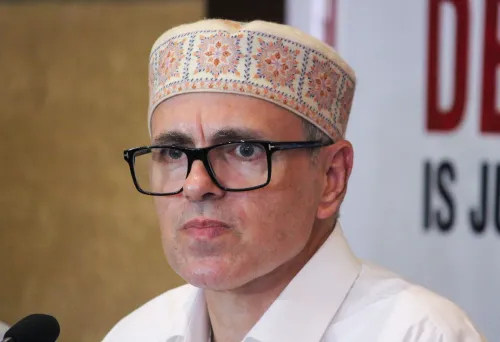
J&K Chief Minister Omar Abdullah has thrown his weight behind a cross-border peace letter signed by over 100 prominent citizens — and turned the political heat back on critics by pointing out that a senior RSS leader had said the very same thing. The move reframes a politically sensitive initiative as mainstream, not marginal.
Key Takeaways
J&K Chief Minister Omar Abdullah on 2 July said no one should object to India-Pakistan dialogue aimed at improving bilateral relations.
A letter coordinated by OP Shah of the Centre for Peace and Progress has been signed by 61 Indians and 55 Pakistanis , urging PM Modi and PM Shehbaz Sharif to revive talks.
Signatories include former J&K CMs Farooq Abdullah and Mehbooba Mufti , former RAW chief A S Dulat , and former Pakistan FM Khurshid Mahmud Kasuri .
Abdullah cited a senior RSS leader’s recent call for India-Pakistan friendship to counter criticism of the initiative.
The letter calls for ‘meaningful and sustained steps’ toward peace, normalcy, and cooperation in South Asia .
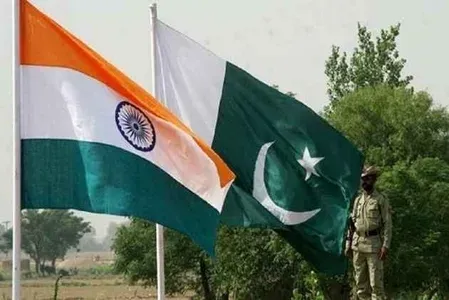
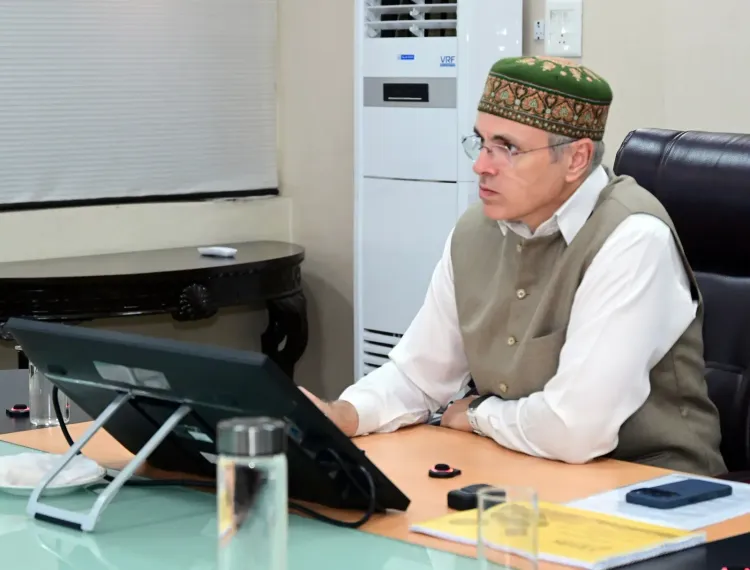
Jammu and Kashmir Chief Minister Omar Abdullah on Thursday, 2 July asserted that no one should object to India-Pakistan dialogue, arguing that the initiative is aimed squarely at improving relations between the two neighbouring nations. His remarks came in Srinagar in response to criticism of a joint letter signed by over 100 prominent citizens from both countries urging the two governments to revive bilateral talks.
What Abdullah Said
Abdullah framed the conflict in historical terms, noting that tensions between India and Pakistan are not new. “This conflict is 30 to 40 years old, and last year, it intensified after the Pahalgam attack. Now, the Prime Minister is being requested, through a letter, that the relations between the two countries should be improved. No one should have any objection to that,” he said.
He pointedly invoked the Rashtriya Swayamsevak Sangh (RSS) to deflect criticism, noting that a senior RSS leader had recently advocated friendship between India and Pakistan. “When the RSS says this, no one objects, but when the leaders in J&K say the same thing, it becomes an issue,” he said. He added that the position echoed former Prime Minister Atal Bihari Vajpayee’s oft-cited maxim: neighbours cannot be changed, only friends can.
The Letter and Its Signatories
The letter was coordinated by OP Shah, chairman of the New Delhi-based Centre for Peace and Progress, and carries the signatures of 61 Indians and 55 Pakistanis. It urges Prime Minister Narendra Modi and Pakistani Prime Minister Shehbaz Sharif to take “meaningful and sustained steps towards restoring peace, normalcy, dialogue and cooperation in South Asia.”
Among the Indian signatories are former J&K Chief Ministers Farooq Abdullah and Mehbooba Mufti, former RAW chief A S Dulat, Rajya Sabha MP Manoj Jha, former Union minister Mani Shankar Aiyar, and retired diplomats. Pakistani signatories include former Foreign Minister Khurshid Mahmud Kasuri and former diplomat Ashraf Jehangir Qazi, alongside civil society members.
The Case for Dialogue
Shah, speaking on the initiative, described the current state of India-Pakistan relations as “far from comfortable,” arguing that the impasse harms ordinary people across the subcontinent. According to Shah, peace and normal relations between the two countries are essential for the economic well-being of citizens on both sides, and any escalation toward conflict directly impacts livelihoods and development.
The letter’s core argument is that sustained engagement can create conditions for greater prosperity across the region — a position that notably aligns with views expressed within the Indian establishment itself, including, as Abdullah highlighted, within the RSS.
Context and What Comes Next
The appeal comes in the wake of the Pahalgam attack, which sharply escalated bilateral tensions last year. This is not the first such cross-border civil society push for dialogue — similar letters have been circulated during past periods of diplomatic freeze, including after the 2016 Uri attack and the 2019 Pulwama attack. Whether the Modi government responds to the letter remains to be seen; the Centre has not yet issued an official reaction.
Point of View
On what grounds do critics object? The cross-border letter itself is a familiar format, and past such appeals have rarely moved governments. What is different this time is the post-Pahalgam context: the letter is being floated after a period of sharply elevated tension, making its reception a useful barometer of how much space exists for Track II diplomacy. The absence of any response from the Centre speaks louder than the signatories list.
NationPress
1 Oct 2026
Frequently Asked Questions
What did Omar Abdullah say about India-Pakistan dialogue?
J&K Chief Minister Omar Abdullah said on 2 July that no one should object to India-Pakistan dialogue, as it is aimed at improving relations between the two neighbours. He argued the position is consistent with what even senior RSS leaders have publicly advocated.
What is the letter signed by 116 citizens about?
The letter, coordinated by OP Shah of the Centre for Peace and Progress, is signed by 61 Indians and 55 Pakistanis and urges PM Narendra Modi and Pakistani PM Shehbaz Sharif to take meaningful steps toward restoring peace, normalcy, dialogue, and cooperation in South Asia.
Who are the prominent signatories of the India-Pakistan peace letter?
Signatories include former J&K Chief Ministers Farooq Abdullah and Mehbooba Mufti, former RAW chief A S Dulat, Rajya Sabha MP Manoj Jha, former Union minister Mani Shankar Aiyar, former Pakistan Foreign Minister Khurshid Mahmud Kasuri, and former diplomat Ashraf Jehangir Qazi.
Why did Abdullah reference the RSS in his remarks?
Abdullah cited a recent statement by a senior RSS leader calling for India-Pakistan friendship to counter criticism of the peace initiative. He argued that if the RSS position draws no objection, J&K leaders advocating the same should not be singled out.
What is the Centre for Peace and Progress?
The Centre for Peace and Progress is a New Delhi-based organisation chaired by OP Shah, who coordinated the cross-border letter urging India and Pakistan to resume bilateral dialogue. Shah has described the current state of relations as ‘far from comfortable’ and harmful to ordinary citizens.