Omar Abdullah Highlights 90-Year-Old's Fight for J&K Rights
Synopsis
J&K Chief Minister Omar Abdullah on 20 July 2026 shared a video of a 90-year-old man championing J&K's rights and dignity, drawing a pointed contrast with political rivals he said prefer posting on social media over taking action on the ground.
Key Takeaways
Omar Abdullah , Chief Minister of Jammu and Kashmir , posted on X on 20 July 2026 highlighting a 90-year-old man's active advocacy for J&K's rights.
The post included a video and implicitly criticised political rivals for confining their activism to social-media commentary.
J&K has been a Union Territory since August 2019 , following the revocation of Article 370 and the passage of the J&K Reorganisation Act .
The National Conference , led by Abdullah , has consistently demanded restoration of full statehood and constitutional safeguards for J&K residents.
The post is part of a broader pattern of senior NC leaders contrasting ground-level activism with online commentary by political opponents.
Key milestones to watch include any parliamentary bill on statehood restoration and upcoming J&K Legislative Assembly election timelines.
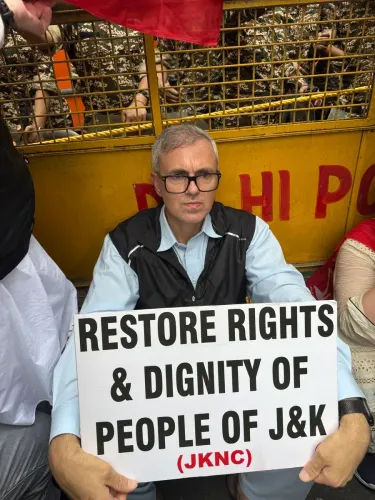
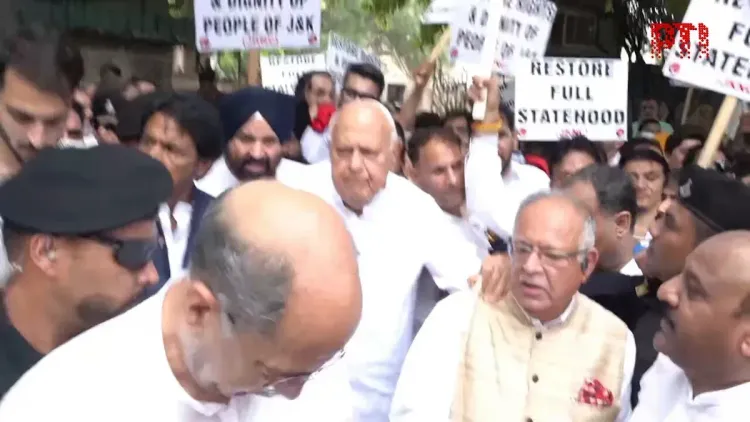
Jammu and Kashmir Chief Minister Omar Abdullah on Monday, 20 July 2026, shared a video on X contrasting the on-ground activism of a 90-year-old advocate for Jammu and Kashmir's rights and dignity with political rivals he accused of limiting their engagement to social-media posts.
In his post, Abdullah wrote: 'Here is a 90 year old man leading from the front for J&K's rights and dignity while some others sit at home posting tweets.' The remark was accompanied by a video, the contents of which show the elderly individual actively participating in what appears to be a public demonstration or advocacy effort on behalf of the region.
Context
Jammu and Kashmir was reorganised in August 2019 when the central government abrogated Article 370, stripping the former state of its special constitutional status and converting it into a Union Territory. Since then, regional political forces — led prominently by the Jammu and Kashmir National Conference (NC) — have sustained a public campaign demanding the restoration of full statehood and constitutional safeguards for the region's residents.
Omar Abdullah, as Chief Minister and vice-president of the National Conference, has consistently placed the statehood question at the centre of his administration's political agenda. His post on 20 July fits squarely within that campaign, amplifying the participation of an elderly citizen to underscore the depth of public feeling on the issue.
Policy Backdrop
The revocation of Article 370 and the passage of the J&K Reorganisation Act, 2019 remain among the most contested legislative acts in recent Indian constitutional history. J&K currently operates without the autonomy it once held as a full state, and its residents are governed directly under the framework applicable to Union Territories, with the Lieutenant Governor holding significant executive authority alongside the elected government.
The National Conference and allied parties have repeatedly urged the central government to introduce legislation in Parliament restoring statehood. The demand has featured in parliamentary debates, election manifestos, and public rallies across the Kashmir Valley and the Jammu division alike.
Stakeholders and Impact
The post resonates most directly with J&K's approximately 1.25 crore residents, for whom statehood restoration carries tangible implications — from the powers of their elected legislature to land and employment protections. Regional political parties, civil-society groups, and legal advocates have all staked positions on the issue.
Abdullah's implicit criticism of rivals who 'sit at home posting tweets' appears directed at political opponents who, in the National Conference's framing, have not matched street-level or institutional advocacy with comparable action. The contrast between physical activism and online commentary has become a recurring rhetorical device in J&K's post-2019 political discourse.
What's Next
Political observers will watch for any fresh bill or resolution on J&K statehood in the Parliament during the ongoing or upcoming session. The timing of the next Legislative Assembly election cycle and any Supreme Court directions on pending petitions related to the 2019 reorganisation are also closely tracked milestones.
For now, Chief Minister Abdullah's post signals that the National Conference-led government intends to keep the statehood demand visible in public discourse — and to frame it as a cause backed not just by politicians but by ordinary citizens, including those of advanced age, willing to advocate in person.
Point of View
And it puts opponents on the defensive by framing their online activity as a substitute for real advocacy. The contrast between physical presence and digital posturing has become a standard rhetorical tool in post-2019 J&K politics, where the National Conference is eager to own the narrative of grassroots resistance. By amplifying a nonagenarian's participation, Abdullah also signals that the statehood demand transcends generational and partisan lines. The move is consistent with the NC's broader strategy of keeping the constitutional question alive in public consciousness ahead of any parliamentary or judicial developments on J&K's status.
NationPress
21 Jul 2026
Frequently Asked Questions
What did Omar Abdullah post about the 90-year-old man?
On 20 July 2026 , J&K Chief Minister Omar Abdullah shared a video on X of a 90-year-old man actively advocating for Jammu and Kashmir's rights and dignity, contrasting his on-ground efforts with political rivals who, Abdullah said, 'sit at home posting tweets.'
What are J&K's rights that Omar Abdullah keeps talking about?
The core demand is the restoration of full statehood to Jammu and Kashmir , which was downgraded to a Union Territory in August 2019 after the abrogation of Article 370 . Associated demands include the revival of constitutional safeguards on land and employment that existed before the reorganisation.
Why was Article 370 removed from Jammu and Kashmir?
The central government abrogated Article 370 in August 2019 , citing the need to integrate J&K fully with the Indian Union and to accelerate development. The move also bifurcated the former state into two Union Territories — Jammu and Kashmir , and Ladakh .
Who is Omar Abdullah and what party does he belong to?
Omar Abdullah is the Chief Minister of Jammu and Kashmir (Union Territory) and the vice-president of the Jammu and Kashmir National Conference , the region's oldest and largest regional political party, which has historically championed J&K autonomy.
What is the National Conference's position on J&K statehood?
The Jammu and Kashmir National Conference has consistently demanded the restoration of full statehood to J&K and the reinstatement of constitutional protections removed in 2019 . The party has raised the issue in Parliament, election campaigns, and public rallies.