ONOE in Gujarat: Labour disruption, ₹7 lakh crore savings cited as JPC wraps 3-day visit
Synopsis
India's ONOE committee left Gujarat with a striking data point: Gujarat University deployed over 90% of its staff for every major election between 2017 and 2024, calling 2024 a 'near-total institutional shutdown.' Add CII's warning of a concentrated migrant labour exodus and a ₹7 lakh crore savings estimate, and the Gujarat consultations produced some of the most concrete economic arguments yet for simultaneous elections.
Key Takeaways
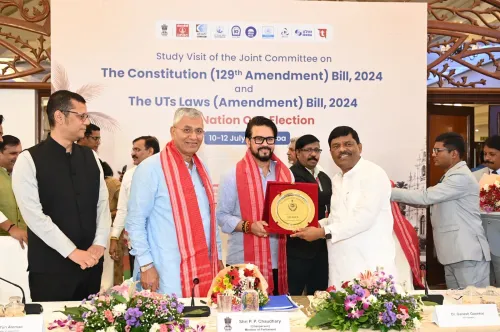
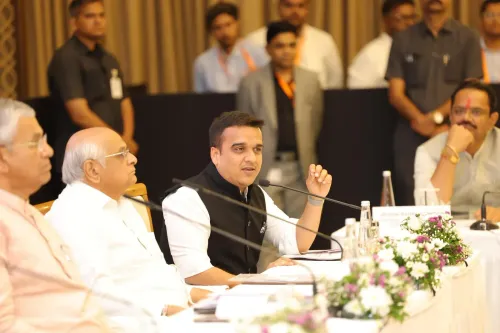
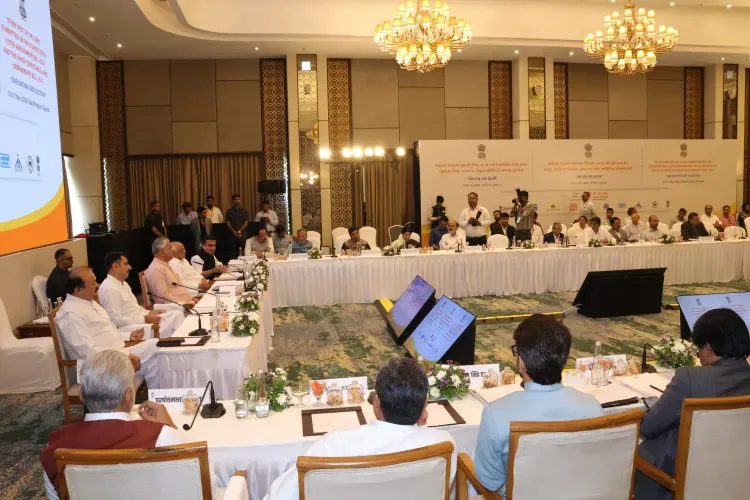
The JPC on ONOE concluded its three-day Gandhinagar consultation on 21 May , meeting political parties, industry bodies, universities and civil society.
Gujarat University deployed 442 of 452 employees for the 2024 Lok Sabha election , describing it as a 'near-total institutional shutdown.' CII Gujarat warned simultaneous polls could trigger a concentrated migrant labour exodus and proposed a Migrant Voter Facilitation Framework (MVFF) with Aadhaar-verified remote voting.
India reportedly spent approximately ₹1.35 lakh crore on the 2024 Lok Sabha election alone, according to figures cited before the committee.
Chaudhary cited estimates of ₹7 lakh crore in potential savings from simultaneous elections through reduced disruption to production, logistics and labour.
The committee is also examining German and Japanese parliamentary models as safeguards against instability under a synchronised electoral system.
The Joint Parliamentary Committee (JPC) examining the 'One Nation, One Election' (ONOE) framework concluded its three-day consultation visit to Gandhinagar on Thursday, 21 May, with educational institutions and industry bodies emerging as the proposal's most vocal backers in the state. Stakeholders argued that the existing cycle of staggered elections was inflicting measurable damage on academic schedules, migrant labour availability, and industrial output across Gujarat.
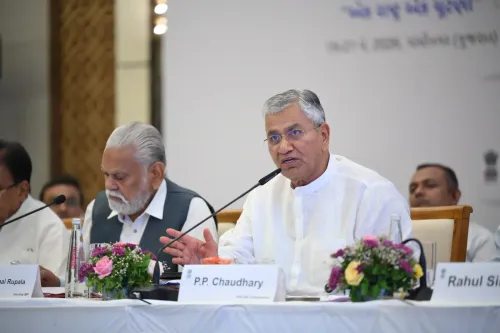
The 39-member committee, chaired by Bharatiya Janata Party (BJP) MP P. P. Chaudhary, is scrutinising the Constitution (One Hundred and Twenty-Ninth Amendment) Bill, 2024 and the Union Territories Laws (Amendment) Bill, 2024 — twin legislative instruments designed to synchronise elections to the Lok Sabha and state assemblies.
What Stakeholders Told the Committee
Consultations in Gandhinagar drew political parties, state officials, economists, industry representatives and civil society groups. Gujarat University and the Confederation of Indian Industry (CII) Gujarat chapter submitted detailed assessments, both concluding that the current staggered election cycle imposes recurring institutional and economic costs.
Gujarat University described simultaneous elections as 'perhaps the most consequential electoral reform India has contemplated since the post-Emergency era.' It submitted that the proposal does not, in itself, violate the federal structure of the Constitution, provided the autonomy of state legislatures is protected. The university also flagged disruptions to classroom teaching, examination supervision, paper evaluation, admissions, research and student support services — particularly during the March–May and October–November examination windows.
Near-Total Institutional Shutdown: The Numbers
According to figures submitted to the committee, Gujarat University deployed 283 of 303 employees during the 2017 Gujarat Assembly election, 313 of 343 during the 2019 Lok Sabha election, 284 of 304 during the 2023 Assembly election, and 442 of 452 during the 2024 Lok Sabha election. The university described the 2024 deployment as 'a near-total institutional shutdown for election-related purposes,' noting that more than 90 per cent of its workforce had been deployed for election duty in every major election cycle between 2017 and 2024.
The submission also referenced the high-level committee chaired by former President Ram Nath Kovind, which estimated that real GDP growth could be 1.5 percentage points higher in the year following simultaneous elections. It cited estimates suggesting India spent approximately ₹1.35 lakh crore on the 2024 Lok Sabha election alone.
Industry's Warning: The Migrant Labour Crunch
CII Gujarat cautioned that while staggered polls currently create periodic but manageable labour movement, simultaneous elections could trigger a concentrated, single-window migration of workers back to their home states. Sectors including construction, textiles, logistics, brick kilns and agriculture in industrial states such as Gujarat, Maharashtra, Karnataka and Delhi depend heavily on migrant labour — predominantly from Bihar and Jharkhand.
An industry leader told reporters: 'Industries are concentrated in Surat, Morbi, Rajkot, and other parts of the state. Many migrant workers coming from Bihar, Jharkhand, etc. are having employment here. They go back when elections occur. This can lead to significant loss in productivity, industry output and costs. This move is welcomed and much needed.'
To address the risk, CII Gujarat proposed a Migrant Voter Facilitation Framework (MVFF), recommending Aadhaar-verified remote voting facilities, 3–5 day staggered early voting windows, and statutory obligations on larger employers to provide paid election leave alongside workforce continuity plans. The body also recommended a phased implementation model — beginning with digital and legal integration, followed by synchronisation of Lok Sabha and assembly elections, and later alignment of municipal and panchayat polls within 100 days of main elections.
JPC Chair on Savings and Safeguards
Committee chair Chaudhary repeatedly argued during consultations that frequent elections impose economic and governance costs far beyond direct government expenditure. Citing estimates previously placed before the committee, he said: 'Simultaneous elections could potentially save the country around ₹7 lakh crore through reduced disruption to production, logistics, public administration and labour movement. This figure may even raise as we are speaking to industry bodies.'
Addressing concerns over federalism, government accountability and truncated legislative terms, Chaudhary said the proposed framework was still under examination and that the committee was studying international models — including German and Japanese parliamentary practices — as potential safeguards against instability arising from no-confidence motions. He maintained that the committee was weighing inputs from former judges, constitutional experts, economists and civil society before finalising its report for Parliament.
Federal Structure and Democratic Accountability Concerns
Several participants questioned whether limiting the tenure of governments elected after a no-confidence motion to the remainder of the original five-year cycle would dilute voters' rights. Chaudhary responded that the Constitution already permits governments to fall before their full term and that the framework sought to 'minimise repeated disruptions while preserving democratic accountability.' He added that the committee was examining whether anti-defection provisions or no-confidence mechanisms would require revision under a synchronised electoral system.
The Gujarat leg forms part of a wider nationwide outreach by the JPC, which is travelling across states to gather stakeholder views before preparing its final report for Parliament. How the committee reconciles industry's support with opposition concerns over federal autonomy and voter rights will determine the shape of any final recommendation.
Point of View
They concentrate it. A single, nationwide pull-back of migrant workers could hit industrial output harder than the current staggered pattern, even if the aggregate disruption is lower. The ₹7 lakh crore savings figure cited by Chaudhary remains unattributed to a published study and deserves scrutiny before it anchors the committee's final report. The harder questions — on truncated terms, federal autonomy, and voter rights after no-confidence votes — received no concrete answers in Gandhinagar.
NationPress
19 Sept 2026
Frequently Asked Questions
What is the 'One Nation, One Election' proposal being examined by the JPC?
It is a constitutional reform proposal that would synchronise elections to the Lok Sabha and all state assemblies, eliminating the current cycle of staggered polls. The JPC is examining the Constitution (One Hundred and Twenty-Ninth Amendment) Bill, 2024 and the Union Territories Laws (Amendment) Bill, 2024, which together form the legislative framework for the change.
What did Gujarat University submit to the JPC about election disruptions?
Gujarat University told the committee that more than 90 per cent of its workforce was deployed for election duty in every major election between 2017 and 2024. During the 2024 Lok Sabha election, 442 of 452 employees were deployed — a situation the university described as a 'near-total institutional shutdown' that disrupted teaching, exams, admissions and research.
What is the Migrant Voter Facilitation Framework proposed by CII Gujarat?
CII Gujarat's Migrant Voter Facilitation Framework (MVFF) recommends Aadhaar-verified remote voting for migrant workers, 3–5 day staggered early voting windows, and statutory paid election leave for workers at larger employers. The proposal is designed to prevent a concentrated exodus of migrant labour from industrial states during simultaneous elections.
How much could simultaneous elections save India, according to the JPC chair?
JPC chair P. P. Chaudhary cited estimates suggesting simultaneous elections could save approximately ₹7 lakh crore through reduced disruption to production, logistics, public administration and labour movement. He noted the figure could rise further as the committee continues consulting industry bodies.
What concerns were raised about ONOE during the Gujarat consultations?
Participants questioned whether restricting the tenure of governments formed after a no-confidence motion to the remainder of the original five-year term would dilute voters' rights. Concerns were also raised about the impact on federalism and democratic accountability. The JPC chair said these issues were still under examination and that international models, including German and Japanese parliamentary practices, were being studied as possible safeguards.