Gujarat industry links repeated elections to ₹12,000–₹15,000 crore annual loss
Synopsis
Gujarat's industry has put a number on what repeated elections cost: ₹12,000–₹15,000 crore a year in lost output, driven by a month-long disruption every election cycle as 30–45 lakh migrant workers return home to vote. Surat's textile sector alone bleeds ₹1,200 crore per affected month — making ONOE not just a political proposal, but a bottom-line issue for India's manufacturing heartland.
Key Takeaways
Gujarat industries estimate an annual production loss of ₹12,000–₹15,000 crore due to election-linked migrant worker migration, according to industry leaders.
Pathik Patwari of the Indian Chamber of Commerce (Gujarat chapter) said Gujarat has 30–45 lakh migrant workers from states including UP, Bihar, and Odisha.
Each election cycle disrupts production for nearly one month , with output declining by an estimated 15–20 per cent .
Surat's textile sector, with a monthly output of ₹8,000 crore , loses approximately ₹1,200 crore per election-affected month.
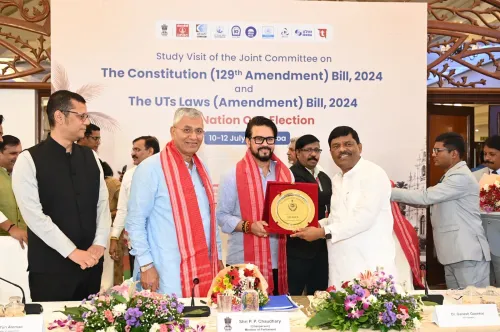
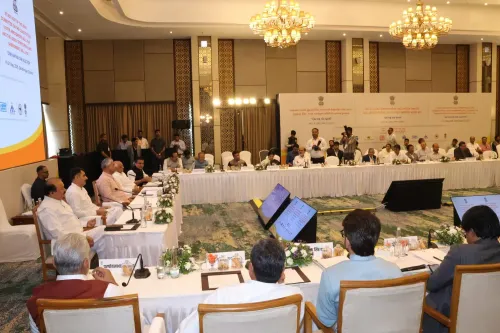
The JPC examining the Constitution (129th Amendment) Bill, 2024 held stakeholder consultations in Gujarat on 25 May 2025 .
The Model Code of Conduct further delays industrial clearances, subsidy disbursements, and investment decisions during election periods.
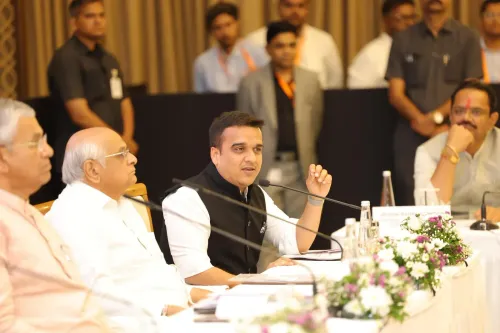
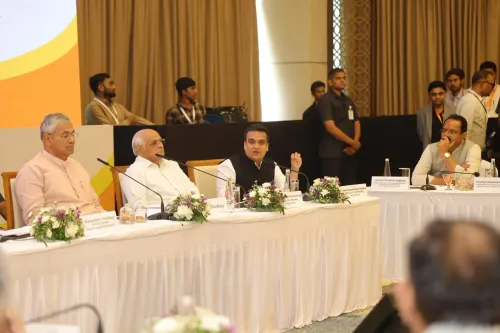
Gujarat's industrial sector, including the textile manufacturing hub of Surat, faces an estimated annual production loss of ₹12,000–₹15,000 crore due to repeated election cycles and the large-scale migration of workers they trigger, industry leaders said on Monday, 25 May. The figures emerged during consultations held in Gujarat by the Joint Parliamentary Committee (JPC) examining the 'One Nation, One Election' (ONOE) proposal.
JPC Consultations in Gujarat
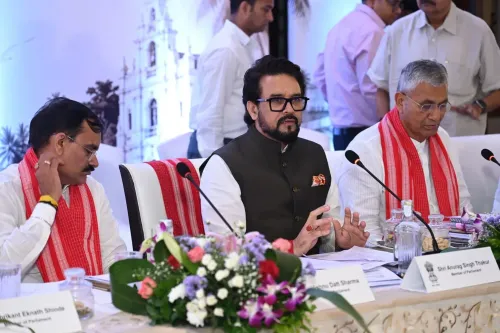
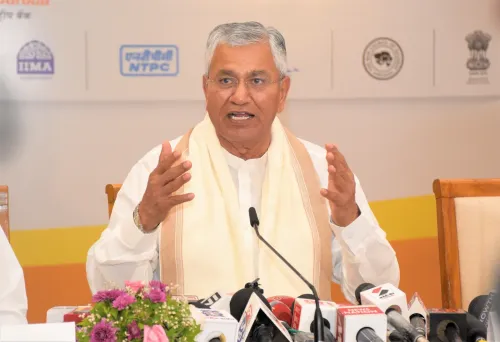
The committee, chaired by Bharatiya Janata Party (BJP) MP P. P. Chaudhary, has been conducting multi-state stakeholder consultations to assess the feasibility of synchronising Lok Sabha, State Assembly, and other elections across India. The panel is examining the Constitution (129th Amendment) Bill, 2024 and associated legislative proposals enabling simultaneous nationwide elections. The Gujarat leg saw participation from state officials, legislators, and industry representatives.
Scale of Migrant Labour Dependency
Pathik Patwari, Chairman of the Indian Chamber of Commerce (Gujarat chapter) and former president of the Gujarat Chamber of Commerce and Industry (GCCI), said the state's manufacturing economy is structurally dependent on migrant labour. 'Official estimates place migrant workers in Gujarat at around 30 lakh, while industry-level assessments suggest the figure could be as high as 40–45 lakh,' he said. These workers primarily come from Uttar Pradesh, Bihar, Odisha, Jharkhand, Chhattisgarh, Madhya Pradesh, and West Bengal, and are engaged across textiles, chemicals, pharmaceuticals, diamonds, and emerging sectors such as semiconductors and automobiles.
How Elections Disrupt Production
Patwari explained that although voting takes place on a single day, the associated migration cycle stretches far longer. 'The election might be for one day, but workers travel around 15 days in advance and return after about 15 days,' he said, meaning industrial output is effectively disrupted for nearly a month per election cycle. He estimated that production declines by around 15–20 per cent during these periods, and noted that the disruption recurs multiple times owing to staggered local body, state, and national elections. Gujarat's Gross State Domestic Product (GSDP) is estimated at approximately ₹27.9 lakh crore, underscoring the scale of economic activity exposed to this recurring disruption.
Surat's Textile Sector: The Hardest Hit
A representative of the Southern Gujarat Chamber of Commerce and Industry (SGCCI) — an apex trade body established in 1940 representing more than 13,000 direct members and over a lakh indirect members — provided sector-specific data on Surat's textile economy. The industry records a monthly production scale of approximately ₹8,000 crore. Based on an estimated 15 per cent productivity impact during election cycles, the monthly output loss translates to roughly ₹1,200 crore per affected period. Surat's textile sector alone employs around 15 lakh migrant workers, largely from Uttar Pradesh, Bihar, Jharkhand, Odisha, and West Bengal. The sector's ecosystem comprises approximately 22,000 weaving units, 400 processing houses, around 20 spinning units, about 20 yarn units, nearly 250 knitting units, and 2,000–2,500 garmenting units, with weaving and processing being the most labour-intensive segments. The diamond industry in Surat employs an estimated three lakh migrant workers but is comparatively less affected due to differences in production structure.
Model Code of Conduct and Administrative Delays
Industry representatives also flagged that repeated election cycles trigger administrative slowdowns under the Model Code of Conduct (MCC), during which policy decisions, subsidy disbursements, land approvals, and industrial clearances are often delayed for weeks or months. 'Such delays increase interest costs, postpone investment decisions, and affect industrial expansion timelines,' they said. Patwari added that election periods further disrupt government functioning through the deployment of administrative personnel for election duties across districts and states. Public statements made during the JPC visit also referenced projections suggesting that simultaneous elections could save up to ₹7 lakh crore and improve administrative efficiency and GDP growth, though estimates vary depending on methodology and assumptions used.
The JPC is expected to continue its multi-state consultation process before submitting its findings to Parliament.
Point of View
000–₹15,000 crore figure is an industry self-estimate, not an audited government calculation — a distinction that matters when it feeds into a parliamentary committee examining a constitutionally significant reform. The ONOE proposal is politically driven by the ruling party, and industry consultations that produce headline loss numbers risk functioning as advocacy dressed as evidence. That said, the structural dependency of Gujarat's manufacturing clusters on circular migrant labour is well-documented and real. The more honest question the JPC should be asking is not whether elections disrupt production — they do — but whether synchronising elections would actually reduce that disruption, or simply consolidate it into one larger shock every five years.
NationPress
25 Sept 2026
Frequently Asked Questions
What is the estimated annual production loss Gujarat's industry attributes to repeated elections?
Industry leaders estimate an annual production loss of ₹12,000–₹15,000 crore for Gujarat's industries, based on cumulative productivity decline and extended labour absenteeism during election-linked migration periods. The figure was cited during JPC consultations on the One Nation, One Election proposal held in Ahmedabad on 25 May 2025.
Why do elections disrupt industrial production in Gujarat?
Gujarat's manufacturing economy depends heavily on 30–45 lakh migrant workers from states such as Uttar Pradesh, Bihar, and Odisha. Although voting occurs on a single day, workers typically travel 15 days before an election and return 15 days after, causing nearly a month of workforce disruption per election cycle.
How badly is Surat's textile industry affected?
Surat's textile sector, which has a monthly production scale of approximately ₹8,000 crore, faces an estimated 15 per cent productivity impact during election cycles, translating to a monthly output loss of about ₹1,200 crore. The sector employs around 15 lakh migrant workers and is considered the most labour-intensive segment in the region.
What is the One Nation, One Election proposal and which committee is examining it?
One Nation, One Election (ONOE) is a proposal to synchronise Lok Sabha, State Assembly, and other elections across India into a single simultaneous cycle. The Joint Parliamentary Committee (JPC), chaired by BJP MP P. P. Chaudhary, is examining the Constitution (129th Amendment) Bill, 2024, which would enable this change, and is conducting multi-state stakeholder consultations.
What additional economic impact does the Model Code of Conduct have on industry?
During election periods, the Model Code of Conduct halts policy decisions, subsidy disbursements, land approvals, and industrial clearances, often for weeks or months. Industry representatives say these delays raise interest costs, postpone investment decisions, and disrupt industrial expansion timelines beyond the direct labour disruption.