ONOE JPC meet in Gujarat: Opposition flags EVM scale, security burden
Synopsis
The ONOE JPC's Gandhinagar hearings are surfacing a consistent opposition front — not just on ideology but on hard logistics. Congress and AAP both challenged the government's cost-saving argument with data, warning that merging election cycles across five governance tiers would overwhelm EVM supply chains, security deployment capacity, and constitutional safeguards for state-level democratic accountability.
Key Takeaways
The 39-member JPC on One Nation, One Election held its second day of consultations in Gandhinagar on 20 May .
Congress and AAP both opposed the proposal, citing EVM availability, security deployment scale, and threats to federal structure.
State Congress President Amit Chavda said election spending is less than 1% of the Union Budget and invoked B.R.
Ambedkar on five-year mandates.
AAP President Isudan Gadhvi put election expenditure at 0.1% of GDP and warned against reducing democratic processes for cost savings.
AAP MLA Gopal Italia proposed separate national election cycles for Lok Sabha and Assembly polls as an alternative model.
The ONOE proposal could be rolled out from 2029 if Constitutional amendments are approved, according to reports.
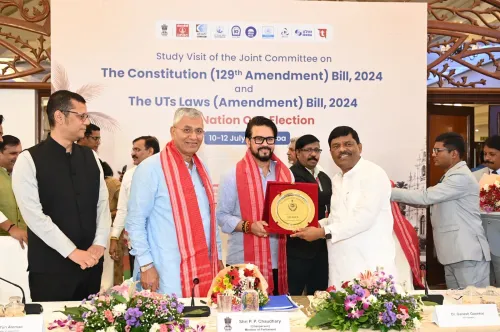
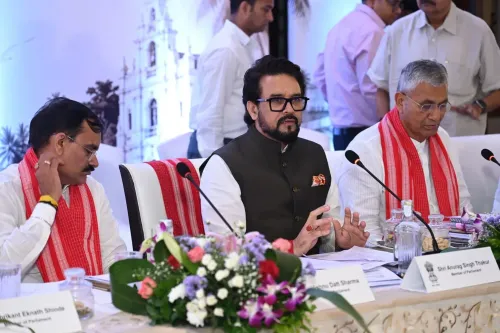
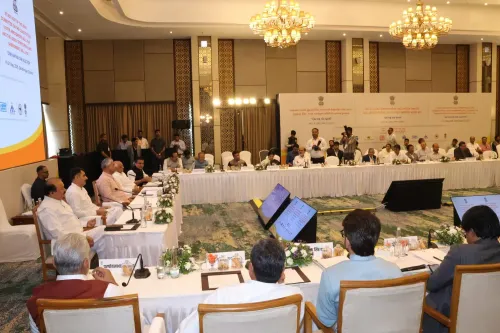
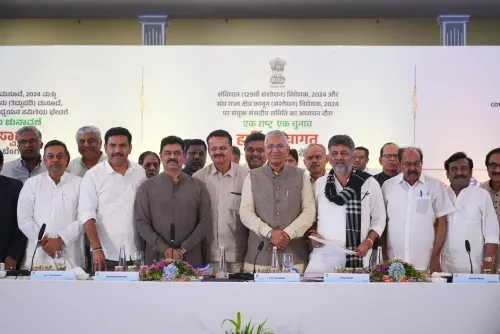
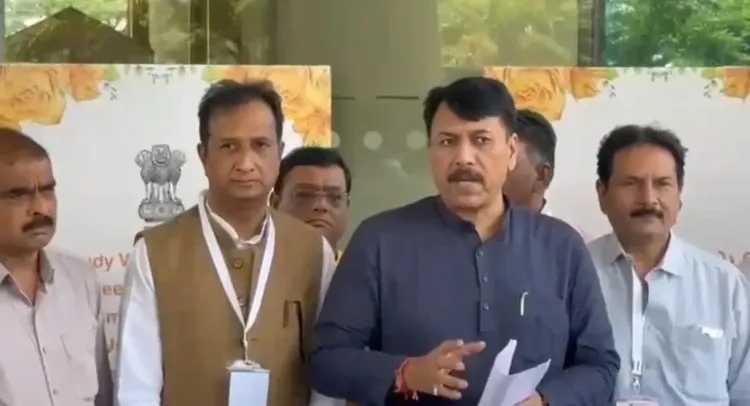
The Joint Parliamentary Committee (JPC) examining the 'One Nation, One Election' (ONOE) proposal held its second day of consultations in Gandhinagar on Wednesday, 20 May, with opposition parties raising pointed concerns over the logistical and constitutional viability of synchronised elections. Debates centred on the availability of electronic voting machines (EVMs), VVPAT units, and the sheer scale of security force deployment that simultaneous polls would demand.
Who Participated and How the Meeting Was Structured
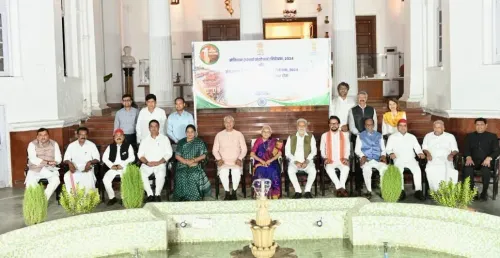
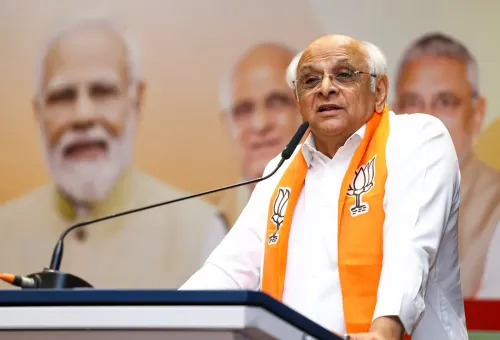
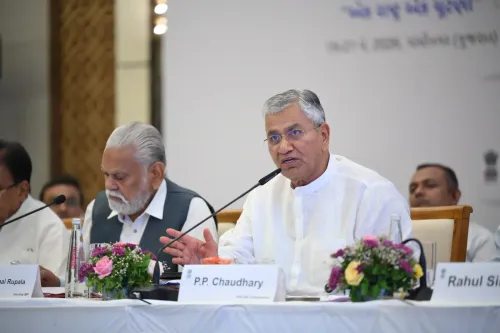
The 39-member JPC, chaired by Bharatiya Janata Party (BJP) MP P.P. Chaudhary and comprising 27 Lok Sabha MPs and 12 Rajya Sabha MPs, convened with representatives from the Indian National Congress (Congress), Aam Aadmi Party (AAP), and the BJP. Gujarat Chief Minister Bhupendra Patel, Deputy Chief Minister Harsh Sanghavi, and Assembly Speaker Shankar Chaudhary also participated in the deliberations.
Congress Opposes the Bill, Cites Federal Concerns
State Congress President Amit Chavda strongly opposed the proposal after the meeting, alleging it carries a 'hidden agenda to centralise power' and weaken the federal structure of the Constitution. He challenged the government's cost-saving rationale, stating: 'Election spending is less than one per cent of the Union Budget. Simultaneous elections would require massive deployment of security forces and the availability of EVMs and VVPAT machines.'
Chavda also raised concerns over mid-term dissolution provisions, arguing that if a state government falls due to a no-confidence motion, elections would be held only for the remaining term rather than a full five years. Invoking Constituent Assembly debates, he said B.R. Ambedkar had emphasised that elected governments must be given full five-year mandates.
Congress MLA Imran Khedawala echoed these concerns, saying: 'It is not a big expenditure issue for a country of 140 crore people. The more serious concern is the scale of machinery required — EVMs, VVPATs and security deployment.' He warned that combining elections across governance tiers could weaken democratic accountability.
AAP Questions Feasibility, Offers Alternative Model
State AAP President Isudan Gadhvi, accompanied by MLAs Gopal Italia, Chaitar Vasava, Hemant Khava, Karan Barot, and Anup Sharma, submitted written representations to the JPC. Gadhvi disputed the government's cost-saving argument, stating that election expenditure is around 0.1 per cent of GDP — 'not a cost that should be reduced at the expense of democratic processes.'
He questioned the structural feasibility of merging elections across tiers: 'How is this structure even possible when state elections are conducted in multiple phases? Lok Sabha, Vidhan Sabha and local body elections cannot be merged as issues at each level are different.'
AAP MLA Gopal Italia proposed an alternative — conducting Lok Sabha and Assembly elections in separate national cycles rather than a single simultaneous exercise. He also raised unresolved constitutional questions around hung assemblies, government collapse, and President's Rule.
Background and What Comes Next
On the first day of the Gandhinagar visit, the JPC reviewed a detailed presentation by the Gujarat state government on administrative and electoral preparedness models. The committee is consolidating inputs from political parties and state stakeholders for its final report. The ONOE proposal, if Constitutional amendments are approved, could reportedly be implemented from 2029.
This is the second major round of state-level consultations by the JPC, and the pattern of opposition resistance — centred on logistics, federalism, and mid-term governance gaps — is emerging as a consistent thread across hearings.
Point of View
Congress and AAP are forcing the JPC onto uncomfortable ground where the government's cost-saving narrative is hardest to defend. The 0.1% of GDP figure, if accurate, effectively dismantles the financial rationale in a single line. What the hearings have not yet surfaced is a credible government response to the mid-term dissolution problem — the constitutional gap that Italia and Chavda both flagged remains unanswered. If the JPC's final report sidesteps this, it will face serious scrutiny in Parliament.
NationPress
5 Oct 2026
Frequently Asked Questions
What is the One Nation, One Election proposal being examined by the JPC?
One Nation, One Election (ONOE) is a proposal to synchronise Lok Sabha, State Assembly, and potentially local body elections into a single electoral cycle. The 39-member Joint Parliamentary Committee, chaired by BJP MP P.P. Chaudhary, is examining its constitutional and administrative feasibility, with a possible rollout from 2029 if amendments are approved.
Why did Congress oppose the ONOE proposal at the Gujarat JPC hearing?
State Congress President Amit Chavda alleged the bill carries a hidden agenda to centralise power and weaken India's federal structure. He also challenged the cost-saving argument, noting election spending is under 1% of the Union Budget, and raised constitutional concerns about mid-term dissolution of Assemblies.
What concerns did AAP raise about simultaneous elections?
AAP President Isudan Gadhvi argued that election expenditure at 0.1% of GDP is not a burden worth compromising democratic processes for. He questioned the structural feasibility of merging multi-phase state elections with national polls, and MLA Gopal Italia raised unresolved questions about hung assemblies and President's Rule.
What alternative did AAP propose to the ONOE model?
AAP MLA Gopal Italia proposed that Lok Sabha and Assembly elections be conducted in separate national cycles rather than a single simultaneous exercise, as a middle path that could reduce election frequency without merging all governance tiers into one poll.
When could One Nation, One Election be implemented?
According to reports, the ONOE proposal could be rolled out from 2029, subject to Constitutional amendments being approved. The JPC is currently consolidating inputs from political parties and state stakeholders before submitting its final feasibility report.