Is the Opposition Bloc Suffering Without 'Life Support' to Challenge BJP?
Synopsis
As the Opposition bloc formed to counter BJP's dominance faces internal strife and diminishing relevance, concerns rise over its future. With leaders like Omar Abdullah highlighting its precarious state, can unity around Congress rejuvenate the ailing coalition in the lead-up to the 2024 elections? Explore the dynamics of this evolving political landscape.
Key Takeaways
The Opposition bloc's initial hopes have given way to concerns about political viability.
Omar Abdullah's remarks highlight internal conflicts and leadership challenges.
Regional interests complicate unification efforts among diverse parties.
Historical precedents like the Janata Party experiment offer insights but also caution.
Future success may hinge on collaboration and strategic planning.
New Delhi, Dec 8 (NationPress) Over two years ago, a coalition of several political parties opposing the Bharatiya Janata Party (BJP) -- primarily directed against Prime Minister Narendra Modi -- came together, raising high hopes within the Opposition.
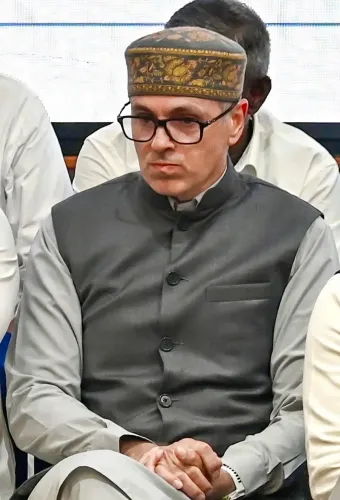
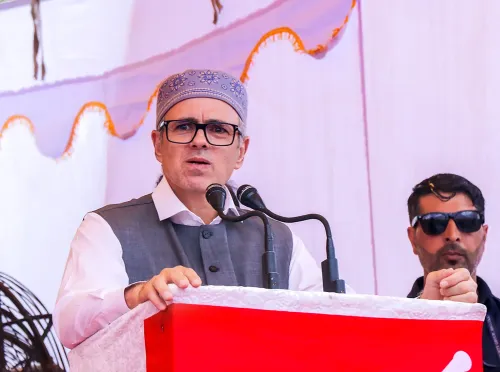
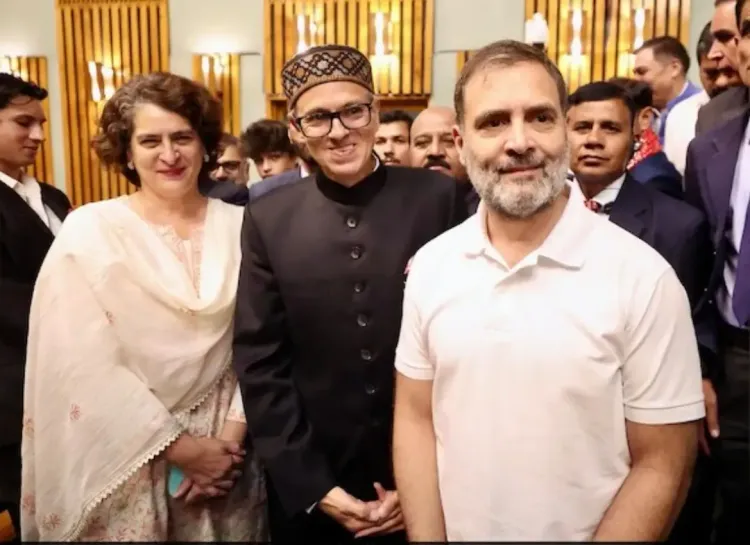
Today, those hopes have transformed into worries regarding the coalition's political viability, with Jammu and Kashmir's Chief Minister and National Conference leader Omar Abdullah stating that the bloc is currently "on life support," perhaps bordering on the "ICU."
His concern stems from the internal strife and the leadership's failure to keep pace with the BJP, which is perpetually in campaign mode, continuously strategizing and innovating politically.
Omar Abdullah expressed that the only viable path for the Opposition to challenge Modi was to "unite around the Congress party." However, he seems to have overlooked the fact that many members of this Indian National Developmental Inclusive Alliance (INDIA), a name derived from the acronym "INDIA," are regional leaders who either emerged from dissenting against the Congress or have thrived by opposing the venerable party.
The Janata Party experiment of the 1970s had similarly united socialists, communists, and right-wing parties to oust the then Prime Minister Indira Gandhi.
So, why not attempt a similar approach again, the leaders may have thought.
Yet, when Nitish Kumar, leader of the Janata Dal (United), hosted the inaugural meeting of the INDIA bloc in Patna, he likely did not foresee a future where he would be taking an oath as the Chief Minister of Bihar, leading a National Democratic Alliance (NDA) government he had just decided to contest against.
His ambitious plans began to unravel in the meetings that followed the one in Patna.
Having nurtured aspirations to spearhead the opposition against Prime Minister Modi, he found himself progressively sidelined.
Next to feel a similar sense of marginalization was the Maratha leader and current head of a faction of the Nationalist Congress Party (NCP), Sharad Pawar.
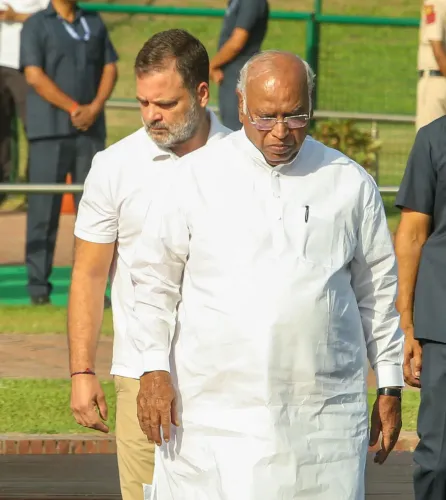
As the 2024 Lok Sabha elections approached, Congress President Mallikarjun Kharge was appointed as the chair of the INDIA bloc.
Mamata Banerjee, Chief Minister of West Bengal and the person credited with coining the acronym INDIA, had previously suggested Kharge's leadership of the bloc.
Insiders reported that Banerjee had the backing of Aam Aadmi Party leader Arvind Kejriwal and Samajwadi Party head Akhilesh Yadav.
This trio was sometimes perceived as a "pressure group" or "sub-alliance" within the broader coalition.
The three leaders believed that it would be challenging for the BJP to launch a fierce attack on a member of the Dalit community.
However, Punjab and West Bengal proved to be formidable battlegrounds.
Initially, Banerjee conceded two seats in Bengal but sought to gain seats in Assam, Manipur, Meghalaya, and Tripura in exchange.
Following a dismal performance in the 2024 Lok Sabha election, where Kejriwal's alliance lost all seven seats in Delhi, he declared a disconnect with Congress, asserting that the INDIA bloc was solely established for the 2024 elections.
This saga continues to evolve.
The shifting political landscape, coupled with the regional ambitions of various leaders, has impacted the INDIA bloc, which, echoing Omar Abdullah's remarks, appears to be deteriorating without adequate "life support" and may ultimately face a critical situation.
Nevertheless, in Uttar Pradesh, Akhilesh Yadav may still seek to collaborate with Congress as the state gears up for the 2027 Assembly elections, hoping to regain political relevance.
However, this may not suffice to rejuvenate the ailing INDIA bloc.
Point of View
I observe that the current struggles of the Opposition bloc reveal deeper issues within its structure and strategy. While the intent to unite against the BJP is commendable, the historical context and regional ambitions complicate this effort. A collaborative approach is essential, yet the path forward may require reevaluation of alliances and strategies.
NationPress
20 Sept 2026
Frequently Asked Questions
What is the current state of the Opposition bloc?
The Opposition bloc, initially formed to challenge the BJP, is currently facing significant internal conflicts and concerns about its political relevance.
Who are the key leaders in the Opposition bloc?
Key leaders include Omar Abdullah, Mallikarjun Kharge, Mamata Banerjee, Nitish Kumar, and Akhilesh Yadav, each representing different regional interests.
What challenges does the Opposition bloc face?
The bloc struggles with infighting, a lack of unified strategy, and the dominance of the BJP in the political landscape.
Can the Opposition bloc regain its strength?
Regaining strength will require a reevaluation of alliances and a focused strategy to unite against the BJP.
What are the implications for the upcoming elections?
The internal discord may hinder the bloc's chances in the 2024 Lok Sabha elections unless unity and a cohesive strategy are established.