Spiritual Leaders Express Outrage Over Taliban's Domestic Violence Legalization

Synopsis
Spiritual leaders are voicing their profound dismay over the Taliban's new penal code that permits **domestic violence against women**. This controversial law not only legitimizes cruelty but also threatens the future of **Islam** globally. Leaders are calling for urgent action against this injustice.
Key Takeaways
The Taliban's new penal code legalizes domestic violence against women.
Spiritual leaders condemn the legislation, calling for urgent action.
The law threatens the future of Islam and women's rights globally.
The code establishes a discriminatory punishment system based on social status.
The 2009 EVAW law has been completely abolished.
Ayodhya, Feb 23 (NationPress) In response to the Taliban's newly established penal code regarding atrocities against women and children in Afghanistan, spiritual leaders condemned this action on Monday, expressing their deep sorrow over the cruelty inflicted on mothers, women, and children under the guise of religion.
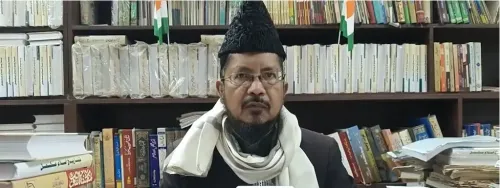
Speaking with IANS, Tapasvi Chavani Mahant Jagatguru Paramhansacharya remarked, “Upon learning about this law, my emotions are uncontrollable. The brutality against mothers, women, and children in the name of religion deeply saddens me.”
“Should this inhumanity against women and children by the Taliban persist, it will irreparably tarnish the image and future of Islam globally. I urge all responsible Muslim leaders, maulanas, and clerics to raise their voices against such injustice and work towards ending this oppression,” he added.
Siddhpeeth Hanumangarhi Mahant Deveshacharya Maharaj also voiced his disapproval, stating, “The Taliban's newly enacted law is utterly condemnable. In Sanatan Dharma, women are revered as goddesses. Any law that endorses violence against women is intolerable. We categorically reject this law, and it must be changed without delay.”
The Taliban's new penal code reportedly 'legalizes' domestic violence against women, permitting husbands to physically discipline their wives and children, provided the punishments do not lead to “broken bones or open wounds.”
This penal code, which was signed by the group’s supreme leader, Hibatullah Akhundzada, sets forth a discriminatory system of punishment based on social standing, classifying individuals as ‘free’ or ‘slave.’
According to this code, if a husband inflicts visible fractures or injuries through what is termed “obscene force,” he may face a mere 15 days of imprisonment. Additionally, a conviction relies on the woman successfully demonstrating the abuse in court, requiring her to present proof of her injuries while remaining fully covered, and she must be accompanied by her husband or a male guardian throughout the court process.
Conversely, a married woman could face up to three months in jail for visiting her relatives without her husband’s consent.
The code delineates varying penalties based on social rank. If a crime is committed by an Islamic scholar, the response is limited to a mere advisory. Elite individuals may receive a court summons and a warning, while those from the middle class could face imprisonment for similar offenses, with individuals from the so-called lower class facing imprisonment and corporal punishment.
This new 90-page penal code has abolished the 2009 law on the Elimination of Violence Against Women (EVAW), which was established by the previous US-backed administration.
Point of View
It is imperative to highlight the urgent need for a collective response to the Taliban's recent legislation. This new penal code raises significant concerns regarding human rights and the treatment of women, necessitating a unified stand against oppression and cruelty. The voices of spiritual leaders underline the importance of addressing such injustices to safeguard the dignity and well-being of all individuals.
NationPress
13 Oct 2026
Frequently Asked Questions
What does the new Taliban penal code entail?
The new penal code reportedly allows for domestic violence against women, permitting husbands to physically punish their wives and children under certain conditions.
How have spiritual leaders reacted to this code?
Spiritual leaders have condemned the code, expressing deep sorrow and calling for an end to the cruelty inflicted on women and children.
What are the implications for women's rights?
The code poses a severe threat to women's rights, enabling violence and oppression while undermining previous laws aimed at protecting women.
Who signed the new penal code?
The penal code was signed by Hibatullah Akhundzada, the Taliban's supreme leader.
What was abolished by this new penal code?
The code has abolished the 2009 law on the Elimination of Violence Against Women (EVAW), which was established under the previous US-backed regime.