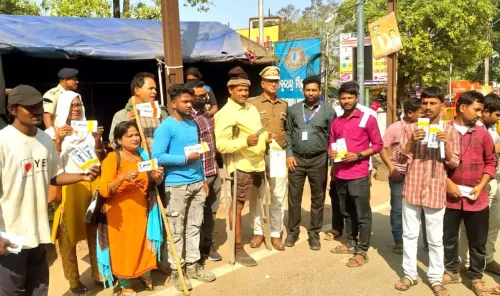
How Many Women Were Screened for Cervical Cancer in 2025?
Click to start listening
Synopsis
In a remarkable public health effort, the Indian government revealed that over 1.20 crore women have been screened for cervical cancer in 2025. This initiative is part of a broader strategy under the National Health Mission aimed at tackling Non-Communicable Diseases across the nation. Discover how this initiative is reshaping healthcare in India.
Key Takeaways
- Over 1.20 crore women screened for cervical cancer in 2025.
- Initiative under the National Health Mission.
- Focus on women aged 30 and above.
- Significant increase in screening rates since 2020-21.
- Comprehensive approach to tackle various Non-Communicable Diseases.
New Delhi, Dec 5 (NationPress) The Indian government announced that over 1.20 crore women have undergone screening for cervical cancer in 2025. This information was provided during a parliamentary session on Friday.
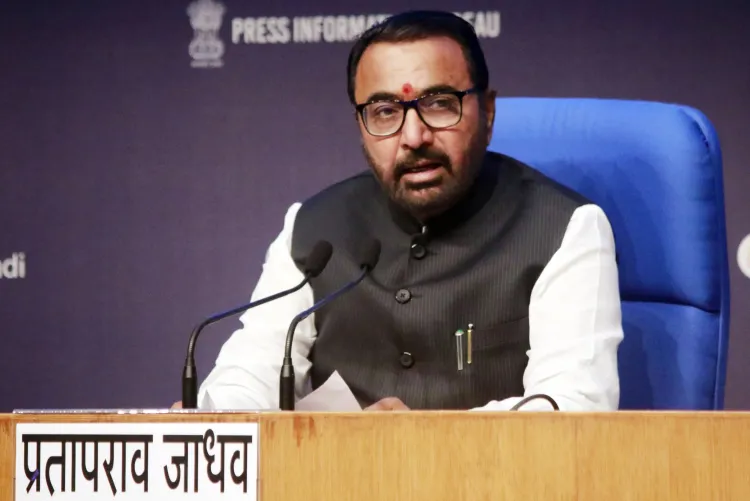
In a written statement to the Lok Sabha, the Union Minister for Health, Prataprao Jadhav, revealed that a nationwide initiative focusing on the prevention, management, and screening of prevalent Non-Communicable Diseases (NCDs), including cervical cancer, has been implemented under the National Health Mission (NHM) as part of Comprehensive Primary Health Care.
This initiative specifically targets individuals over the age of 30 for screening.
According to the National NCD Portal, the cervical cancer screening rate has shown a steady increase since 2020-21.
“In 2020-21, screenings were conducted for 2,111,011 women. This number surged to 5,950,309 in 2021-22, 18,684,268 in 2022-23, 11,595,917 in 2023-24, 17,548,256 in 2024-25, and reached 12,723,558 by November 30, 2025,” Jadhav stated in the Lower House.
He also indicated that the number of estimated deaths attributable to cervical cancer increased from 28,255 in 2014 to 35,691 in 2023, referencing data from the Indian Council of Medical Research (ICMR) - National Cancer Registry Programme (NCRP).
Furthermore, he highlighted that the Ministry of Health and Family Welfare (MoHFW) is proactively engaging in various initiatives to enhance preventive healthcare and mobile health services, particularly in rural and isolated areas, in line with the broader objective of Universal Health Coverage (UHC).
Through the Ayushman Arogya Mandirs (AAMs), comprehensive primary healthcare (CPHC) is being enhanced by reinforcing Sub Health Centres (SHCs) and Primary Health Centers (PHCs) to provide a wider array of services, including reproductive and child healthcare, elderly care, and management of communicable and non-communicable diseases.
“As reported by States/UTs on the AAM portal, a total of 1,80,906 AAMs have been established across India as of October 31. Various wellness activities such as Yoga, cycling, and meditation are organized in these centers. Up to October 31, 6.37 crore wellness sessions, including Yoga, have been conducted at AAMs,” Jadhav mentioned.
Under the National Programme for Prevention and Control of Non-Communicable Diseases (NP-NCD), a population-based initiative has also been launched for the prevention, management, and screening of common NCDs as part of the NHM and CPHC.
“Population-based screening aids in improved disease management through early detection, follow-ups, and treatment adherence,” Jadhav emphasized.
“By November 30, a total of 39.79 crore screenings for hypertension, 39.60 crore for diabetes, 33.57 crore for oral cancer, and 15.72 crore for breast cancer have been completed at all health facilities,” he added, as per data from the NP-NCD portal.
Point of View
I believe that this initiative reflects a concerted effort by the Indian government to improve women's health across the nation. It is crucial that such programs continue to receive support and funding to ensure that preventive healthcare becomes a norm rather than an exception.
NationPress
05/12/2025
Frequently Asked Questions
What is the significance of the cervical cancer screening initiative?
The cervical cancer screening initiative aims to reduce mortality rates and improve early detection, thereby facilitating timely treatment and better health outcomes for women.
How does the National Health Mission support this initiative?
The National Health Mission provides the framework for implementing various health programs, including those targeting Non-Communicable Diseases like cervical cancer, ensuring a comprehensive health approach.
What age group is primarily targeted for screening?
Individuals over the age of 30 are primarily targeted for cervical cancer screening as part of the initiative.
How has the screening rate changed over the years?
The screening rate for cervical cancer has increased significantly, showing a consistent rise from 2020-21 to 2025.
What other health issues are addressed under the National Health Mission?
The National Health Mission also addresses various health issues, including hypertension, diabetes, oral cancer, and breast cancer screenings.