Owaisi invokes Abdul El-Sayed's US Senate win to push Muslim political identity in UP
Synopsis
Owaisi seized on Abdul El-Sayed's history-making US Senate victory in Michigan to deliver a pointed message to Muslim voters in Uttar Pradesh: stop being political followers and start being leaders. The same press conference doubled as an attack on the Centre's move to clear a century-old mosque for the Central Vista project — making it one of his most charged statements in recent months.
Key Takeaways
AIMIM President Asaduddin Owaisi cited Abdul El-Sayed's win in the Michigan Senate race to call for independent Muslim political identity in Uttar Pradesh .
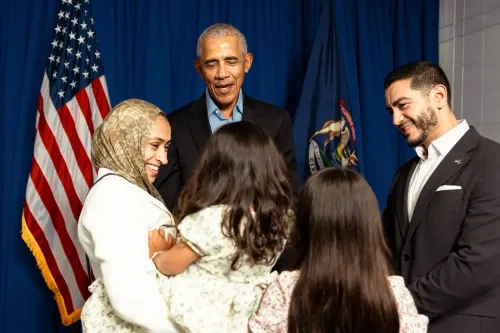
El-Sayed became the first Muslim US senator after winning the Michigan seat in US mid-term elections.
Owaisi posted on X: 'An Abdul has won in Michigan; now, the Abdul of Uttar Pradesh must strengthen his own political identity.' He criticised the Centre for seeking removal of the century-old Qadeemi Masjid within the Krishi Bhawan compound for the Central Vista project, calling it a registered Waqf property.
Owaisi highlighted that Hyderabad election officials found no illegal immigrants in the city's electoral rolls, challenging earlier BJP claims.
He said AIMIM assisted all eligible voters, regardless of religion, during the Special Intensive Revision (SIR) exercise.
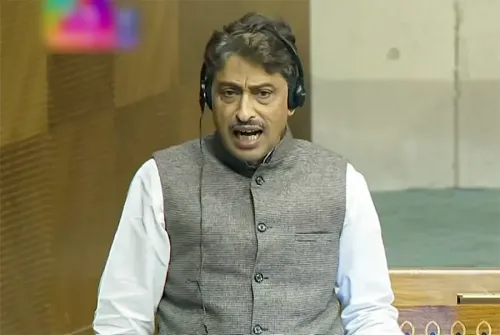
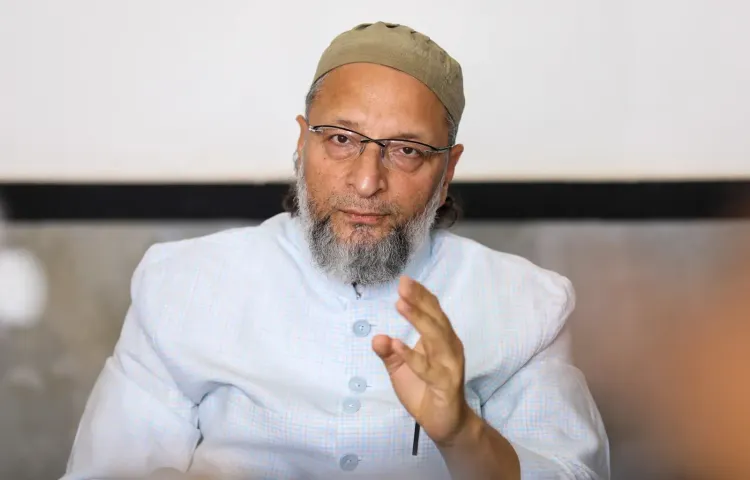
All India Majlis-e-Ittehadul Muslimeen (AIMIM) President Asaduddin Owaisi on Wednesday, 4 November 2026, drew a sharp parallel between the United States and Uttar Pradesh, citing the landmark Senate victory of Democratic candidate Abdul El-Sayed in Michigan to argue that Muslims in India's most populous state must assert an independent political identity. The Hyderabad MP's remarks came hours after El-Sayed made history by becoming the first Muslim US senator.
What Owaisi Said
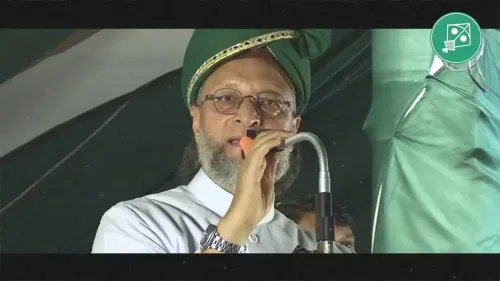
'An Abdul has won in Michigan; now, the Abdul of Uttar Pradesh must strengthen his own political identity,' Owaisi posted on X, using the name 'Abdul' — a common component in Muslim names — as a symbol of community assertion. Speaking separately to reporters at his party's headquarters, Darussalam, in Hyderabad, he said: 'BJP used to say Abdul makes puncture. We are saying Abdul will now become leader. He will not lay carpets nor be scared of the RSS nor bow before anybody. Abdul will do his job and become a leader.'
Owaisi added that 'the time has come for us to demonstrate that Abdul bows in servitude to no one but Allah,' and stated the community would 'no longer be the ones laying out carpets for others.' The remarks are widely seen as a direct challenge to the Bharatiya Janata Party (BJP)'s political framing of Muslim voters in Uttar Pradesh, a state where AIMIM has sought to expand its footprint beyond its Hyderabad stronghold.
El-Sayed Victory: The Context
Abdul El-Sayed won the Michigan Senate race during US mid-term elections, becoming the first Muslim elected to the US Senate. The victory drew widespread attention among Muslim-American and Muslim-majority diaspora communities globally. Owaisi used the result as a template for electoral mobilisation, arguing it demonstrated that Muslim candidates could win on their own terms without ideological compromise.
Owaisi on Qadeemi Masjid and Central Vista
The AIMIM chief also trained his fire on the Centre over its reported submission to the Delhi High Court that the century-old Qadeemi Masjid — located within the Krishi Bhawan compound in New Delhi — must be removed to facilitate the redevelopment of the Common Central Secretariat (CCS) under the Central Vista project.
Owaisi argued the mosque predates both Krishi Bhawan and the construction of Lutyens' Delhi, which began in 1908. 'This mosque is a part of the cultural and historical heritage of the country. It was built even before Krishi Bhawan. This is registered Waqf. The government is not its owner,' he said. He called on Union Minorities Welfare Minister Kiren Rijiju to publicly clarify that the government does not hold ownership over the site and urged authorities to take any ownership dispute to the Waqf tribunal.
Owaisi also criticised the Centre's characterisation of the mosque as 'impermissible and incompatible with the secular character of government property,' contrasting it with the Modi government's decision to inaugurate the Central Vista project with a Bhoomi Pooja. 'Apparently, secularism is not offended by the use of one faith's rituals for a public project, but is allergic to a mosque that has stood there even before 1912, long before Krishi Bhawan was even built,' he said.
On Hyderabad Electoral Rolls and SIR Exercise
When asked about Hyderabad District Election Officer R.V. Karnan's statement that no illegal immigrants were found in the city's electoral rolls, Owaisi shot back: 'What will Amit Shah say now?' — a reference to BJP leaders' earlier claims about alleged illegal voters in Hyderabad, including assertions that 'surgical strikes' would be conducted on the city's rolls. Owaisi said the Special Intensive Revision (SIR) exercise had imposed hardships on ordinary voters and that AIMIM had assisted all eligible voters, regardless of religion, through the process.
What It Means for UP Politics
Owaisi's remarks signal an intensifying effort by AIMIM to position itself as a vehicle for independent Muslim political assertion in Uttar Pradesh ahead of future electoral cycles. The invocation of El-Sayed's victory is a rhetorical strategy to legitimise community-specific electoral mobilisation by drawing on a globally recognised precedent. Critics are likely to frame the remarks as divisive; Owaisi's supporters will argue they are a response to years of BJP rhetoric targeting Muslim names and identity. The coming weeks will test whether the symbolism translates into ground-level organisational expansion in UP.
Point of View
Making it harder to dismiss as parochialism. But the gap between Michigan and Uttar Pradesh is vast: El-Sayed won in a diverse, institutionally liberal state, while UP's political economy is shaped by caste arithmetic and social coalition-building that cuts across religion. The Qadeemi Masjid charge is more immediately potent: the contrast between a Bhoomi Pooja inaugurating Central Vista and a mosque being cited as incompatible with secular government property is a contradiction the Centre has not adequately addressed. Owaisi's political legitimacy among UP Muslims will ultimately depend less on rhetorical parallels with the US and more on whether AIMIM can convert symbolism into electoral infrastructure.
NationPress
4 Nov 2026
Frequently Asked Questions
Why did Owaisi invoke Abdul El-Sayed's US Senate win?
Owaisi used El-Sayed's historic victory in the Michigan Senate race — which made him the first Muslim US senator — to argue that Muslims in Uttar Pradesh should build an independent political identity rather than remaining subordinate actors in coalition politics. He framed the win as proof that a person named 'Abdul' could become a leader on their own terms.
Who is Abdul El-Sayed and why is his victory significant?
Abdul El-Sayed is a Democratic candidate who won the Michigan Senate race during US mid-term elections, becoming the first Muslim elected to the United States Senate. The victory drew attention globally among Muslim communities and was cited by Owaisi as a template for political assertion.
What is the Qadeemi Masjid controversy Owaisi raised?
The Centre reportedly told the Delhi High Court that the century-old Qadeemi Masjid inside the Krishi Bhawan compound in New Delhi must be removed for the redevelopment of the Common Central Secretariat under the Central Vista project. Owaisi argued the mosque is registered Waqf property, predates both Krishi Bhawan and Lutyens' Delhi, and cannot be demolished by the government.
What did Owaisi say about Hyderabad's electoral rolls?
Owaisi pointed to Hyderabad District Election Officer R.V. Karnan's statement that no illegal immigrants were found in Hyderabad's electoral rolls, using it to challenge earlier BJP claims that the city's voter lists contained illegal voters. He asked rhetorically what Home Minister Amit Shah would say in light of this finding.
What is AIMIM's political strategy in Uttar Pradesh?
AIMIM, led by Owaisi, has been seeking to expand beyond its Hyderabad base by positioning itself as a party for independent Muslim political participation in Uttar Pradesh. Owaisi's latest remarks signal an intensified push to frame AIMIM as an alternative to both the BJP and parties that treat Muslim voters as a captive vote bank.