Abdul El-Sayed wins Michigan Senate race, becomes first Muslim US Senator
Synopsis
Abdul El-Sayed has just made American political history — the first Muslim ever elected to the US Senate, winning Michigan's Senate seat after beating Republican Mike Rogers. The Egyptian American doctor and former public health official overcame a last-minute intra-party betrayal and a previous double-digit primary defeat to reach the Senate chamber.
Key Takeaways
Abdul El-Sayed won the Michigan Senate race on 4 November 2026 , becoming the first Muslim ever elected to the US Senate .
He defeated Republican Mike Rogers , overcoming a last-minute endorsement of Rogers by Congresswoman Haley Stevens .
El-Sayed is also the first Democratic doctor in the Senate since 1969 .
His campaign focused on universal health care , removing outside money from politics, and criticism of Israel's conduct.
He had previously suffered a double-digit loss in Michigan's 2018 Democratic gubernatorial primary.
El-Sayed holds degrees from the University of Michigan , Columbia University , and Oxford University , where he studied as a Rhodes Scholar .
Abdul El-Sayed, an Egyptian American Democrat and former public health official, made history on Wednesday, 4 November 2026, becoming the first Muslim ever elected to the United States Senate after defeating Republican Mike Rogers in the closely watched Michigan Senate race. El-Sayed also became the first Democratic doctor elected to the Senate since 1969.
A Historic Victory in Detroit
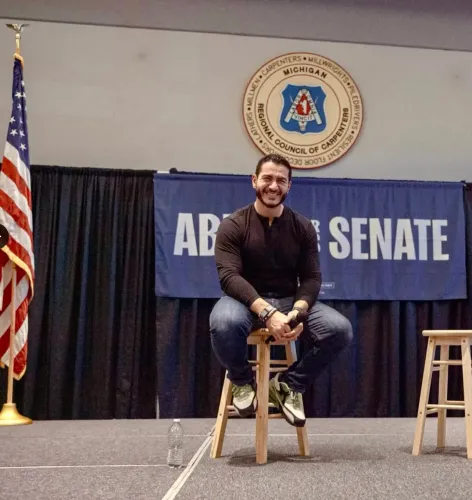
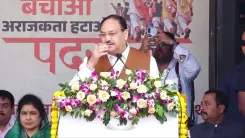
Speaking at his election headquarters in Detroit, El-Sayed declared: 'Michigan, we did it! I am so proud and honoured to stand here as your Senator-elect from the great state of Michigan.' The victory is widely seen as a landmark moment in American political history, marking the first time a Muslim candidate has secured a seat in the upper chamber of the US Congress.
El-Sayed had never previously held elected office. Notably, in 2018, he suffered a double-digit defeat in Michigan's Democratic gubernatorial primary, making his Senate triumph all the more remarkable eight years on.
Campaign Built on Health Care and Political Reform
El-Sayed's campaign centred on three core pillars: universal health care, removing outside money from elections, and criticism of Israel's conduct, according to multiple reports. On the eve of the vote, he told Michigan voters: 'You deserve to be able to see a doctor without getting a huge bill.' He pledged to dismantle what he described as the US's 'divisive multi-billion-dollar for-profit medical system' and to get 'money out of politics', while vowing to address the economic challenges facing working families.
Last-Minute Hurdle From Within the Party
El-Sayed's path to victory was not without turbulence. Congresswoman Haley Stevens, who lost the Democratic primary to El-Sayed, broke with the party at the eleventh hour and threw her support behind Republican rival Mike Rogers. Despite that defection, El-Sayed held on to secure the seat — a signal, analysts note, of the strength of his ground-level coalition in Michigan.
Who Is Abdul El-Sayed
El-Sayed was born and raised in southeast Michigan, attending public schools in the state. He was raised by his father, Mohamed, an Egyptian immigrant, and his stepmother, Jackie, whose family has lived in Gratiot County, Michigan since the 1800s. He graduated from the University of Michigan, where he played on the Wolverines men's lacrosse team.
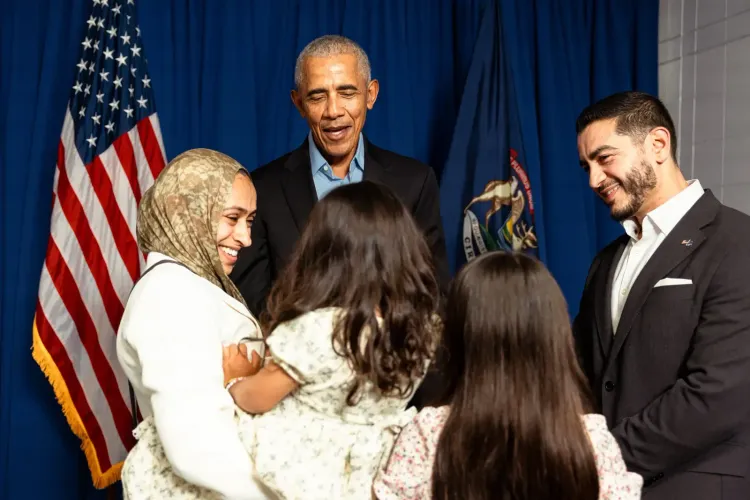
El-Sayed earned his medical degree from Columbia University on an NIH-funded fellowship and completed a second doctorate at Oxford University as a Rhodes Scholar. He resides in Ann Arbor, Michigan with his wife, Sarah, and their two daughters, Emmalee and Serene.
What Comes Next
El-Sayed's election sets up a potentially transformative Senate tenure, with his stated priorities — universal health care and campaign finance reform — placing him firmly on the progressive wing of the Democratic Party. His arrival in the Senate will be watched closely both as a policy signal and as a cultural milestone for Muslim Americans across the country.
Point of View
But it is equally a story about coalition durability — his ground game held even when a sitting Congresswoman from his own party backed his Republican opponent at the last minute. His policy platform, anchored in single-payer health care and campaign finance overhaul, puts him at odds with the centrist Democratic establishment he will now sit alongside in the Senate. The real question is whether his identity as the chamber's first Muslim member becomes his defining label, or whether his legislative agenda does — a tension that will shape every vote he casts and every committee hearing he attends.
NationPress
4 Nov 2026
Frequently Asked Questions
Who is Abdul El-Sayed and why is his Senate win historic?
Abdul El-Sayed is an Egyptian American Democrat, physician, and former public health official from Michigan who, on 4 November 2026, became the first Muslim ever elected to the United States Senate. He also became the first Democratic doctor in the Senate since 1969.
Who did Abdul El-Sayed defeat in the Michigan Senate race?
El-Sayed defeated Republican Mike Rogers to win the Michigan Senate seat. The race was complicated at the last minute when Congresswoman Haley Stevens, who had lost the Democratic primary to El-Sayed, publicly endorsed Rogers, though it was not enough to swing the result.
What were the key issues in El-Sayed's Senate campaign?
El-Sayed's campaign was built around universal health care, removing outside money from elections, and criticism of Israel's conduct, according to multiple reports. He pledged to dismantle the US for-profit medical system and address economic hardship faced by Michigan families.
What is El-Sayed's educational and professional background?
El-Sayed graduated from the University of Michigan, earned a medical degree from Columbia University on an NIH-funded fellowship, and completed a second doctorate at Oxford University as a Rhodes Scholar. He worked as a public health official before entering electoral politics.
Had Abdul El-Sayed run for office before this Senate win?
Yes. El-Sayed ran for Michigan governor in 2018 but suffered a double-digit defeat in the Democratic primary. The 2026 Senate victory is his first successful bid for elected office.