Owaisi Questions if Law Changes Can Restore Lives Lost to Paper Leaks

Synopsis
AIMIM president Asaduddin Owaisi posted a sharp rhetorical question on 28 July 2026, asking whether new laws, social media reels, or resignations can restore the lives of students who died following paper leak scandals — targeting the political class's cyclical response to India's examination crisis.
Key Takeaways
AIMIM president Asaduddin Owaisi posted a Hindi-language question on 28 July 2026 challenging the adequacy of India's response to paper leak-linked student deaths.
He named three political responses — changing laws, making reels, and demanding resignations — and questioned their worth against irreversible loss of life.
India's NEET-UG 2024 paper leak scandal, conducted by the National Testing Agency , triggered protests and reports of student suicides.
Parliament passed the Public Examinations (Prevention of Unfair Means) Act, 2024 in response, imposing strict penalties for exam malpractice.
A high-level committee was constituted in 2024 to review the NTA's functioning, but structural concerns about the examination system persist.
Parliamentary debate on deeper NTA reform or a replacement testing body is expected to continue in upcoming sessions.
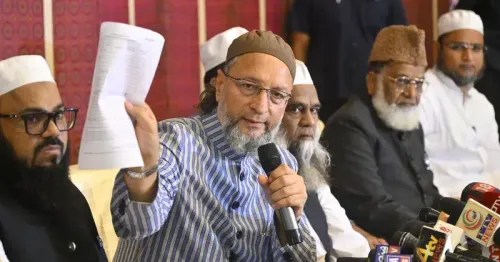
A piercing question — not a slogan — is what AIMIM president Asaduddin Owaisi put before the country on Tuesday, 28 July 2026: can any law, any resignation, any viral reel undo the deaths of students who lost their lives because of paper leaks?
Posting in Hindi, Owaisi asked: 'क्या कानून बदल देने, रील बना लेने या इस्तीफ़ा ले लेने से उन Students की ज़िंदगी वापस आ जाएगी, जिन्होंने Paper Leak की वजह से अपनी जान गंवा दी?' — 'Will changing the law, making reels, or extracting a resignation bring back the lives of those students who lost their lives because of paper leaks?' The question is rhetorical. The grief behind it is not.
A Decade of Leaks, a Graveyard of Promises
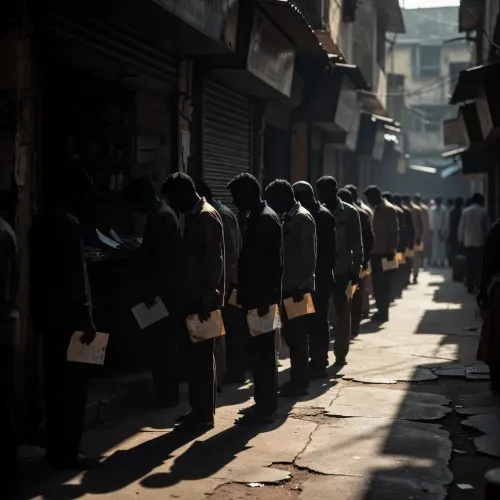
India's examination system has been haunted by paper leak scandals for well over a decade — state boards, central recruitment tests, and national entrance exams alike. The pattern is almost mechanical: a leak surfaces, protests erupt, an official resigns, a committee is formed, a law is passed. Then the cycle restarts.
The most visible flashpoint came in 2024, when the NEET-UG medical entrance examination — administered by the National Testing Agency (NTA) — was rocked by widespread paper leak allegations. Reports of student suicides in the aftermath shook the country. Parliament responded by passing the Public Examinations (Prevention of Unfair Means) Act, 2024, imposing stiff penalties for malpractices. A high-level committee was also constituted to review the NTA's functioning. Reforms on paper. Grief that did not wait for them.
The Three Targets in Owaisi's Question
The Hyderabad MP's post is surgical in what it names. Three responses — changing the law, making reels, taking resignations — represent the three registers in which Indian politics typically processes a crisis: legislative action, social media performance, and accountability theatre. Owaisi's question strips all three of their consolatory power in a single sentence.
The mention of 'reels' is pointed. When student tragedies trend online, the discourse often shifts to content — politicians filming solidarity videos, influencers amplifying hashtags — while the structural failures that caused the deaths remain unaddressed. The Hyderabad MP is naming that displacement directly.
What Genuine Reform Would Require
Observers tracking the examination reform debate have flagged that legislative penalties alone cannot fix a system whose vulnerabilities run through printing contractors, exam centre networks, and data security protocols. Parliamentary discussions on whether to overhaul or replace the NTA entirely are expected to continue in coming sessions — a debate that Owaisi's intervention now feeds into with moral urgency rather than procedural argument.
The families of students who died in the wake of exam scandals have not received a public reckoning commensurate with their loss. That absence is the real subject of this post. Laws can be amended. Reels can be deleted. The dead cannot be recalled.
Point of View
He is not merely criticising policy — he is critiquing the entire grammar of political empathy online. This feeds into a broader opposition argument that the 2024 legislative and administrative responses to the NEET scandal were damage-control exercises rather than structural fixes. The post is likely to amplify pressure on the government ahead of any parliamentary session that takes up NTA reform, positioning student welfare as a moral rather than purely administrative question.
NationPress
29 Jul 2026
Frequently Asked Questions
What did Asaduddin Owaisi say about paper leaks?
On 28 July 2026, Owaisi posted in Hindi asking whether changing laws, making social media reels, or obtaining resignations can bring back the lives of students who died because of paper leaks — challenging the political class's response to exam scandals.
Which paper leak is Owaisi referring to?
While the post does not name a specific exam, it follows the pattern of the NEET-UG 2024 paper leak controversy involving the National Testing Agency, which triggered nationwide protests and reports of student suicides.
What law was passed after the NEET paper leak?
Parliament enacted the Public Examinations (Prevention of Unfair Means) Act, 2024, which imposes strict penalties for paper leaks and other malpractices in national-level public examinations.
What is the National Testing Agency and why is it controversial?
The National Testing Agency is an autonomous body under the Ministry of Education that conducts major entrance exams including NEET-UG and JEE. It came under heavy scrutiny in 2024 following paper leak allegations, prompting a government-constituted review committee.
What reforms are expected for India's examination system?
Parliamentary discussions on overhauling or replacing the National Testing Agency are expected in upcoming sessions, with proposals ranging from decentralisation of exam conduct to stricter digital security protocols for question papers.