Owaisi questions UP govt: MSD University built, but students can't pay fees

Synopsis
AIMIM president Asaduddin Owaisi questioned the Uttar Pradesh government on October 13, 2026, pointing out that MSD University in Azamgarh has been built but students from the district cannot afford its fees, demanding to know what the state has done for them.
Key Takeaways
Asaduddin Owaisi posted on October 13, 2026 questioning the UP government over fee affordability at MSD University, Azamgarh .
The post asks what concrete measures have been taken for students who cannot pay fees despite the university being established.
Azamgarh is a district in eastern Uttar Pradesh with a large population of economically weaker sections.
AIMIM has a consistent track record of critiquing the gap between higher education infrastructure creation and actual access for marginalised students in UP .
No publicly detailed fee-reimbursement or scholarship scheme specifically for MSD University students has been confirmed.
Upcoming UP state budget discussions on higher education allocations will be key to watch for a government response.
A university has come up in Azamgarh — but the students it was meant to serve reportedly cannot afford to walk through its doors. AIMIM president Asaduddin Owaisi fired a pointed question at the Uttar Pradesh government on Tuesday, October 13, 2026, asking what concrete steps have been taken to make MSD University financially accessible to the district's students.
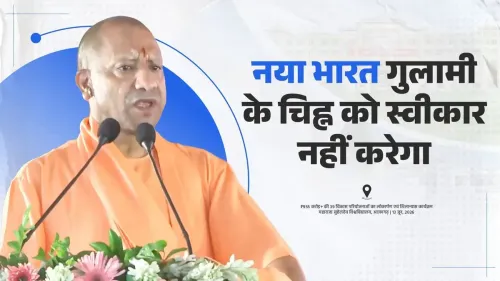
Posting in Hindi and English, Owaisi wrote: 'Azamgarh mein MSD University toh ban gayi, lekin chhatron ke paas fees bharne ke paise nahin hain. Baba, Students ke liye aapne kiya kya?' — 'MSD University has been built in Azamgarh, but students don't have money to pay the fees. What have you done for the students?'
Infrastructure without access: the Azamgarh paradox
Azamgarh, a district in eastern Uttar Pradesh with a significant population of economically weaker sections, has long been cited as underserved in higher education. The establishment of MSD University in the district was presented as a milestone — a physical symbol of expanding educational opportunity in a region that historically lacked a major state university.
But Owaisi's challenge cuts straight to a familiar contradiction: building the campus is only half the equation. If tuition fees outpace what local families can pay, the university becomes a monument to aspiration rather than a vehicle for mobility. The question is blunt, and deliberately so.
A recurring critique of UP's higher education model
AIMIM has consistently argued that state governments in Uttar Pradesh prioritise ribbon-cutting over student welfare — announcing universities, colleges, and institutes without pairing them with robust scholarship schemes or fee-reimbursement programmes for students from low-income households. Owaisi's post fits squarely into that line of attack.
The broader opposition discourse across UP has repeatedly asked whether newly established state universities have clear fee structures that are accessible to first-generation learners and students from marginalised communities. Without targeted financial support — scholarship top-ups, fee waivers, or hostel subsidies — new campuses can deepen inequality rather than close it.
What the state government has yet to answer
The Uttar Pradesh government has in recent budget cycles discussed allocations for higher education infrastructure, but specific fee-reimbursement or scholarship coverage for MSD University students in Azamgarh has not been publicly detailed. Upcoming state budget deliberations and announcements on scholarship schemes will be watched closely to see whether the gap Owaisi has flagged is addressed in policy — not just in rhetoric.
A new building is easy to photograph. Making it genuinely free to use is harder — and that is precisely the question Owaisi is putting on the record.
Point of View
Then immediately expose the delivery gap on the ground. By framing the question as 'what have you done for students,' he shifts the debate from construction statistics to human outcomes. This follows a well-worn AIMIM playbook of highlighting infrastructure-versus-access contradictions in UP, particularly in districts with large Muslim and low-income populations. The pressure is likely to intensify as UP approaches its next budget cycle, when scholarship and fee-reimbursement line items will come under scrutiny.
NationPress
13 Oct 2026
Frequently Asked Questions
What is MSD University in Azamgarh?
MSD University is a university established in Azamgarh district, eastern Uttar Pradesh. It was set up to expand higher education access in the region, though details of its full fee structure and establishment date have not been officially publicised widely.
Why is Owaisi criticising the UP government over MSD University?
Owaisi argues that while the physical campus of MSD University has been built, students in Azamgarh cannot afford to pay its fees, making the university inaccessible to the economically weaker sections it was supposed to benefit.
What scholarships or fee waivers are available for MSD University students?
No publicly confirmed fee-reimbursement or dedicated scholarship scheme specifically for MSD University students in Azamgarh has been detailed by the Uttar Pradesh government as of October 2026. Upcoming state budget discussions are expected to address higher education allocations.
What is AIMIM's position on higher education in Uttar Pradesh?
AIMIM, led by Asaduddin Owaisi, has consistently argued that the UP government prioritises infrastructure creation over genuine affordability, calling for robust scholarship schemes and fee-reimbursement programmes to make new universities accessible to marginalised students.
Who is addressed as 'Baba' in Owaisi's post?
The identity of the person addressed as 'Baba' in Owaisi's post cannot be independently verified from available information, and NationPress does not speculate beyond what the post text confirms.