Owaisi Questions Xi Jinping Invite Amid LAC Tensions

Synopsis
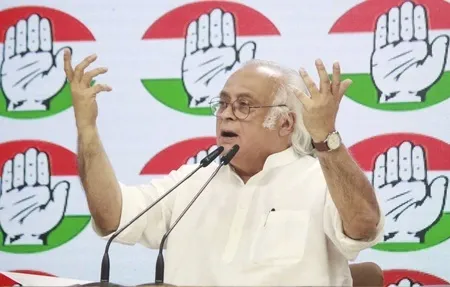
AIMIM president Asaduddin Owaisi challenged the government over a reported invitation to Chinese President Xi Jinping to visit New Delhi, asking whether it signals acceptance of Beijing's terms for normalcy despite unresolved LAC border tensions following the 2020 Galwan clash.
Key Takeaways
Asaduddin Owaisi questioned on 12 August 2026 why India is reportedly inviting Xi Jinping to New Delhi while Chinese troops remain on disputed LAC territory.
20 Indian soldiers were killed in the June 2020 Galwan clash , after which India stated bilateral ties could not normalise until the LAC situation was resolved.
India and China have held more than 20 rounds of corps commander talks since 2020, achieving only partial disengagement.
Owaisi asked whether the invitation implies New Delhi has accepted Beijing's conditions for 'normalcy' — a direct challenge to the government's stated red lines.
The Ministry of External Affairs has not publicly confirmed the reported Xi visit; MEA briefings and parliamentary sessions are the next key watch-points.
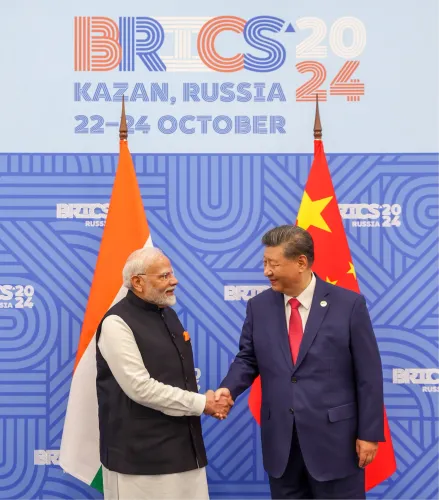
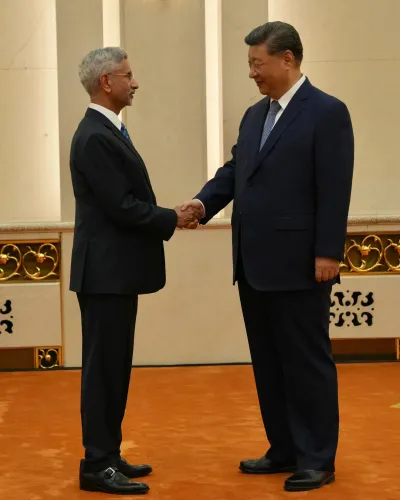
With Chinese troops still reported to be pitching tents on disputed territory and blocking Indian patrols along the Line of Actual Control, AIMIM president Asaduddin Owaisi has fired a pointed question at the government: why is New Delhi rolling out the welcome mat for Chinese President Xi Jinping next month?
The question at the heart of India's China gamble
Owaisi's post cuts straight to the tension that has defined India's China policy since the June 2020 Galwan clash — the collision between strategic engagement and stated red lines. 'While all this is happening on the border, we are inviting Chinese President Xi Jinping to New Delhi next month,' he wrote, demanding to know whether the invitation signals acceptance of Beijing's terms for 'normalcy' in bilateral ties.
It is a question with real weight. After 20 Indian soldiers were killed in the Galwan Valley confrontation, New Delhi publicly insisted that relations with Beijing could not return to normal until the LAC situation was fully resolved and Chinese forces returned to their pre-2020 positions. More than 20 rounds of corps commander-level talks followed, yielding partial disengagements at some friction points — but not a comprehensive settlement.
Dual track, contested terms
India has since pursued what analysts describe as a dual-track approach: reinforcing military infrastructure along the LAC while keeping selective high-level diplomatic channels open. That calculus has drawn sustained fire from opposition voices who argue the government's public red lines and its diplomatic actions do not always align.
Owaisi's post sharpens that critique into a binary: either the border situation has genuinely improved enough to justify a summit-level visit, or New Delhi has quietly accepted conditions it once publicly rejected. 'Is this our policy on how to deal with Chinese troops pitching tents on our territory and blocking our patrols?' he asked. 'Or have we accepted all the terms that Beijing has placed before us?'
What an answer would require
Any official response would need to address the on-ground situation at the LAC — specifically whether patrolling rights at contested points have been restored and whether Chinese forward deployments have been rolled back to pre-April 2020 lines. The Ministry of External Affairs has not publicly confirmed the reported invitation. Parliamentary sessions and upcoming MEA briefings will be the first places to watch for either a clarification or a confirmation that the diplomatic calendar has moved ahead of the border calendar.
The Hyderabad MP's challenge lands at a moment when the terms of any India-China reset remain intensely contested — and when the gap between what is said at podiums and what is happening on high-altitude ridgelines is the central question of the relationship.
Point of View
Arguing that high-level engagement without verified LAC restoration effectively rewards Chinese assertiveness. The question of whether a Xi visit would be preceded by a verifiable disengagement milestone — or proceed regardless — will test the government's stated framework and shape the domestic political narrative around India's border credibility for months ahead.
NationPress
12 Aug 2026
Frequently Asked Questions
Why is Owaisi questioning Xi Jinping's reported visit to India?
Owaisi is questioning the visit because Chinese troops are still reportedly present on disputed LAC territory and blocking Indian patrols, which he argues contradicts India's stated position that relations cannot normalise until the border situation is resolved.
What happened at Galwan Valley in 2020?
In June 2020 , Indian and Chinese troops clashed in the Galwan Valley along the Line of Actual Control , resulting in the deaths of 20 Indian soldiers . It was the deadliest India-China border confrontation in decades.
Has India confirmed that Xi Jinping is visiting New Delhi?
As of the post date, the Ministry of External Affairs has not publicly confirmed any invitation or visit by Xi Jinping to New Delhi . The claim originates from Owaisi's post and has not been officially verified.
What is the Line of Actual Control?
The Line of Actual Control (LAC) is the de facto border between India and China, stretching roughly 3,488 kilometres across Ladakh, Himachal Pradesh, Uttarakhand, Sikkim, and Arunachal Pradesh. It has been a site of repeated military standoffs, most severely since 2020.
What has India's official position been on normalising ties with China?
India has repeatedly stated that bilateral relations with China cannot return to normal until the situation along the LAC is fully resolved and Chinese forces return to their pre-April 2020 positions. This position has been reiterated across multiple rounds of diplomatic and military talks.