Owaisi Questions BJP Defections, Cites UBT and TMC Exodus

Synopsis
AIMIM president Asaduddin Owaisi has questioned the wave of Shiv Sena (UBT) and TMC legislators reportedly defecting to the BJP, challenging opposition leaders to explain systemic party weakness rather than blaming individuals, and citing the Qur'an and a Hindi proverb to underscore his point.
Key Takeaways
AIMIM president Asaduddin Owaisi posted on June 18, 2026 questioning large-scale defections to the BJP from opposition parties.
He called on two 'prominent MPs' from Shiv Sena (UBT) to publicly name those who allegedly threatened members to defect.
He also referenced 19 TMC MPs said to have defected, asking why that exodus had gone unexplained.
Owaisi cited Surah Al-Humazah (104:1) of the Qur'an — 'Woe to every backbiter, slanderer' — cautioning against blame-shifting.
He used the Hindi proverb 'Shikari naya hai, jal puraana hai' to argue that defection tactics are an old pattern, not a new development.
India's Tenth Schedule (1985) anti-defection law has repeatedly been tested by large-scale floor-crossings since 2014 .
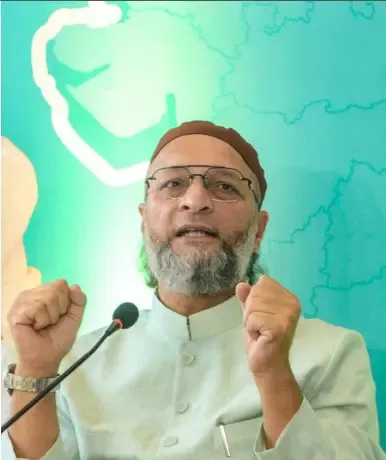
AIMIM president Asaduddin Owaisi on Thursday, June 18, 2026, sharply questioned the wave of legislators defecting to the Bharatiya Janata Party (BJP), calling out both Shiv Sena (UBT) and Trinamool Congress (TMC) over their inability to retain members — and challenging opposition leaders to explain why their MPs are leaving rather than pointing fingers at individuals.
Context
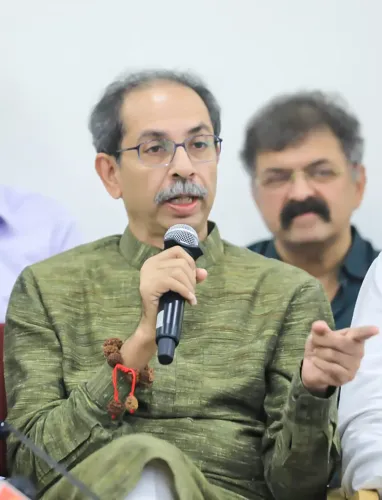
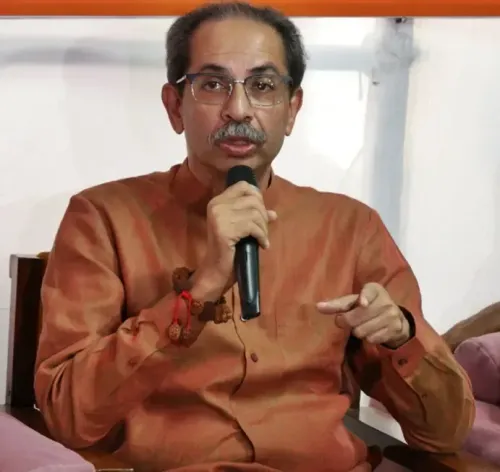
Owaisi's post, shared on X (formerly Twitter), referenced reports that some Shiv Sena (UBT) MPs are also considering joining the BJP, adding to what he described as a broader pattern of defections. He specifically called on two 'prominent MPs' from the UBT faction to name whoever allegedly 'threatened' their colleagues into switching sides. He also pointed to 19 TMC MPs said to have defected, questioning why that exodus had not been similarly explained.
In a pointed aside, Owaisi quoted the Qur'an (Surah Al-Humazah, 104:1) — 'Waylul-likulli humazatil-lumazah' ('Woe to every backbiter, slanderer') — appearing to caution those who deflect blame rather than accept accountability. He closed with the Hindi phrase 'Shikari naya hai, jal puraana hai' ('The hunter is new, but the net is old'), implying that the tactics used to engineer defections are a long-standing pattern, not a new phenomenon.
Policy Backdrop
India's Tenth Schedule, inserted into the Constitution in 1985, was designed specifically to deter legislators from switching parties after election. Despite this anti-defection law, large-scale floor-crossings have recurred across states, often exploiting provisions that allow mergers of at least two-thirds of a legislative party.
The most prominent recent instance was the 2022 Maharashtra crisis, when a majority faction of the original Shiv Sena, led by Eknath Shinde, broke away and formed a government with the BJP. The Uddhav Thackeray-led rump — now recognised as Shiv Sena (UBT) — has since operated as an opposition entity, yet Owaisi's post suggests it too is facing internal churn. Since 2014, similar patterns have played out in Karnataka, Madhya Pradesh, Goa, and West Bengal, consistently weakening non-NDA parties' floor strength.
Stakeholders and Impact
For Shiv Sena (UBT), any further defections would deepen the existential crisis the party has faced since the 2022 split. The party has already lost its original name and symbol to the Shinde faction following Election Commission rulings. Fresh defections, if confirmed, would further erode its parliamentary presence and bargaining power within the INDIA bloc.
For the TMC, the reported departure of 19 MPs — if verified — would represent a significant blow to the party's national footprint outside West Bengal. Owaisi's critique implicitly targets both parties' leaderships, arguing that systemic weakness, not external pressure alone, explains why members are leaving. Opposition MPs and regional parties across the country are key stakeholders in any disqualification petitions that may follow under the anti-defection law.
What's Next
Owaisi's intervention signals that the defection debate is likely to intensify in the coming weeks, particularly if Shiv Sena (UBT) or TMC leaders respond publicly to his challenge. Disqualification petitions filed under the Tenth Schedule in Parliament or state assemblies would be the immediate legal avenue, and any such petitions could trigger by-elections in affected constituencies.
The broader question Owaisi raises — why large-scale defections to the BJP remain structurally easy — is one that opposition parties will need to answer both in court and at the ballot box. As he put it, 'You cannot blame one prominent MP for all your failures.'
Point of View
He signals to a cross-ideological audience that accountability must precede blame. The challenge to 'two prominent MPs' to name their alleged threateners is a rhetorical trap: if they name someone, it becomes a legal and political flashpoint; if they stay silent, Owaisi's critique stands. This fits a broader arc in which AIMIM positions itself as a principled outsider holding the mainstream opposition to standards it fails to meet.
NationPress
17 Sept 2026
Frequently Asked Questions
Why is Owaisi criticising Shiv Sena UBT and TMC over BJP defections?
Owaisi argues that opposition parties cannot blame external pressure or a single individual for defections when systemic internal weakness is the real cause. He challenged UBT leaders to publicly name whoever threatened their MPs, and questioned why 19 TMC MPs defected without similar accountability.
What is the anti-defection law in India?
The anti-defection law is contained in the Tenth Schedule of the Indian Constitution, added in 1985 . It disqualifies legislators who voluntarily give up party membership or vote against party direction, though a merger of at least two-thirds of a legislative party is exempt.
What happened to Shiv Sena in 2022?
In 2022 , a majority faction of Shiv Sena led by Eknath Shinde broke away and formed a government with the BJP in Maharashtra. The remaining faction under Uddhav Thackeray was later designated Shiv Sena (UBT) and lost both the party name and symbol.
What does 'Shikari naya hai, jal puraana hai' mean?
The Hindi phrase translates to 'The hunter is new, but the net is old.' Owaisi used it to suggest that the tactics used to engineer political defections are not novel — they are a long-standing method being deployed again.
What Qur'anic verse did Owaisi quote in his post?
Owaisi quoted Surah Al-Humazah, verse 104:1 — 'Woe to every backbiter, slanderer' — appearing to caution politicians who deflect blame onto others rather than accepting responsibility for their party's failures.