Owaisi Speaks on SIR, Passport-Citizenship Row, Iran Invite to Modi
Synopsis
AIMIM president Asaduddin Owaisi spoke exclusively on 26 June 2026 about three converging issues: the Special Intensive Revision of electoral rolls, the passport-citizenship documentation row affecting Muslim communities, and Iran's reported invitation to PM Modi to attend Ayatollah Khamenei's funeral.
Key Takeaways
Owaisi addressed the Special Intensive Revision (SIR) of electoral rolls, a process critics link to disproportionate documentation burdens on Muslim and marginalised voters.
The passport-citizenship row intersects with unresolved appeals stemming from the Assam NRC , whose final list was published in August 2019 .
The Citizenship Amendment Act (CAA) , passed in December 2019 , remains the legislative flashpoint underpinning both the SIR and passport disputes.
Iran reportedly invited PM Narendra Modi to attend the funeral of Supreme Leader Ayatollah Ali Khamenei , a diplomatically sensitive decision for New Delhi .
India-Iran ties are anchored in energy cooperation and the Chabahar port project, making leadership-transition diplomacy strategically significant.
Owaisi's interview signals AIMIM will keep citizenship documentation and India-Iran diplomacy central to its political agenda ahead of upcoming elections.
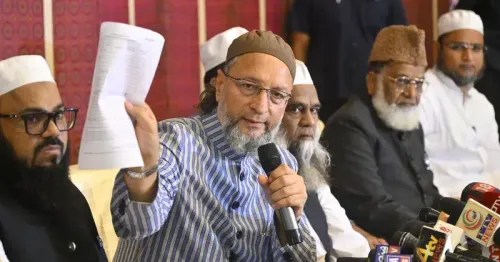
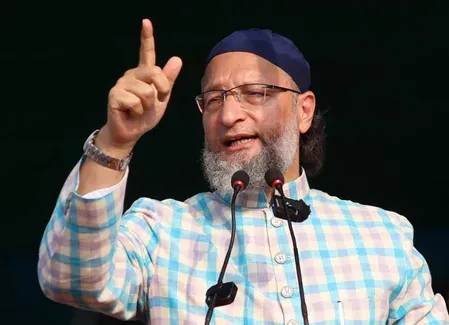
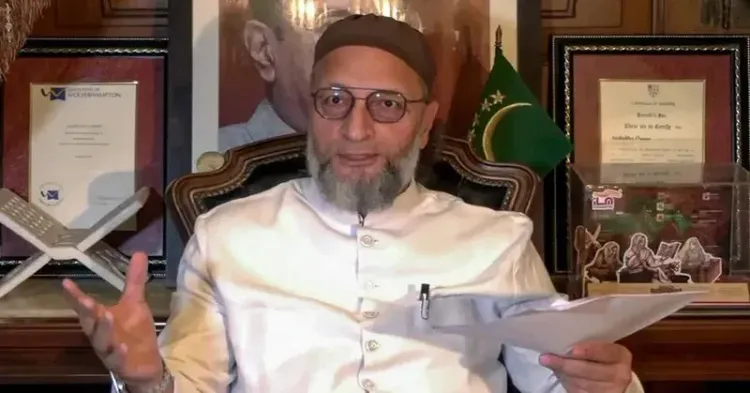
AIMIM president Asaduddin Owaisi on Friday, 26 June 2026 shared his views in an exclusive interview covering three flashpoint issues: the ongoing row over the Special Intensive Revision (SIR) of electoral rolls, the passport-citizenship documentation controversy, and Iran's reported invitation to Prime Minister Narendra Modi to attend the funeral of Supreme Leader Ayatollah Ali Khamenei.
Context
Owaisi, the Lok Sabha MP from Hyderabad and a consistent voice on Muslim citizenship rights, addressed all three subjects in a single sit-down interview, signalling their interconnected political weight ahead of upcoming electoral cycles. The interview comes at a moment when citizenship documentation and voter-roll processes have become contested terrain in Indian politics.
The Special Intensive Revision (SIR) of electoral rolls has drawn scrutiny from opposition leaders who allege it disproportionately burdens Muslim and marginalised communities with documentation requirements. Owaisi has previously argued that such exercises echo the logic of the National Register of Citizens (NRC), which left lakhs of residents — disproportionately Muslims — facing exclusion after the Assam NRC final list was published in August 2019.
Policy Backdrop
The passport-citizenship row intersects with a broader legislative and administrative framework that has been contested since the Citizenship Amendment Act (CAA) was passed in December 2019. The CAA fast-tracks citizenship for non-Muslim migrants from Afghanistan, Bangladesh, and Pakistan, a criterion that critics, including Owaisi, have consistently termed discriminatory and constitutionally suspect.
Questions around passport issuance for individuals whose citizenship status is under documentation dispute have surfaced in multiple states, with affected residents — particularly in border regions — caught between administrative requirements and unresolved NRC appeals. Owaisi has been among the most vocal parliamentary voices connecting these threads.
On the diplomatic front, India and Iran have maintained pragmatic bilateral ties anchored in energy cooperation and the strategic Chabahar port project, even as geopolitical pressures from sanctions and differing stances on regional conflicts have complicated the relationship. The reported Iranian invitation to PM Modi for Khamenei's funeral would, if confirmed, represent a significant diplomatic moment requiring careful calibration by New Delhi.
Stakeholders and Impact
The SIR and passport-citizenship issues directly affect Muslim voters in border states, as well as communities that have historically struggled with documentation access. Civil society groups monitoring electoral roll revisions have flagged patterns of deletion and re-enrolment demands that they say fall unevenly on minorities and the poor.
On the Iran question, the stakes are diplomatic: how India responds to an invitation tied to a major leadership transition in Tehran will be read closely by both Gulf partners and Western allies. Opposition leaders like Owaisi have previously questioned the government's posture on Iran, particularly in the context of the Israel-Palestine conflict and India's abstentions at international forums.
What's Next
Parliamentary debate on citizenship-related legislation and state-level electoral roll revision exercises are expected to remain live political issues through the next election cycle. Any formal government response to the Iranian invitation — or a confirmed decision by PM Modi on attendance — will set a precedent for India's diplomatic protocol during foreign leadership transitions.
Owaisi's interview signals that AIMIM intends to keep citizenship documentation and India-Iran diplomacy at the centre of its political agenda, using every parliamentary and public platform available to press the government for clarity.
Point of View
Passport-citizenship disputes, and Iran diplomacy — in a single interview reflects a deliberate political framing: that documentation-based exclusion and foreign-policy posture are both sites where Muslim interests are at stake. The SIR controversy is the latest iteration of a post-CAA-NRC pattern in which administrative processes become proxies for a larger citizenship debate, and Owaisi has consistently been the most prominent parliamentary voice connecting these dots. On Iran, his comments position AIMIM as a monitor of New Delhi's diplomatic choices in Muslim-majority geographies, a role that carries electoral resonance in constituencies with significant Muslim voter bases. Together, these interventions suggest AIMIM is building a coherent pre-election narrative around citizenship security and foreign-policy accountability.
NationPress
26 Jun 2026
Frequently Asked Questions
What is the Special Intensive Revision (SIR) of electoral rolls that Owaisi is commenting on?
The Special Intensive Revision (SIR) is an Election Commission exercise to update voter rolls, which critics including Owaisi argue places disproportionate documentation burdens on Muslim and marginalised communities, echoing concerns raised during the Assam NRC process.
What is the passport-citizenship row in India?
The passport-citizenship row refers to disputes where individuals — particularly in border states — face difficulty obtaining or renewing passports because their citizenship status is under question due to unresolved NRC appeals or documentation gaps linked to the CAA-NRC framework.
Did Iran invite PM Modi to Ayatollah Khamenei's funeral?
Iran reportedly extended an invitation to Prime Minister Narendra Modi to attend the funeral of Supreme Leader Ayatollah Ali Khamenei; the Indian government's formal response to this invitation had not been confirmed at the time of Owaisi's interview.
What is Owaisi's stance on the Citizenship Amendment Act (CAA)?
Owaisi has consistently opposed the CAA since its passage in December 2019, arguing that its exclusion of Muslims from fast-track citizenship criteria is discriminatory and violates constitutional guarantees of equality.
Why are India-Iran relations significant in the context of Khamenei's funeral?
India and Iran share strategic ties through energy cooperation and the Chabahar port project, making any high-level attendance at a major Iranian state event diplomatically significant and closely watched by both regional partners and Western allies.