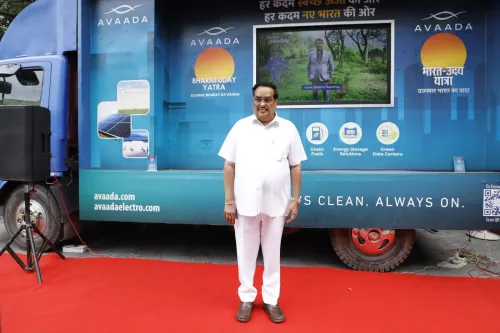
Jal Shakti Minister Paatil joins Avaada Bharat Uday Yatra
Synopsis
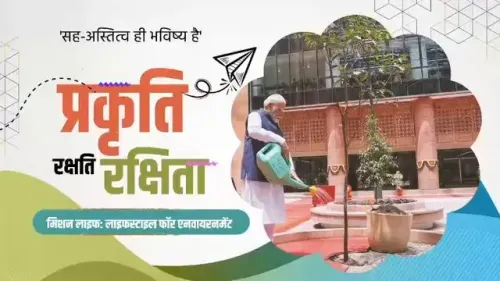
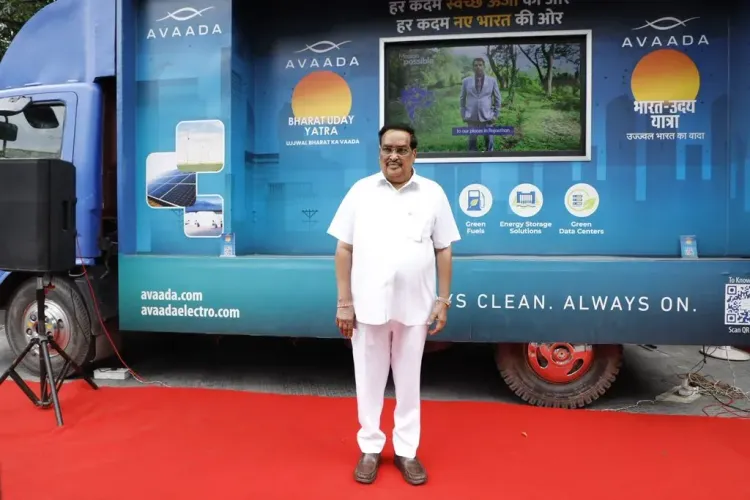
Union Jal Shakti Minister C. R. Paatil joined the Avaada Bharat Uday Yatra on 16 June 2026, underscoring PM Modi's clean energy vision and India's push toward renewable infrastructure, green technology, and self-reliance under the Viksit Bharat 2047 framework.
Key Takeaways
Union Jal Shakti Minister C.
Paatil participated in the Avaada Bharat Uday Yatra special programme on 16 June 2026 .
Paatil described clean energy as 'the strong foundation for a prosperous, secure and self-reliant India for future generations.' The event is linked to Avaada Group , an Indian company active in solar, wind, and green hydrogen projects.
India targets 500 GW of non-fossil fuel capacity by 2030 under its Panchamrit climate commitments from COP26.
The minister connected his participation to the Viksit Bharat 2047 vision of a developed, self-reliant India by the centenary of independence.
Solar-powered agriculture under the PM-KUSUM scheme illustrates the cross-sectoral link between Jal Shakti's water mandate and renewable energy expansion.
Union Jal Shakti Minister C. R. Paatil participated in a special programme of the Avaada Bharat Uday Yatra on Tuesday, 16 June 2026, reaffirming the central government's commitment to clean energy, green development, and self-reliance as pillars of the Viksit Bharat 2047 vision.
Context
Paatil shared his participation on social media, stating — 'स्वच्छ ऊर्जा केवल पर्यावरण संरक्षण का माध्यम नहीं, बल्कि आने वाली पीढ़ियों के लिए समृद्ध, सुरक्षित और आत्मनिर्भर भारत की मजबूत आधारशिला है' — ('Clean energy is not merely a means of environmental protection, but a strong foundation for a prosperous, secure and self-reliant India for future generations.')
The minister credited Prime Minister Narendra Modi's 'visionary leadership' for steering the country toward renewable energy, green technology, and robust infrastructure. The Avaada Bharat Uday Yatra is an initiative associated with Avaada Group, one of India's prominent renewable energy companies with interests spanning solar, wind, and green hydrogen projects.
Policy Backdrop
India's clean energy ambitions are anchored in the Panchamrit commitments announced at COP26 in 2021, which include achieving 500 GW of non-fossil fuel electricity capacity by 2030 and reaching net-zero emissions by 2070. These targets have been reinforced through domestic manufacturing incentives under Production Linked Incentive (PLI) schemes for solar modules, designed to reduce import dependence and build an indigenous supply chain.
Paatil's participation is notable given his portfolio: the Jal Shakti Ministry oversees water resources and irrigation, sectors increasingly linked to solar-powered agriculture through schemes such as PM-KUSUM (2019), which subsidises solar pumps and decentralised renewable plants for farmers. The intersection of water security and clean energy makes such events relevant to his ministry's mandate.
Stakeholders and Impact
Private-sector renewable energy developers like Avaada Group stand at the centre of India's green transition, and events such as the Bharat Uday Yatra reflect a growing convergence between corporate sustainability programmes and the central government's messaging on energy security and climate goals. Farmers and rural communities are among the key beneficiaries, as solar-powered irrigation reduces dependence on diesel pumps and grid power.
For future generations — explicitly invoked by the minister — the stakes are higher still: the Viksit Bharat 2047 framework, which envisions a developed India by the centenary of independence, places clean energy infrastructure at the core of long-term economic resilience and environmental sustainability.
What's Next
Attention will now turn to India's progress against its 500 GW non-fossil fuel target ahead of the 2030 deadline, as well as any new state-level renewable energy tenders and allocations under the National Green Hydrogen Mission. Cross-ministerial coordination — between Jal Shakti, Power, and New and Renewable Energy — will be critical to ensuring that solar-powered water infrastructure scales alongside broader grid targets. The minister's appearance at a corporate green initiative signals continued high-level political endorsement for private investment in India's energy transition.
Point of View
Linking water security to clean energy is a deliberate framing — solar-powered irrigation is one of the most tangible on-the-ground deliverables connecting both portfolios. The invocation of Viksit Bharat 2047 situates routine event participation within a grand civilisational narrative, a rhetorical pattern that has become central to BJP's governance communication. As the 2030 renewable capacity deadline approaches, such high-profile endorsements are also a signal to investors that political commitment to the energy transition remains firm.
NationPress
19 Sept 2026
Frequently Asked Questions
What is the Avaada Bharat Uday Yatra?
The Avaada Bharat Uday Yatra is an initiative associated with Avaada Group, an Indian renewable energy company, aimed at promoting clean energy awareness and green development aligned with national goals.
Who is C. R. Paatil and why did he attend this event?
C. R. Paatil is India's Union Minister of Jal Shakti and a senior BJP leader. He attended the Avaada Bharat Uday Yatra on 16 June 2026 to express support for India's clean energy and Viksit Bharat 2047 vision.
What is Viksit Bharat 2047?
Viksit Bharat 2047 is the Indian government's vision to transform India into a fully developed nation by 2047, the centenary of independence, with clean energy and self-reliance as core pillars.
What is India's 2030 renewable energy target?
India has committed to achieving 500 GW of non-fossil fuel electricity capacity by 2030 as part of its Panchamrit climate pledges made at COP26 in 2021.
How does Jal Shakti Ministry relate to clean energy?
The Jal Shakti Ministry oversees water resources and irrigation, which are increasingly powered by solar energy through schemes like PM-KUSUM, making clean energy directly relevant to the ministry's work.