Pakistan terror handlers target cash-strapped recruits in shift from white-collar cells
Synopsis
Pakistan-based terror handlers are quietly reviving an old recruitment playbook — targeting daily wage workers and the financially desperate with payments as low as ₹5,000 to ₹15,000 per task. Running parallel to the more-publicised white-collar cell strategy, this dual-track approach is widening India's terror threat surface in ways that standard profiling frameworks are only beginning to catch up with.
Key Takeaways
Pakistan-based terror networks have shifted recruitment focus over the past six to eight months toward daily wage workers and those in financial distress.
Recruits are offered ₹5,000 to ₹15,000 per task — motivated by money, not ideology — to run surveillance rackets, drug smuggling, and targeted hits.
Maqsood Ali , a 21-year-old daily wager arrested in Coimbatore, Tamil Nadu , had recruited individuals from Uttar Pradesh , Tamil Nadu , and Karnataka .
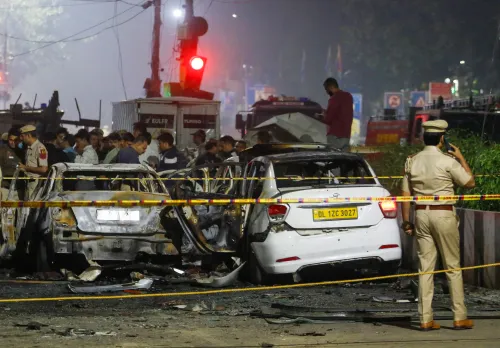
The Faridabad terror module , linked to the Red Fort car bomb blast in November last year , had earlier highlighted the threat from white-collar, self-radicalised professionals.
Low-profile recruits are being used to install covert CCTV cameras at railway stations and bus stands, feeding live surveillance to Pakistan -based handlers.
Officials say networks inspired by Jaish-e-Mohammed and Lashkar-e-Taiba are now running a dual recruitment strategy targeting both educated professionals and economically vulnerable individuals.
Security agencies in India have flagged a significant shift in the recruitment strategy of Pakistan-based terror networks, with handlers increasingly targeting daily wage workers and financially distressed individuals — a sharp pivot from the earlier pattern of radicalising educated, white-collar professionals. The trend has emerged over the past six to eight months, according to officials tracking counter-terror operations across the country.
The Faridabad Module: A Turning Point
The unravelling of the Faridabad terror module, which allegedly carried out a car bomb blast near Delhi's Red Fort in November last year, first brought into focus how educated professionals had been drawn into operating dangerous cells on Indian soil. That episode also indicated a growing appetite among certain radicalised youth to form and run terror networks with limited direction from across the border.
Officials noted that such modules had been emerging independently, drawing ideological inspiration from outfits such as Jaish-e-Mohammed (JeM) and Lashkar-e-Taiba (LeT) while maintaining minimal operational contact with Pakistan-based handlers during their formation and early activities. 'Such persons are more lethal, require very little guidance and are capable of planning and executing high-value attacks while also raising funds on their own,' one official said.
The New Recruitment Playbook
Agencies say the recruitment profile has now shifted markedly. Greater emphasis is reportedly being placed on daily wage workers, less-educated individuals, and those in acute financial distress. Unlike ideologically motivated recruits, these individuals are described as transactional — willing to carry out tasks for sums as low as ₹5,000 to ₹15,000.
According to officials, these recruits are being used to run surveillance rackets, facilitate drug smuggling, and carry out short-duration targeted tasks. They are reportedly being coordinated by operatives such as Shahzad Bhatti, who allegedly direct them remotely.
One illustrative case is that of Maqsood Ali, a 21-year-old daily wager arrested in Coimbatore, Tamil Nadu. He was allegedly recruited to run a surveillance racket and to expand the network further. According to officials, he had managed to bring in recruits from Uttar Pradesh, Tamil Nadu, and Karnataka before his arrest.
Why Low-Profile Recruits Are Dangerous
Counter-terror analysts caution that while these recruits may lack the sophistication of white-collar operatives, their very ordinariness makes them difficult to detect. Recruits — particularly daily wage workers — do not attract scrutiny precisely because they blend into everyday urban environments.
A key tactic involves deploying such individuals to install covert CCTV cameras at high-footfall locations such as railway stations and bus stands, providing a live surveillance feed to handlers based in Pakistan. 'Even the people who see them do not suspect them as they look like genuine individuals who have been called in to either repair or install a camera,' an official said.
Officials warn that despite lower operational sophistication, these recruits can inflict considerable damage on the country's security apparatus — both through direct acts and by building surveillance infrastructure for more complex future operations.
A Return to an Old Strategy
Security officials note that this is not an entirely new approach — it mirrors tactics used by Pakistan-based networks several years ago, when financially vulnerable youth were exploited to collect bomb-making material and plant explosive devices in various parts of the country. Those operations succeeded partly because the recruits aroused no suspicion, blending in as ordinary labourers.
The revival of this model, alongside the continuing emergence of self-radicalised white-collar modules, suggests that Pakistan-based networks are now running a two-track recruitment strategy — one targeting ideology-driven professionals and another targeting economically vulnerable individuals. Analysts say this dual approach widens the threat surface considerably and poses fresh challenges for Indian intelligence agencies monitoring both ends of the spectrum.
With state police units across the country reporting recent arrests linked to financially motivated recruits, security agencies are recalibrating their profiling frameworks to account for this expanding and more diverse threat landscape.
Point of View
Transactional daily wagers on the other — is a studied escalation, not improvisation. The danger of the low-profile recruit lies not in operational sophistication but in invisibility: a man installing a camera looks like a technician, not a threat. Indian counter-terror profiling has historically over-indexed on ideological markers, which leaves economic vulnerability as a persistent blind spot. The revival of the old financial-exploitation playbook, now combined with digital surveillance tasks feeding live data to Pakistan, suggests these networks are building layered infrastructure — not just mounting isolated attacks.
NationPress
9 Oct 2026
Frequently Asked Questions
What is the new terror recruitment pattern flagged by Indian security agencies?
Indian security agencies have observed a shift over the past six to eight months toward recruiting daily wage workers and financially distressed individuals, who are paid between ₹5,000 and ₹15,000 per task. Unlike earlier ideologically driven recruits, these individuals are motivated purely by money and are used for surveillance, drug smuggling, and short-duration hits.
What was the Faridabad terror module and why does it matter?
The Faridabad terror module was a cell allegedly responsible for a car bomb blast near Delhi's Red Fort in November last year. Its exposure revealed that white-collar professionals — educated and financially self-sufficient — were running dangerous terror cells in India with minimal guidance from Pakistan-based handlers.
Who is Maqsood Ali and what was his alleged role?
Maqsood Ali is a 21-year-old daily wage worker arrested in Coimbatore, Tamil Nadu. He was allegedly recruited to operate a surveillance racket and to expand the terror network, and had reportedly brought in recruits from Uttar Pradesh, Tamil Nadu, and Karnataka before his arrest.
How do low-profile recruits carry out surveillance for Pakistan-based handlers?
These recruits are deployed to install covert CCTV cameras at high-footfall locations such as railway stations and bus stands, providing a live surveillance feed to handlers in Pakistan. Because they appear to be ordinary technicians doing routine installation work, they rarely attract suspicion.
Are groups like Jaish-e-Mohammed and Lashkar-e-Taiba directly controlling these recruits?
Not directly, according to officials. The modules draw ideological inspiration from outfits such as Jaish-e-Mohammed and Lashkar-e-Taiba but maintain limited operational contact with Pakistan-based handlers, particularly during their formation. Pakistan-based networks appear to be enabling rather than commanding these cells.