Pakistan ISI 'love trap' behind Rajasthan train blast: Punjab duo arrested

Synopsis
A Pakistani handler allegedly used a 'love trap' — cultivating a romance with a divorced Punjab woman — to orchestrate three IED planting attempts on a Rajasthan railway line, culminating in the 3 November 2025 blast at Sri Ganganagar. Only a timing error stopped a train from being hit. The arrested duo received ₹2.23 lakh and weapons stamped by the Pakistan Ordnance Factory, pointing to a structured ISI-linked recruitment operation targeting vulnerable young people in border districts.
Key Takeaways
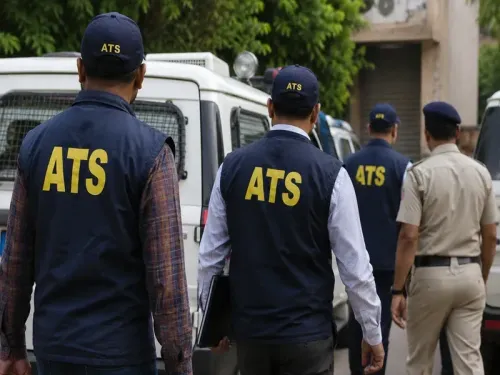
Rajasthan ATS arrested Mahakdeep Kaur (21) and Devendra Singh (23) , both from Gurdaspur, Punjab , for the 3 November 2025 railway track blast in Sri Ganganagar .
The conspiracy was allegedly directed by Pakistan's ISI ; a Pakistani handler identified as 'Shah' cultivated a romantic relationship with Mahakdeep to recruit her.
The duo made three separate attempts to plant IEDs before the successful blast on 3 November , which created a crater and disrupted train movement for nearly 10 hours .
Explosives for the final attempt were delivered via a drone drop near the Punjab border ; the couple was paid ₹2.23 lakh in total.
Investigators recovered two foreign-made pistols and 40 cartridges bearing the Pakistan Ordnance Factory stamp, along with ₹30,000 cash.
The ATS analysed over five lakh mobile data records and 200+ CCTV clips to identify and arrest the suspects; investigation into the wider network is ongoing.
A romantic relationship allegedly engineered by a Pakistan-based handler became the entry point for a cross-border terror conspiracy targeting a passenger train in Rajasthan. The Rajasthan Anti-Terrorist Squad (ATS) has arrested two suspects — Mahakdeep Kaur (21) and Devendra Singh (23), both residents of Gurdaspur, Punjab — in connection with the 3 November 2025 explosion on the Anupgarh-Suratgarh railway line in Sri Ganganagar district. Investigators allege the attack was orchestrated at the direction of Pakistan's Inter-Services Intelligence (ISI), and that only a timing error — the bomb detonating nearly 30 minutes after the train had passed — averted what could have been a mass-casualty disaster.
How the Alleged Conspiracy Unfolded
According to the ATS investigation, Mahakdeep's alleged entry into the network traces back to her former husband, Karan, who was jailed in a heroin smuggling case in February 2025. During a prison visit, Karan allegedly gave her the contact number of a Pakistan-based smuggler known as 'Lovely', framing it as a way to arrange money. Mahakdeep subsequently established contact with Lovely, who introduced her to an associate identified only as 'Shah'.
Shah allegedly cultivated a romantic relationship with Mahakdeep and gradually persuaded her to carry out an explosion on a railway track in return for financial payments. He then reportedly introduced her and her boyfriend Devendra to another Pakistani-based associate — described as Shah's uncle — via a video call. This unnamed handler assigned them the task of planting an improvised explosive device (IED) and provided step-by-step instructions on preparing and setting a time bomb through subsequent video calls.
Three Attempts Before the Blast
The operation was not executed in one go. Investigators say the pair first travelled to Vijaynagar in Sri Ganganagar district on 6 October to collect explosives from a designated drop point, but returned empty-handed after failing to locate the consignment. They returned on 12–13 October and planted two time bombs on the railway track between Ramsinghpur and Vijaynagar; these failed to detonate due to broken wires and technical faults. After informing their Pakistani handler of the failure, they were allegedly reprimanded.
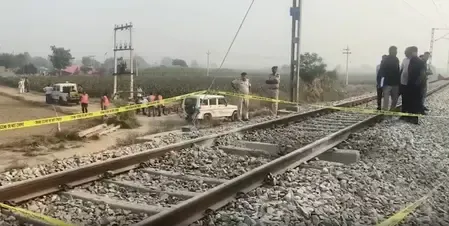
The third attempt was made on 3 November. The accused reportedly arrived in Sri Ganganagar on 30 October, checked into a hotel, and subsequently collected explosives delivered via a drone drop near the Punjab border — a method increasingly flagged by Indian security agencies in border districts. After failing to execute the plan on 1 and 2 November, they planted a time bomb near 50 GB village on the evening of 3 November and fled toward Punjab. At approximately 9.45 pm, a powerful explosion struck the railway track, creating a crater between the rails, damaging two railway sleepers, and disrupting train movement for nearly 10 hours. The train had already cleared the blast site by then.
Financial Trail and Recruitment Method
The ATS says the Pakistani handler paid the couple a total of ₹2.23 lakh — ₹1 lakh in cash and the remainder through online transfers. Investigators recovered ₹30,000 in cash, two foreign-made pistols, and 40 cartridges bearing the stamp of the Pakistan Ordnance Factory during the arrests.
Mahakdeep allegedly drew Devendra into the plot by promising him money and marriage. The two had been acquainted since their Class 12 days and were reportedly in a relationship. ATS Additional Director General Dinesh M.N. stated that his team analysed more than five lakh mobile data records and over 200 CCTV clips before tracing and arresting the duo in the Kalanaur police station area in Punjab, with assistance from the Amritsar CI Cell and Gurdaspur SP.
A Wider Recruitment Pattern Linked to Shahzad Bhatti
According to ADG Dinesh M.N., an individual identified as Shahzad Bhatti emerged as an active threat following Operation Sindoor and has allegedly been targeting Indian youth through monetary inducements and online instructions for carrying out criminal activities. The ATS suspects the network is part of a broader recruitment strategy deployed by Pakistan-based operatives.
Investigators noted that handlers were specifically targeting divorced or single women, using romantic overtures and financial promises to draw them in. A separate case involving a divorced woman identified as Babita, who was allegedly approached through a similar method and subsequently arrested by the ATS, was cited as a parallel instance of the same pattern. Bikaner Inspector General Omprakash and Sri Ganganagar Superintendent of Police Harishankar pointed to the linguistic and cultural similarities shared by border districts such as Gurdaspur, Tarn Taran, and Fazilka with Sri Ganganagar as a factor exploited by handlers to establish contact with local residents.
Families Express Shock; Investigation Continues
Both suspects were produced before the Additional Civil Judge and Judicial Magistrate No. 2 and remanded to eight days of police custody. The families of both accused have denied prior knowledge of their activities. Mahakdeep's mother, Sarabjit Kaur, said her daughter had studied up to Class 12 and had married of her own choice before the relationship ended in divorce. Her father, Tirlok Singh, said the family learnt of her alleged involvement only when police arrived at their home.
Devendra's mother, Baljit Kaur, and aunt, Sukhwinder Kaur, said he had also studied up to Class 12. His aunt said he left home two days before the 3 November blast, claiming he was going to Delhi, and returned three days after the explosion. A cab driver who allegedly transported the accused during their movements in the region is also being questioned. The ATS is continuing its investigation to map the complete network, identify the handlers, and trace the movement of explosives and money.
Point of View
Romantic grooming, drone-delivered explosives, and online bomb-making tutorials represents a scalable, low-cost recruitment model that bypasses traditional militant pipelines. What is particularly alarming is the targeting of economically vulnerable, socially isolated individuals in border districts where linguistic and cultural proximity to Pakistan facilitates contact. India's counter-terror apparatus has historically focused on ideology-driven recruitment; this case signals a pivot toward transactional, emotionally manipulative methods that are harder to detect before an attempt is made. The parallel case of 'Babita' mentioned by the ATS suggests this is a pattern, not an anomaly — and that the number of active recruitments may exceed what has been publicly disclosed.
NationPress
16 Nov 2026
Frequently Asked Questions
What was the 3 November 2025 Rajasthan train track blast?
On 3 November 2025, a powerful IED explosion struck the Anupgarh-Suratgarh railway line in Sri Ganganagar district, Rajasthan, creating a crater between the tracks and damaging two railway sleepers. Train movement in the area was disrupted for nearly 10 hours; a major disaster was averted only because the blast occurred about 30 minutes after the train had passed the spot.
Who has been arrested in connection with the blast?
The Rajasthan ATS arrested Mahakdeep Kaur (21) and Devendra Singh (23), both residents of Gurdaspur in Punjab. They were produced before a magistrate and remanded to eight days of police custody.
How were the suspects allegedly recruited by Pakistan-based handlers?
According to investigators, Mahakdeep was introduced to a Pakistani contact through her jailed former husband and was subsequently groomed romantically by an associate identified as 'Shah', who allegedly persuaded her to plant explosives in exchange for money. She in turn recruited her boyfriend Devendra by promising him money and marriage. The couple was paid a total of ₹2.23 lakh and trained via video calls on preparing and planting IEDs.
What is the alleged ISI connection and who is Shahzad Bhatti?
ATS Additional Director General Dinesh M.N. stated that the conspiracy was allegedly orchestrated at the direction of Pakistan's ISI. An individual identified as Shahzad Bhatti is alleged to have become an active threat following Operation Sindoor, reportedly targeting Indian youth — particularly divorced or financially vulnerable women — through monetary and romantic inducements for carrying out attacks.
How did investigators trace and catch the suspects?
The ATS analysed more than five lakh mobile data records and over 200 CCTV clips to identify the suspects. With assistance from the Amritsar CI Cell and Gurdaspur SP, the team traced and arrested the duo in the Kalanaur police station area of Punjab. Recovered evidence included two foreign-made pistols, 40 cartridges stamped by the Pakistan Ordnance Factory, and ₹30,000 in cash.