Has the Pakistani Military Intensified Transnational Repression Under Asim Munir?
Synopsis
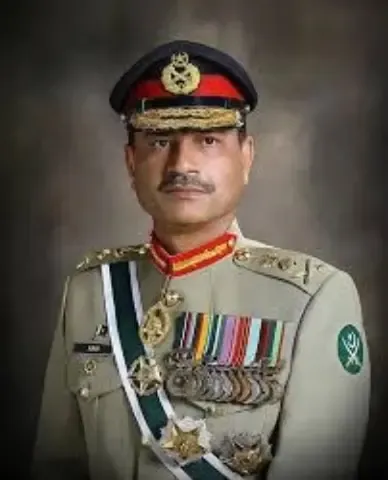
Pakistan's military, under General Asim Munir, has ramped up transnational repression against dissidents abroad, raising alarms among analysts and international observers. This report delves into the alarming tactics employed and the implications for those opposing the regime.
Key Takeaways
Transnational repression has significantly intensified under General Asim Munir.
The military's actions are aimed at silencing critics both abroad and in Pakistan.
Legal frameworks have been manipulated to provide immunity for state actors.
Violent tactics have replaced mere legal harassment in targeting dissidents.
Western responses remain insufficient despite clear evidence of these actions.
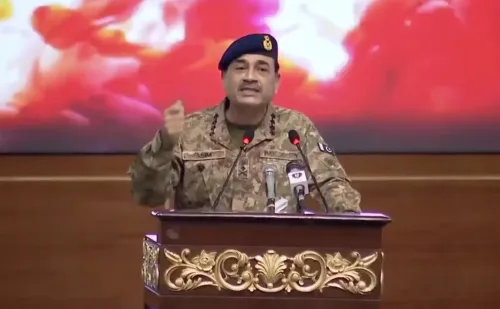
New Delhi, Feb 22 (NationPress) Pakistan has faced long-standing allegations of utilizing transnational repression to silence dissidents residing abroad. The frequency of these incidents has notably escalated since General Asim Munir took charge of the army in November 2022, as reported by media sources.
Numerous analysts and international observers contend that Munir has directly influenced this perilous strategy, openly threatening individuals linked to former Prime Minister Imran Khan, according to the Greek City Times report.
By framing adversaries as existential threats, Munir legitimizes surveillance and violence against Pakistani citizens living overseas, the report claims.
Pakistan’s 27th Constitutional Amendment, enacted in late 2025, has conferred upon Munir lifetime immunity, created a puppet judiciary, and eliminated judicial oversight, bestowing him with extensive powers to target dissidents globally.
“The military establishment of Pakistan is orchestrating a nefarious campaign of transnational repression against dissidents in Western nations. This is not mere speculation; it is a documented pattern where critics of the Pakistani state are hunted, threatened, assaulted, and terrorized in their foreign residences, while their families in Pakistan are manipulated as leverage,” detailed the report.
“The military's objective is straightforward: to psychologically break critics, compel their silence, and caution others that exile offers no protection. This extends Pakistan’s internal coercion model into Western territories, employing criminal proxies and untraceable intimidation,” it further elaborated.
The report indicated that since Munir's assumption of command, transnational repression has surged, shifting from legal harassment to coordinated violent acts in Western capitals. These attacks include the use of firearms, arson, acid attacks, and trained operatives acting with clear confidence that democratic governments will remain uninvolved.
“The most recent, unequivocal evidence is from the United Kingdom. In January 2026, local media reported that the counter-terrorism unit of Scotland Yard has assumed control of an investigation into ‘highly targeted’ assaults on Pakistani dissidents residing in the UK, including prominent advocates for jailed former Prime Minister Imran Khan,” the report stated.
“These attacks have been violent and persistent, encompassing assaults, a firearm incident, attempted arson, and continuous property damage. One victim, Mirza Shahzad Akbar, a human rights lawyer and former cabinet member under Khan, was assaulted after the attacker confirmed his identity and then repeatedly punched him in front of his family,” it noted.
The report underscored that despite growing evidence suggesting the Pakistani state's involvement in transnational repression, the responses from Western nations have been lamentably insufficient.
Point of View
It is our duty to report on such significant matters with utmost authority and impartiality. The actions being taken against dissidents abroad are alarming and deserve immediate attention from the international community. Pakistan's alleged transnational repression reflects a broader issue of state-sponsored intimidation that must be addressed to uphold human rights and democratic freedoms.
NationPress
30 Sept 2026
Frequently Asked Questions
What is transnational repression?
Transnational repression refers to the attempts by a state to control or intimidate its dissidents living abroad, often involving threats, violence, and coercion.
Who is General Asim Munir?
General Asim Munir is the Chief of Army Staff of Pakistan, who assumed command in November 2022 and has been linked to rising instances of transnational repression.
What is the 27th Constitutional Amendment?
The 27th Constitutional Amendment, enacted in late 2025, grants General Munir lifetime immunity, creates a puppet court, and removes judicial oversight, giving him extensive powers.
What actions have been reported against dissidents?
There have been reports of violent attacks, including firearms incidents, arson, and physical assaults on Pakistani dissidents in Western countries since Munir's command.
How have Western nations responded?
Western responses to the alleged transnational repression by Pakistan have been criticized for being inadequate, despite mounting evidence of the state's involvement.