What is Causing the Disruptions in Parliament?
Synopsis
The Winter Session of Parliament is marred by disruptions as the Opposition protests against electoral roll revisions. This article examines the ongoing chaos, key legislative issues, and the implications of the current political climate.
Key Takeaways
Parliament sessions are disrupted by Opposition protests.
Introduction of significant legislation like the Central Excise (Amendment) Bill, 2025.
Assurances from the ruling alliance regarding electoral reform discussions.
Concerns over the Sanchar Saathi app and its implications for user privacy.
Need for constructive dialogue in Parliament for effective governance.
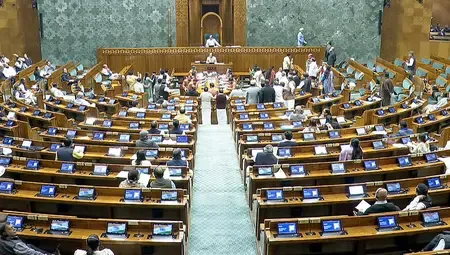
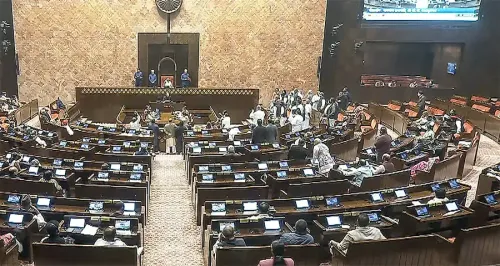
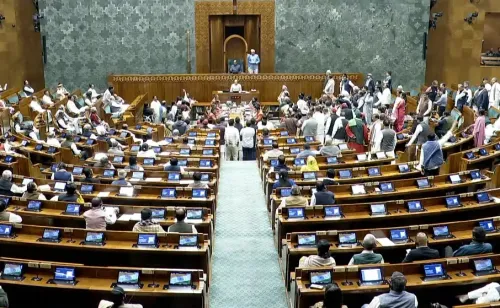
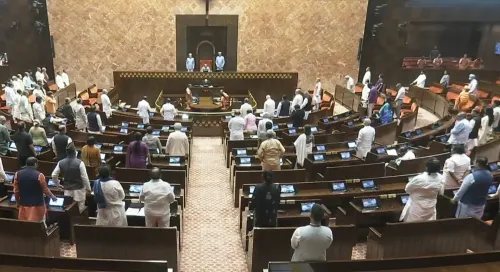
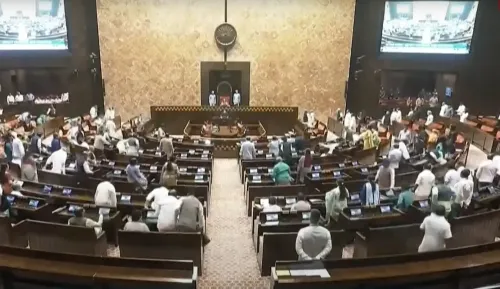
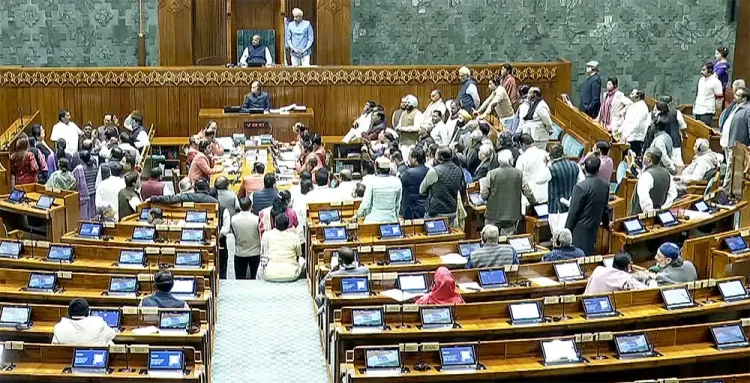
New Delhi, Dec 2 (NationPress) The ongoing Winter Session of Parliament has faced yet another round of interruptions on the second day in a row, culminating in the adjournment of both Houses due to the ongoing uproar from the Opposition.
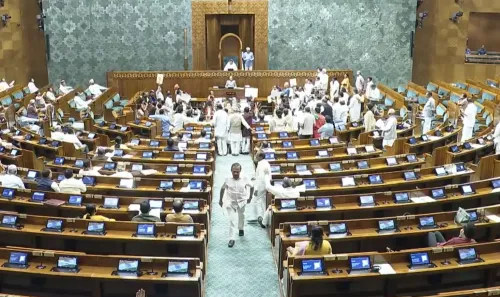
Both the Lok Sabha and Rajya Sabha experienced consistent disturbances as the Opposition protested against the Special Intensive Revision (SIR) of electoral rolls. The protests commenced with members brandishing placards outside the Makar Dwar even before the Parliament session began at 11 am.
During the Lok Sabha session, Finance Minister Nirmala Sitharaman introduced the Central Excise (Amendment) Bill, 2025, which faced interruption due to the uproar regarding electoral reforms. This bill, which is designed to reorganize taxes on “sin goods” such as tobacco and pan masala, represents a vital fiscal initiative.
Unfortunately, the protests overshadowed crucial legislative discussions.
In the meantime, the Rajya Sabha sent back the Manipur GST bill to the Lower House, where this legislation, aimed at substituting an Ordinance enacted to implement service and tax reforms in the northeastern state, was approved on Monday. This amendment was prompted by the President's rule in the region.
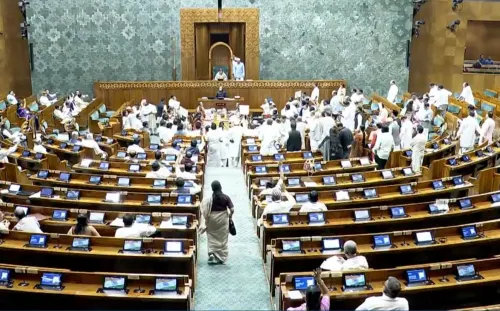
Opposition MPs in the Upper House similarly continued their call for a timeline regarding the electoral rolls revision, leading to protests within the Well of the House and ultimately resulting in a walkout.
The chaos prompted several adjournments in both Houses, despite assurances from ruling alliance leaders such as J. P. Nadda and Kiren Rijiju that the government is open to discussing electoral reforms at the right moment.
However, the Opposition MPs opted for sloganeering and walkouts, which disrupted valuable legislative time.
As a result, citizens were once again deprived of the opportunity to witness substantial discussions on pressing issues like taxation reforms and national security. The Leader of the Opposition in the Rajya Sabha, Mallikarjun Kharge, insisted that all business be suspended for a Rule 267 debate on SIR, with support from several other MPs. Chairman C.P. Radhakrishnan dismissed at least 20 notices under Rule 267, citing procedural issues, yet members chose to amplify their voices, storming the Well amid slogans and ultimately walking out.
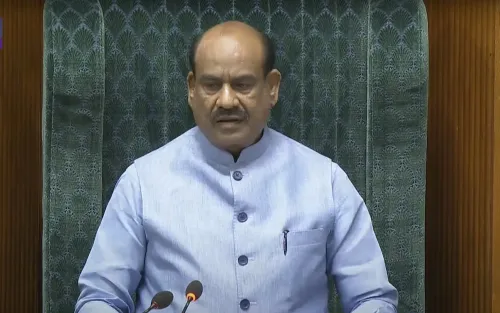
On multiple occasions, the Chair noted that the Opposition has been leveraging Rule 267 as a means of disrupting normal operations. Treasury bench leaders pointed out that alternative mechanisms exist for addressing critical matters, such as Rule 176, which allows for short-duration discussions without necessitating the suspension of business for an entire day.
Meanwhile, a report concerning the Telecom Ministry's alleged order regarding its Sanchar Saathi mobile app ignited surveillance concerns, causing a stir both inside and outside the two Houses on Tuesday.
Nevertheless, Minister of Communications Jyotiraditya Scindia, addressing the media outside Parliament, clarified that the app, which tackles certain cybersecurity challenges, is not compulsory for mobile users. Designed primarily to combat fraud and theft, downloading the app is entirely voluntary.
Point of View
It is essential to highlight the ongoing disruptions in Parliament. While the Opposition raises valid concerns, the continued protests detract from the legislative process. Citizens deserve to witness meaningful discussions on significant issues affecting the nation. It is crucial for all parties to engage constructively to address these challenges and prioritize the welfare of the public.
NationPress
17 Oct 2026
Frequently Asked Questions
What is the main reason for the disruptions in Parliament?
The disruptions stem from the Opposition's protests against the Special Intensive Revision of electoral rolls.
What significant legislation was introduced during the session?
The Central Excise (Amendment) Bill, 2025 was introduced by Finance Minister Nirmala Sitharaman.
How has the ruling alliance responded to the Opposition's protests?
Leaders from the ruling alliance have assured that the government is willing to discuss electoral reforms at an appropriate time.
What impact do these disruptions have on legislative proceedings?
The ongoing protests have led to multiple adjournments, preventing meaningful discussions on critical issues.
Is the Sanchar Saathi app mandatory for mobile users?
No, the app is not mandatory for mobile users and is intended for voluntary download to address cybersecurity concerns.