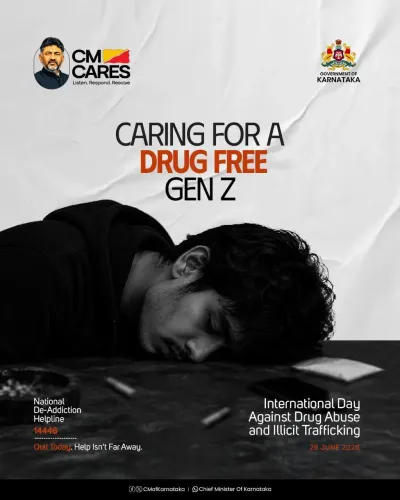
Karnataka launches Tobacco-Free Youth Campaign 4.0; Khader flags passive smoking risk
Synopsis
Karnataka's fourth Tobacco-Free Youth Campaign is about more than awareness posters — Health Minister U.T. Khader used the launch to announce a likely ban on tobacco ads on BMTC buses, a refusal of CSR funds from tobacco companies, and stricter enforcement at IT park smoking zones. The passive-smoking argument is old; the policy signals are new.
Key Takeaways
Karnataka Health Minister U.T.
Khader launched Tobacco-Free Youth Campaign (TFYC) 4.0 on 17 November 2026 at Arogya Soudha, Bengaluru .
Khader stressed that smoking in public spaces harms bystanders through passive smoking, calling for strict compliance with designated smoking zones.
The state is considering a ban on tobacco product advertisements on BMTC buses ; celebrity endorsement boards have already been reduced.
The Karnataka Congress government has decided to refuse CSR funds from tobacco manufacturers .
TFYC 4.0 targets tobacco-free universities, villages, and public spaces under COTPA, 2003 , with coordination across government departments, schools, and local bodies.
A mobile app has been deployed to monitor Health Department employee attendance at Arogya Soudha.
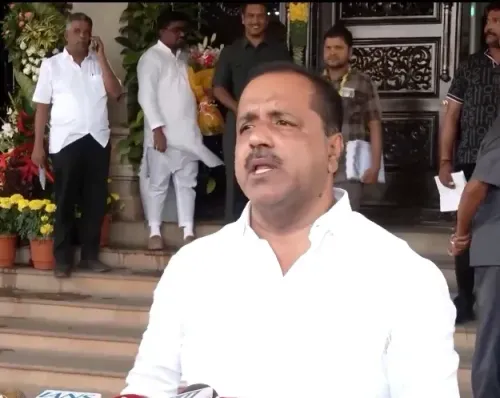
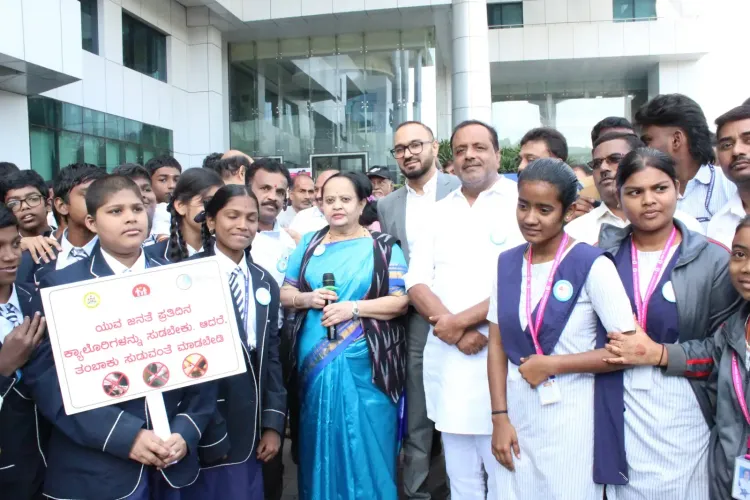
Karnataka Health Minister U.T. Khader on Tuesday, 17 November launched the Tobacco-Free Youth Campaign (TFYC) 4.0 at Arogya Soudha in Bengaluru under the National Tobacco Control Programme (NTCP), warning that smoking in public spaces inflicts the harm of passive smoking on bystanders who have made no such choice. The campaign marks the fourth edition of Karnataka's state-wide push to protect children and youth from tobacco consumption.
Khader on Passive Smoking and Designated Zones
Speaking to reporters after the launch, Khader acknowledged the practical limits of enforcement. 'If they smoke in public places, others will also suffer the consequences by becoming passive smokers. That is why separate smoking zones have been created,' he said. He noted that habitual smokers — developed over years — would 'find one way or another to smoke irrespective of the difficulties they faced,' making an outright overnight ban unrealistic in a country of around 140 crore people with a workforce where smokers number in the millions.
Responding specifically to questions about smoking zones in IT parks and corporate campuses, Khader said action would be initiated to ensure designated smoking areas strictly adhere to prescribed rules, so that non-smokers face no health risk or inconvenience. While a full 100 per cent restriction was not immediately feasible, he stressed that regulating tobacco sales through progressive restrictions remained a priority.
Crackdown on Tobacco Advertising
The Minister revealed that the Karnataka government was considering a ban on BMTC bus advertisements promoting tobacco-related products. He pointed out that the number of celebrity-endorsed advertisement boards had already been reduced in several locations. Khader cautioned that celebrity endorsements of pan masala products could influence young children and nudge them toward unhealthy habits — a concern that health advocates have raised repeatedly in the context of surrogate advertising regulations.
Significantly, Khader also announced that the Congress government in Karnataka had decided not to accept Corporate Social Responsibility (CSR) funds from tobacco manufacturing companies — a policy stance that distances state health programmes from industry financing.
What TFYC 4.0 Covers
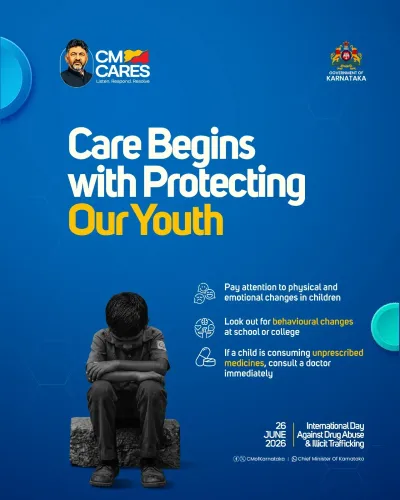
The campaign operates under the Cigarettes and Other Tobacco Products Act (COTPA), 2003, and targets multiple fronts: awareness programmes in schools and colleges, declaration of universities as tobacco-free zones, promotion of tobacco-free villages and public spaces, social media campaigns, and community tobacco-free pledges. Various government departments, educational institutions, district administrations, and local bodies across Karnataka will coordinate implementation.
This is the fourth iteration of the TFYC, reflecting the state's sustained engagement with tobacco control — though health advocates note that campaign continuity does not automatically translate into measurable reductions in youth tobacco uptake without robust enforcement and outcome tracking.
Attendance Drive at Health Department
In a separate directive at the same event, Khader asked Health Department employees to report for duty on time, disclosing that a dedicated mobile application had been developed to monitor attendance. 'We are first ensuring that employees report on time at Arogya Soudha. Once they start attending duty punctually here, others at lower levels will follow,' he said, adding that he had already issued directions on the matter twice.
With TFYC 4.0 now formally underway, the state's tobacco control apparatus faces the challenge of translating awareness into verifiable behavioural change — particularly among adolescents who remain a key target of tobacco industry marketing.
Point of View
If enacted, would take Karnataka closer to a consistent surrogate-advertising crackdown, though enforcement of existing COTPA provisions in IT parks and public spaces remains patchy. Four editions of the same campaign signal intent; they do not by themselves constitute impact. The real measure of TFYC 4.0 will be whether Karnataka pairs awareness drives with published, auditable data on youth tobacco prevalence — something the state has yet to consistently deliver.
NationPress
17 Nov 2026
Frequently Asked Questions
What is the Tobacco-Free Youth Campaign 4.0 launched in Karnataka?
TFYC 4.0 is the fourth edition of Karnataka's state-wide tobacco control campaign, launched on 17 November 2026 at Arogya Soudha in Bengaluru under the National Tobacco Control Programme. It aims to protect children and youth from tobacco use through awareness drives, enforcement of COTPA 2003, and promotion of tobacco-free educational institutions and public spaces.
What did Health Minister U.T. Khader say about passive smoking?
Khader warned that when habitual smokers light up in public places, non-smokers nearby are involuntarily exposed to harmful second-hand smoke. He cited this as the core reason designated smoking zones must be strictly enforced, while acknowledging that an immediate total ban across a 140-crore population presents practical challenges.
Will Karnataka ban tobacco advertisements on BMTC buses?
Khader said the Karnataka government is actively considering a ban on BMTC bus advertisements for tobacco-related products. He added that the number of celebrity endorsement boards for such products has already been reduced in several locations, and that celebrity promotions of pan masala risk influencing children.
Why has Karnataka refused CSR funds from tobacco companies?
The Congress government in Karnataka has decided not to accept Corporate Social Responsibility funds from tobacco manufacturers, a move aimed at ensuring that state health programmes are not financially linked to the industry whose products they seek to curb. No further conditions or timelines for this policy were specified at the launch.
Who is covered by TFYC 4.0 and how will it be implemented?
The campaign targets children, youth, universities, villages, and public spaces across Karnataka. Implementation will be coordinated by government departments, educational institutions, district administrations, and local bodies, using tools such as social media campaigns, tobacco-free pledges, and enforcement of COTPA 2003 provisions.