Uttarakhand Forest Dept Traps Terror Leopard in Pauri Garhwal
Synopsis
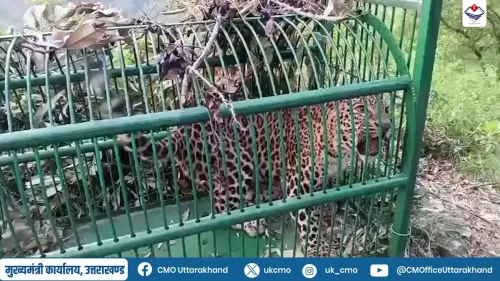
A leopard terrorising Taruli village in Pauri Garhwal has been captured alive in a cage trap by the Uttarakhand Forest Department. The Chief Minister's Office confirmed the successful rescue on 5 November 2026, bringing relief to anxious villagers in a district with recurrent human-leopard conflict.
Key Takeaways
A leopard ( guldar ) had been causing terror among residents of Taruli village in Pauri Garhwal , Uttarakhand.
The Uttarakhand Forest Department deployed a cage trap and successfully rescued the animal.
The Chief Minister's Office of Uttarakhand confirmed the operation on 5 November 2026 .
Human-leopard conflict is a recurring challenge across hill districts including Pauri, Tehri , and Almora .
Villagers expressed relief following the leopard's capture; the animal will undergo assessment before possible release or rehabilitation.
A leopard that had been stalking and terrorising residents of Taruli village in Pauri Garhwal district is finally behind bars — captured alive in a cage trap by an Uttarakhand Forest Department rescue team, bringing relief to a community that had lived in fear. The Chief Minister's Office of Uttarakhand confirmed the successful operation on Thursday, 5 November 2026.
The post, shared in Hindi, read: 'Pauri Garhwal ke Taruli gaon mein dahshat ka karan bana guldar pinjare mein qaid' — 'The leopard that had become a source of terror in Taruli village, Pauri Garhwal, has been caged; the forest department team carried out the rescue, and villagers have heaved a sigh of relief.'
A village on edge, a cage as the answer
Taruli is a rural settlement nestled in the forested hills of Pauri Garhwal, one of Uttarakhand's most wildlife-rich yet conflict-prone districts. When a leopard — known locally as guldar — begins entering a village, daily life shifts dramatically: children stay indoors, livestock are locked up at dusk, and every rustle in the dark becomes a threat. The Forest Department responded by deploying a cage trap, a standard protocol in such human-wildlife conflict situations, and the operation succeeded.
Pauri Garhwal's recurring struggle with the guldar
This rescue is not an isolated event. Human-leopard conflict is a persistent reality across Uttarakhand's hill districts — Pauri, Tehri, and Almora among the most frequently affected — where the boundary between village and forest has steadily eroded. As settlements expand and forest habitats shrink, leopards are increasingly pushed into populated zones in search of prey. The Uttarakhand Forest Department has built significant operational experience in cage-based rescues, dispatching trained teams whenever a big cat is reported near human habitation.
What happens to the captured leopard
With the animal secured, attention now turns to what comes next. Standard procedure involves a veterinary assessment of the leopard's health, age, and behaviour before a decision is made on release into a suitable forest zone or longer-term rehabilitation. Forest officials will monitor the area to ensure no second animal remains active near Taruli.
For the people of Taruli, the cage is more than a trap — it is the moment a shadow lifted. The forest department's swift response is a reminder that in Uttarakhand's hills, the work of keeping humans and wildlife from lethal collision never really stops.
Point of View
Unresolved tension in Uttarakhand's development model: hill districts are expanding their human footprint while forest buffers shrink, making leopard incursions into villages structurally inevitable rather than exceptional. The Forest Department's cage-rescue capability is well-practised, but each incident is essentially a symptom of habitat pressure that reactive operations cannot cure. The state government's decision to amplify this rescue through the CMO's official handle signals an awareness that visible, quick action on wildlife threats is as much a governance-optics priority as an ecological one. Without longer-term land-use and corridor policies, the cycle of terror, trap, and temporary relief will keep repeating across Pauri, Tehri, and Almora.
NationPress
5 Nov 2026
Frequently Asked Questions
Where was the leopard captured in Uttarakhand?
The leopard was captured in Taruli village in the Pauri Garhwal district of Uttarakhand by the state Forest Department's rescue team.
How does the Uttarakhand Forest Department handle leopard rescues?
The department deploys trained rescue teams who set cage traps in areas where leopards have been reported. Once captured, the animal is assessed by veterinary staff and decisions are made on release into suitable forest zones or rehabilitation.
Is human-leopard conflict common in Pauri Garhwal?
Yes. Pauri Garhwal, along with Tehri and Almora, is among the Uttarakhand districts most frequently affected by human-leopard conflict, driven by the shrinking forest habitat bordering expanding rural settlements.
What will happen to the leopard caught in Taruli village?
Following capture, the leopard will undergo a health and behavioural assessment. Forest officials will then decide whether to release it into a suitable forest area or place it in a rehabilitation facility.