Uttarakhand CM Office: Kandai's Sanjeev Bachheti Reverses the Migration Tide

Synopsis
The Uttarakhand Chief Minister's Office spotlighted Sanjeev Bachheti of Kandai village in Pauri Garhwal, who returned from the plains and built a local enterprise — becoming a job-giver in a district long plagued by out-migration. The story anchors the state's broader self-employment and reverse migration push.
Key Takeaways
Sanjeev Bachheti of Kandai village, Pauri Garhwal is highlighted by the Uttarakhand CMO as a 'job-giver' through reverse migration.
Pauri Garhwal is one of Uttarakhand's most migration-affected districts, with decades of population drain to plains cities.
Uttarakhand launched expanded self-employment programmes for returning migrants following the 2020 COVID-19 reverse migration wave.
The government's use of the term 'job giver' signals a policy framing of returnees as employment creators, not just beneficiaries.
The CMO post amplifies an individual success story to reinforce the state's broader reverse migration and rural self-employment narrative.
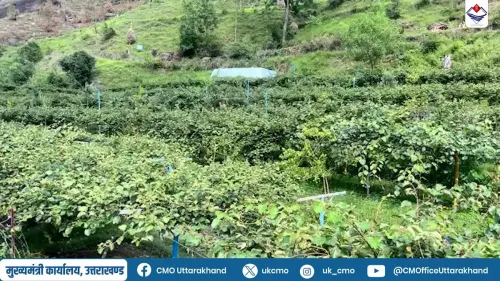
A village in the hills of Pauri Garhwal is generating jobs — not losing people to the plains. The Chief Minister's Office of Uttarakhand on Wednesday, October 21, 2026, highlighted the story of Sanjeev Bachheti of Kandai village, who chose to return home and build something that now employs others.
The post, shared in Hindi, reads: 'Pauri Garhwal ke Kandai gaon ke Sanjeev Bachheti reverse migration kar bane job giver' — 'Sanjeev Bachheti of Kandai village in Pauri Garhwal became a job-giver through reverse migration.' In a district long defined by the steady drain of its working-age population to cities, that sentence carries real weight.
Pauri Garhwal's out-migration problem — and why one return matters
Pauri Garhwal sits in Uttarakhand's Garhwal range, a district with some of the state's most documented rates of rural out-migration. Decades of young men and women leaving for Dehradun, Delhi, and beyond have hollowed out village after village, leaving behind ageing populations and shrinking local economies. The government's framing of Bachheti's story as a 'job-giver' narrative is deliberate: it signals that going back is not just viable — it can multiply opportunity for neighbours.
The policy moment behind the personal story
Uttarakhand's push for reverse migration accelerated sharply after the 2020 COVID-19 lockdowns, when hundreds of thousands of migrants returned to hill districts under duress. The state government moved quickly to convert that involuntary return into a policy opportunity, expanding self-employment support programmes specifically targeting returnees in districts like Pauri Garhwal. The current government has continued to frame individual entrepreneurship stories as proof points for those schemes.
Showcasing a returnee-turned-employer is the sharpest argument a government can make: not a statistic, but a named person in a named village, doing something visible. It also quietly reframes the migration conversation — from 'how do we stop people leaving' to 'how do we show what's possible if they stay.'
What the 'job-giver' label signals
The specific choice of the phrase 'job giver' — used in both Hindi and English in the post's hashtags — is not accidental. Uttarakhand's self-employment schemes have consistently positioned the ideal outcome not as someone finding a job, but as someone creating them. A returnee who employs others in their home district represents the full loop: reverse migration that relieves urban pressure, sustains a rural community, and demonstrates policy effectiveness all at once.
Whether Bachheti's story translates into broader district-level uptake of self-employment schemes remains the real metric to watch. Pauri Garhwal's depopulation challenge is structural, and one headline cannot reverse it. But stories travel — and in hill districts where the question every young person faces is whether to stay or go, a local job-giver from Kandai village is a louder answer than any government circular.
Point of View
A 'job-giver from Kandai' is a more resonant message than any scheme notification. The pivot from 'stopping outmigration' to 'celebrating those who return and create' marks a subtle but significant shift in how Uttarakhand governments frame the rural economy challenge. The real test, however, is whether district-level scheme uptake data eventually backs the headline — or whether the stories remain exceptions rather than a trend.
NationPress
21 Oct 2026
Frequently Asked Questions
Who is Sanjeev Bachheti from Uttarakhand?
Sanjeev Bachheti is a resident of Kandai village in Pauri Garhwal district, Uttarakhand, highlighted by the state's Chief Minister's Office as an example of successful reverse migration — someone who returned to his home village and created local employment.
What is reverse migration in Uttarakhand?
Reverse migration in Uttarakhand refers to the movement of people who had earlier left hill districts for cities returning to their home villages, often to start enterprises. The trend gained momentum after the 2020 COVID-19 lockdowns, and the state government has supported it through self-employment schemes.
Why does Pauri Garhwal have high out-migration?
Pauri Garhwal is a hilly district with limited industrial employment and historically fewer economic opportunities compared to plains cities, driving generations of young people to migrate to urban centres like Delhi and Dehradun.
What self-employment schemes does Uttarakhand offer for returning migrants?
Following the 2020 COVID-19 reverse migration wave, Uttarakhand expanded self-employment support programmes targeting returnees in hill districts, aiming to help them start local enterprises and reduce dependence on urban employment.
What does 'job giver' mean in Uttarakhand's reverse migration policy?
'Job giver' is the term used by the Uttarakhand government to describe returning migrants who not only sustain themselves through self-employment but also create employment opportunities for others in their home villages — the ideal outcome of the state's reverse migration push.