Punjab anti-stubble machinery a 'major scam', says BJP's Phoolka; seeks CBI probe

Synopsis
BJP leader and senior advocate HS Phoolka has taken direct aim at the AAP government in Punjab, alleging that its heavily subsidised 'Super Seeder' programme is a lobby-driven scam that saddles farmers with debt while cheaper, PAU-endorsed alternatives worth ₹80,000–₹2 lakh receive zero state support. He has formally requested a CBI probe from Home Minister Amit Shah — a politically charged move as stubble smoke blankets northern India.
Key Takeaways
BJP leader HS Phoolka alleged on 21 November 2026 that Punjab's anti-stubble machinery scheme is a 'major scam' .
The state-promoted Super Seeder costs approximately ₹3 lakh ; Phoolka claims nearly 90 per cent of its users still burn stubble.
Punjab Agricultural University (PAU) recommends two cheaper alternatives — the Mitra Seeder (₹2 lakh) and Triple Zero Technology (₹80,000) — neither of which receives government subsidy, according to Phoolka.
Phoolka has formally requested a CBI probe from Union Home Minister Amit Shah and submitted supporting documentation.
Only about five Triple Zero Technology machines are reportedly operational across all of Punjab, Phoolka claimed.
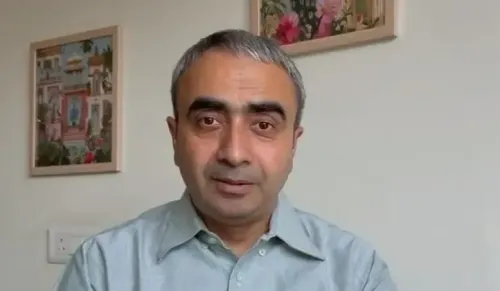
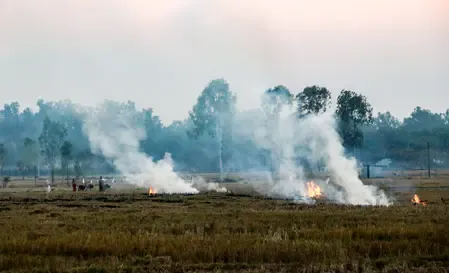
Senior advocate and Bharatiya Janata Party (BJP) leader HS Phoolka on Saturday, 21 November 2026, alleged that the machinery being promoted under government schemes by the ruling Aam Aadmi Party (AAP) government in Punjab to prevent stubble burning is a 'major scam', and that he has formally requested a Central Bureau of Investigation (CBI) probe from Union Home Minister Amit Shah. The allegations come amid mounting concerns over crop residue burning in Punjab and its contribution to severe air pollution across northern India, including New Delhi.
What Phoolka Alleged
Phoolka acknowledged that stubble burning is a significant environmental problem in Punjab, before turning his focus to the state government's response. 'The machinery being sold under government schemes, claiming to prevent stubble burning is, according to me, a massive scam,' he said. He alleged that farmers are being deliberately supplied with ineffective and overpriced equipment by the AAP government, while genuinely effective and cheaper alternatives — recommended by a reputed agricultural institution — are being sidelined.
Phoolka claimed he personally met Home Minister Amit Shah to flag the alleged irregularities and was asked to submit full details. 'He asked me to send him the complete details, which I have done,' Phoolka said, adding that a CBI inquiry has been formally requested.
The 'Super Seeder' Controversy
At the centre of the allegations is the 'Super Seeder' machine, which the Punjab government promotes under its subsidy scheme. According to Phoolka, the machine costs approximately ₹3 lakh, with the government providing a subsidy of ₹1 lakh and farmers bearing the remaining ₹2 lakh — and sometimes more. Despite this outlay, Phoolka claimed that nearly 90 per cent of farmers using the Super Seeder are still compelled to burn stubble because the machine is not suited to all cropping conditions.
He further alleged that the Super Seeder requires tractors of around 65 horsepower, while many farmers in Punjab own tractors of only 35 to 40 horsepower, effectively forcing them to purchase larger tractors and take on additional loans. 'This is a huge scam driven by lobbies which have trapped farmers,' he claimed.
PAU-Recommended Alternatives Being Ignored, Says Phoolka
Phoolka pointed to two machines recommended by Punjab Agricultural University (PAU) — described as a globally reputed institution — which he said are both cheaper and more effective than the Super Seeder. The first, the 'Mitra Seeder', costs approximately ₹2 lakh and has reportedly delivered strong results over five to six years of PAU promotion. The second, the 'Triple Zero Technology', allows sowing to be carried out simultaneously with paddy harvesting, costs approximately ₹80,000, and also eliminates the need to burn stubble.
Notably, neither machine receives any government subsidy, according to Phoolka. He added that PAU's recommended machinery can reduce fertiliser use by approximately 20 per cent, cut water consumption by a similar margin, lower overall cultivation costs by at least 20 per cent, and improve crop yields. Despite these stated benefits, Phoolka claimed there are only about five Triple Zero Technology machines currently operational across the entirety of Punjab.
Phoolka's Claims of a Lobby-Driven System
Phoolka alleged that the promotion of expensive machinery is driven by powerful lobbies involving officials, large tractor companies, and groups connected to agricultural loans. 'Officials take a share of the subsidies involved in these expensive machines and those are promoted by a powerful lobby,' he claimed, adding that 'bureaucrats, large tractor companies, and lobbying groups connected with agricultural loans are enriching themselves and misleading farmers, causing them financial losses.'
The AAP government in Punjab has not, as of the time of this report, issued a formal response to Phoolka's specific allegations.
What Happens Next
Phoolka stated that all required documentation supporting the CBI probe request has been submitted to Home Minister Amit Shah. Whether the Centre acts on the request will likely depend on the documentation's strength and the political dynamics between the BJP-led Centre and the AAP-governed state. The stubble burning season in Punjab typically peaks between October and November, making the timing of these allegations politically significant. With air quality in northern India deteriorating sharply each winter, pressure on both state and central governments to act on crop residue management is intensifying.
Point of View
University-endorsed alternatives — is a testable proposition, and PAU's publicly available research should be the reference point, not political assertions alone. If the Super Seeder genuinely fails 90 per cent of users, the subsidy architecture is a policy failure regardless of intent. What is striking is that the same pattern — input subsidies captured by equipment lobbies at the expense of small farmers — has played out in multiple states across multiple governments; Punjab is not uniquely vulnerable. A CBI probe, if initiated, will also need to explain why the Centre's own agriculture ministry has not flagged PAU's recommendations through its own extension channels.
NationPress
21 Nov 2026
Frequently Asked Questions
What is HS Phoolka's allegation about Punjab's anti-stubble burning machinery scheme?
BJP leader HS Phoolka has alleged that the Punjab AAP government is promoting the 'Super Seeder' — a costly machine he says is ineffective for most farmers — under a subsidy scheme, while ignoring cheaper and more effective alternatives recommended by Punjab Agricultural University (PAU). He has called the arrangement a 'major scam' driven by lobbies involving officials, tractor companies, and agricultural loan groups.
What CBI probe has Phoolka requested, and from whom?
Phoolka has formally requested a CBI investigation into the alleged irregularities from Union Home Minister Amit Shah. He said Shah asked him to submit complete documentation, which Phoolka confirmed he has done.
What are the PAU-recommended alternatives to the Super Seeder?
Punjab Agricultural University recommends two machines: the 'Mitra Seeder', costing approximately ₹2 lakh, and the 'Triple Zero Technology', costing approximately ₹80,000, which allows sowing simultaneously with paddy harvesting. Phoolka claims neither receives any government subsidy, despite both reportedly eliminating the need to burn stubble.
Why does Phoolka say the Super Seeder is problematic for Punjab farmers?
According to Phoolka, the Super Seeder costs around ₹3 lakh and requires a tractor of at least 65 horsepower, while many Punjab farmers own tractors of only 35–40 horsepower, forcing them to buy larger tractors and take bigger loans. He also claims nearly 90 per cent of farmers using the machine still end up burning stubble because it is not effective across all cropping situations.
Has the AAP government in Punjab responded to Phoolka's allegations?
As of the time of this report, the AAP government in Punjab has not issued a formal response to the specific allegations made by Phoolka regarding the anti-stubble burning machinery scheme.