Sam Pitroda wishes Modi good health, calls 'Vishwa Guru' claim 'bogus'
Synopsis
Indian Overseas Congress chief Sam Pitroda wished PM Modi good health in a rare olive branch — then promptly called India's 'Vishwa Guru' self-image 'bogus', questioned New Delhi's role in Gaza and the Russia-Ukraine conflict, and argued India has no real seat at the global table. The remarks set up a sharp contrast with the government's recent diplomatic messaging.
Key Takeaways
Sam Pitroda , chief of the Indian Overseas Congress , wished PM Modi good health on 15 October 2026 , calling his 25 years in public life 'an accomplishment in its own way.' Pitroda called India's 'Vishwa Guru' self-image “bogus,” arguing the country's actual global influence is overstated domestically.
He questioned India's role in the Russia-Ukraine conflict and raised India's absence from meaningful engagement on the Gaza crisis.
On Rahul Gandhi becoming Prime Minister in 2029 , Pitroda said the decision rests solely with the people of India.
He argued India, as the world's most populous nation, should have “a seat at the table” in global decision-making rather than remaining on the sidelines.
Sam Pitroda, chief of the Indian Overseas Congress, on Thursday, 15 October 2026, wished Prime Minister Narendra Modi good health while simultaneously delivering a sharp critique of India's global standing, calling the country's self-styled 'Vishwa Guru' image “bogus” and arguing that India lacks a genuine seat at the international table.
Pitroda's Remarks on PM Modi
Speaking in an interview, Pitroda offered measured words for the Prime Minister on a personal level. “First of all, I wish him good health. He’s at an age where we all get affected. So, I wish him very good health. He has completed 25 years, which is an accomplishment in its own way,” he said. The comments mark a rare instance of the Congress-aligned leader extending goodwill toward Modi, even as he sharpened his criticism on substantive policy matters.
On Rahul Gandhi's 2029 Prime Ministerial Prospects
When asked whether Rahul Gandhi, the Leader of the Opposition in the Lok Sabha, could become Prime Minister in 2029, Pitroda deferred to public opinion rather than making a direct claim. “It is for the people of India to decide,” he said, declining to offer a personal endorsement or forecast. The 2029 general elections remain a focal point of opposition strategy, with the Indian National Congress (INC) attempting to consolidate its position after its 2024 gains.
India's Global Influence: Pitroda's Critique
The more pointed strand of Pitroda's remarks concerned India's international standing. He questioned the country's ability to play a decisive role in securing a ceasefire between Russia and Ukraine, arguing that New Delhi's actual leverage falls short of its domestic self-portrayal. “I don't think India has the kind of power that we should have today. Our position in the world is not what we think it is. You know, we call ourselves ‘Vishwa Guru’ and all that. From my viewpoint, it’s all bogus,” he said.
Pitroda acknowledged that such narratives may provide domestic reassurance but argued they must be stress-tested against reality. “It’s okay if that makes our people feel good, but the reality is very different,” he said, adding: “What role did we play? It has been going on for a while. Why, all of a sudden, after five years, do we play a role? Where were we before? What role did we play in Gaza?”
India Should Have 'a Seat at the Table'
Pitroda argued that as the world's most populous nation, India should command greater attention in multilateral decision-making. “We are the largest country in the world, and we should have a seat at the table, not on the sidelines. We don’t have a seat at the table today. I don’t think people are paying attention to what we have to say,” he said. He also pushed back on the domestic perception that global capitals routinely look to India for guidance. “The general impression given in India is that we are Vishwa Guru; everybody is waiting for our input and advice. No, that’s not true. Go see the newspapers in the world, and you will see what space India gets,” Pitroda added.
Context and Significance
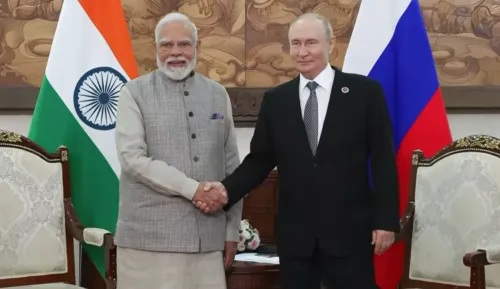
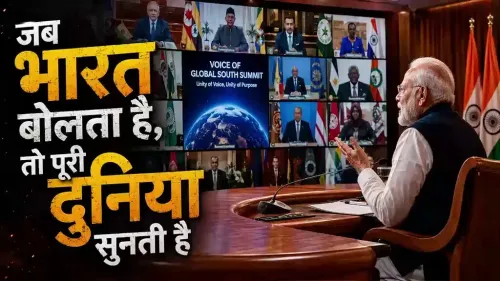
This is not the first time Pitroda has drawn controversy with remarks on India's foreign policy and global image. His comments come at a moment when the government has projected India's diplomatic profile — through its G20 presidency in 2023 and ongoing engagements on the Russia-Ukraine conflict — as evidence of a rising global role. Critics from the ruling Bharatiya Janata Party (BJP) are likely to contest his characterisation, particularly given India's growing bilateral engagements with the United States, European Union, and the Global South. Pitroda stressed the need for what he called a realistic assessment, allowing that “people could hold differing opinions” on India's international influence. The Congress has not officially endorsed his views on foreign policy.
Point of View
But the more pointed challenge is his question about India's actual leverage in Gaza and Ukraine — conflicts where New Delhi's mediation ambitions have consistently outpaced outcomes. The BJP will rebut with G20 optics and bilateral wins, but Pitroda is pointing at something the government's own diplomatic record leaves partially unanswered: what does India's influence actually change on the ground? That is a question worth tracking regardless of who raises it.
NationPress
15 Oct 2026
Frequently Asked Questions
What did Sam Pitroda say about PM Modi?
Pitroda wished PM Modi good health and acknowledged his 25 years in public life as 'an accomplishment in its own way.' The remarks, made in an interview on 15 October 2026, were personal in tone and did not amount to political endorsement.
Why did Pitroda call India's 'Vishwa Guru' claim bogus?
Pitroda argued that India's self-portrayal as a global guide does not match its actual influence in international affairs. He cited the country's limited role in the Russia-Ukraine conflict and its absence from meaningful engagement on the Gaza crisis as evidence that India lacks a real seat at the global table.
What did Pitroda say about Rahul Gandhi becoming Prime Minister in 2029?
Pitroda declined to make a direct prediction, saying the decision rests with the people of India. He did not personally endorse or rule out Rahul Gandhi's prime ministerial prospects.
What is the Indian Overseas Congress?
The Indian Overseas Congress is the international wing of the Indian National Congress (INC), tasked with engaging the Indian diaspora globally. Sam Pitroda, a veteran technologist and long-time Congress adviser, has served as its chief.
How has the government responded to Pitroda's remarks on India's global standing?
As of the time of reporting, there was no official government response to these specific remarks. The BJP is widely expected to push back, citing India's G20 presidency in 2023 and growing bilateral engagements with the US, EU, and Global South as evidence of rising global influence.