CM Gujarat: India's Global Stature Rose Under Modi's 12-Year Foreign Policy
Synopsis
The Gujarat Chief Minister's Office marked 12 years of PM Modi's 'Nation First' foreign policy on 19 June 2026, crediting it with raising India's global influence and establishing the country as a 'Vishwamitra' — friend of the world — guided by the Vasudhaiva Kutumbakam ideal.
Key Takeaways
The Gujarat CMO posted on 19 June 2026 marking 12 years of PM Modi's 'Nation First' foreign policy under the hashtag #12YearsOfIndiaFirst .
India is described as a 'Vishwamitra' (friend of the world) guided by Vasudhaiva Kutumbakam — the ancient Sanskrit principle meaning 'the world is one family'.
Key policy milestones cited in research include the Neighbourhood First and Act East policies launched in 2014 , and India's G20 presidency in 2023 under the Vasudhaiva Kutumbakam theme.
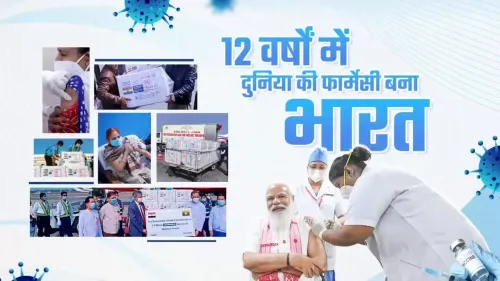
India's Vaccine Maitri initiative supplied COVID-19 vaccines to over 100 countries during 2020–2022 , operationalising the 'world as one family' principle.
India has simultaneously engaged QUAD , BRICS , and SCO , reflecting a multi-alignment posture that balances ties with Russia and Western partners.
Upcoming focus includes India's positioning at the 2026 BRICS Summit and follow-up on UN Security Council reform proposals.
The Chief Minister's Office of Gujarat on Friday, 19 June 2026 credited Prime Minister Narendra Modi's 'Nation First' foreign policy vision for elevating India's global standing over the past 12 years, describing the country as a 'Vishwamitra' — a friend to the world — guided by the ancient ideal of Vasudhaiva Kutumbakam (the world is one family).
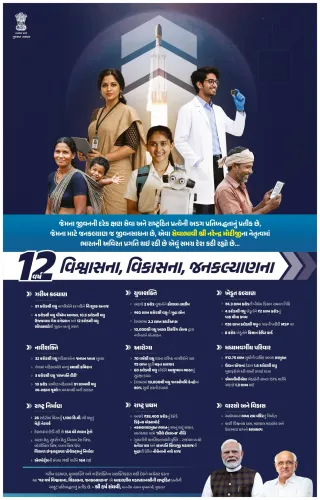
The post, shared under the hashtag #12YearsOfIndiaFirst, states in Gujarati: 'Mananiya Vadapradhan Shri Narendrabhai Modina netrutvama Rashtra Pratham vision sathe videsh nitina pariname chhella 12 varsma Bharatno vadhyo vaishvik prabhav...' — translating broadly as: 'Under the leadership of honourable Prime Minister Shri Narendra Modi, with the vision of Nation First, India's global influence has grown over the last 12 years, and India, having become a Vishwamitra with the spirit of Vasudhaiva Kutumbakam, has earned the respect of the entire world.'
Context
The post marks what the Gujarat CMO frames as a 12-year milestone of the Modi government's foreign policy, counting from 2014 when the current administration took office. The dual concepts invoked — 'Rashtra Pratham' (Nation First) and Vasudhaiva Kutumbakam — have been central to how the government has publicly articulated its international posture: assertive on national interest while projecting India as a benevolent global stakeholder.
The term 'Vishwamitra', meaning 'friend of the world', has been used by senior government voices to describe India's evolving identity as a provider of global public goods rather than merely a recipient of international assistance.
Policy Backdrop
Since 2014, India's foreign policy architecture has expanded on multiple fronts. The Neighbourhood First and Act East policies repositioned India's diplomatic priorities toward immediate neighbours and ASEAN nations. Simultaneously, New Delhi deepened engagement across groupings including QUAD, BRICS, and the Shanghai Cooperation Organisation (SCO), maintaining simultaneous ties with both Russia and Western partners — a posture often described as strategic autonomy or multi-alignment.
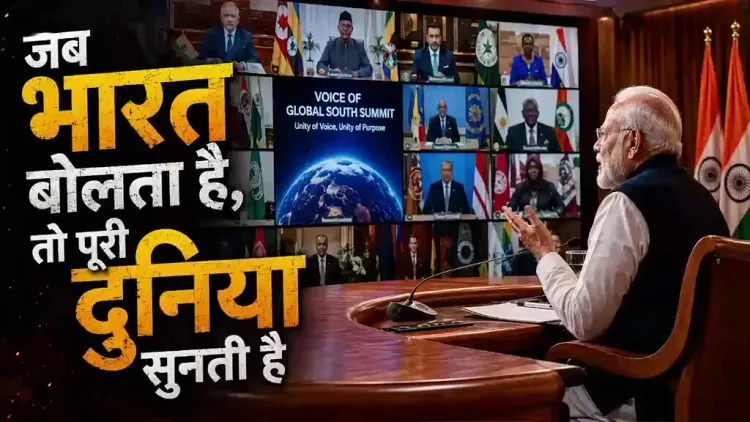
A landmark moment came with India's G20 presidency in 2023, conducted under the theme 'Vasudhaiva Kutumbakam', during which New Delhi positioned itself as a bridge between the Global North and the Global South. Earlier, during 2020–2022, the Vaccine Maitri initiative saw India supply COVID-19 vaccines to over 100 countries, reinforcing the 'world as one family' narrative in practical terms.
Stakeholders and Impact
The framing resonates most directly with the Indian diaspora and Global South nations that have looked to India for diplomatic solidarity and development partnerships. For the diaspora, a more assertive India on the world stage carries symbolic and practical weight — from faster consular services to stronger bilateral agreements protecting workers abroad.
For developing nations, India's self-projection as 'Vishwamitra' translates into expectations of continued support on climate finance, technology transfer, and representation in multilateral forums. The Gujarat CMO's post, amplifying a national foreign-policy message from a state platform, also signals how the 'India First' narrative is being reinforced at the sub-national level ahead of significant diplomatic events.
What's Next
India's diplomatic calendar remains active, with attention turning to its positioning at the 2026 BRICS Summit and any concrete follow-up on UN Security Council reform proposals that gained momentum during its G20 presidency. How New Delhi converts the 'Vishwamitra' identity into durable institutional outcomes — permanent UNSC membership, leadership of multilateral development banks, or binding Global South coalitions — will be the real test of the foreign-policy arc that the Gujarat CMO's post celebrates. The coming months will reveal whether the symbolic milestone translates into structural gains in the global order.
Point of View
Reinforcing the 'India First' brand ahead of the 2026 BRICS Summit. By invoking 'Vishwamitra' alongside 'Vasudhaiva Kutumbakam', the communication attempts to reconcile nationalist assertion with universalist appeal — a balancing act that has defined Modi-era diplomacy. The 12-year framing is also a pre-election consolidation move, anchoring foreign-policy achievements as a core BJP governance credential. Whether the symbolic language translates into measurable structural gains — such as UNSC permanent membership — remains the unresolved question at the heart of this narrative.
NationPress
18 Sept 2026
Frequently Asked Questions
What is India's 'Nation First' foreign policy under Modi?
India's 'Nation First' or 'Rashtra Pratham' foreign policy, pursued since 2014, prioritises India's strategic and economic interests while projecting the country as a responsible global stakeholder through initiatives like Vaccine Maitri and the G20 presidency.
What does 'Vishwamitra' mean in the context of Indian foreign policy?
'Vishwamitra' literally means 'friend of the world' in Sanskrit. In foreign-policy usage it describes India's self-image as a provider of global public goods — vaccines, development finance, diplomatic solidarity — rather than a passive recipient of international aid.
What is Vasudhaiva Kutumbakam and why is it significant?
Vasudhaiva Kutumbakam is an ancient Sanskrit phrase meaning 'the world is one family.' It was the official theme of India's G20 presidency in 2023 and has become a recurring motif in Modi government communications to frame India's inclusive approach to global diplomacy.
What were India's major foreign policy achievements in the last 12 years?
Key milestones include the Neighbourhood First and Act East policies (2014), Vaccine Maitri supplying COVID-19 vaccines to over 100 countries (2020–2022), hosting the G20 Leaders' Summit in 2023, and active engagement in QUAD, BRICS, and SCO simultaneously.
Why is the Gujarat CMO posting about national foreign policy?
State government offices in India routinely amplify central government milestones, particularly those tied to the ruling party's governance narrative. The Gujarat CMO's post on the 12-year foreign-policy milestone reflects coordinated messaging across BJP-governed states.