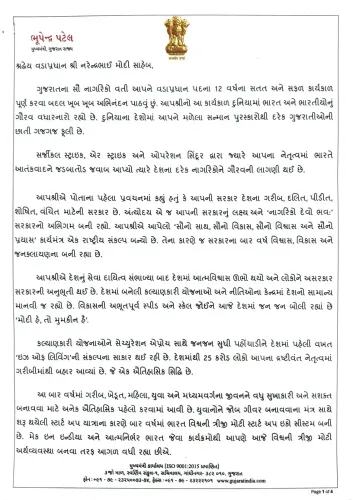
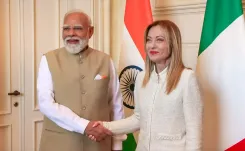
CM Bhupendra Patel Hails 12 Years of Modi's Foreign Policy
Synopsis
Gujarat Chief Minister Bhupendra Patel on 19 June 2026 credited PM Modi's 12-year leadership for elevating India's global standing, invoking the 'Vishwa Bandhu' identity and Viksit Bharat vision as proof of India's rising diplomatic and strategic stature.
Key Takeaways
Gujarat CM Bhupendra Patel posted on 19 June 2026 praising 12 years of PM Modi 's foreign policy under #12YearsOfIndiaFirst .
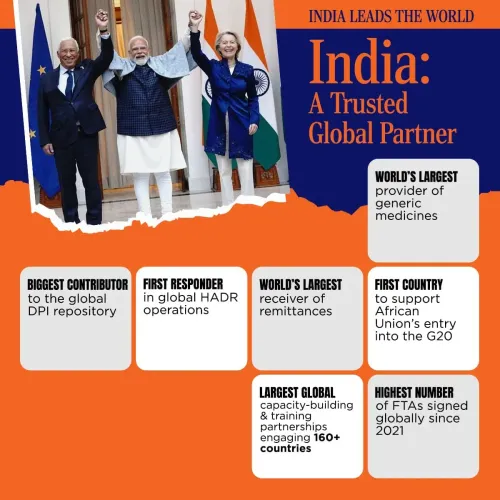
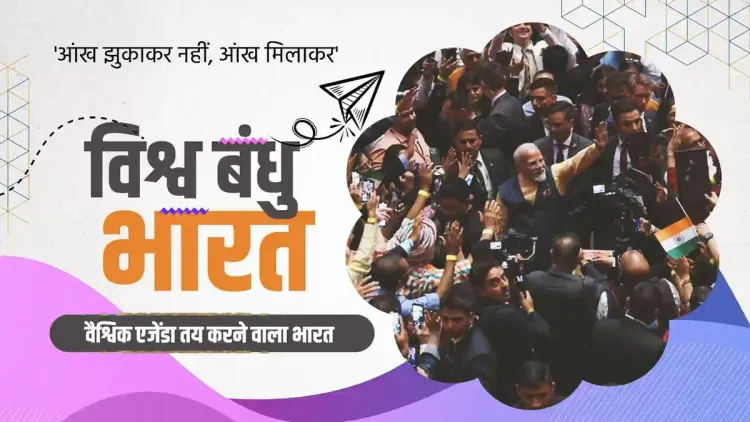
Patel described India as a 'Vishwa Bandhu' — friend of the world — that guides solutions in international crises.
The post invokes two core BJP foreign-policy principles: Rashtra Hit Sarvopari (Nation First) and Vasudhaiva Kutumbakam (the world is one family).
India's 2023 G20 presidency formally adopted the Vishwa Bandhu framing and championed Global South priorities.
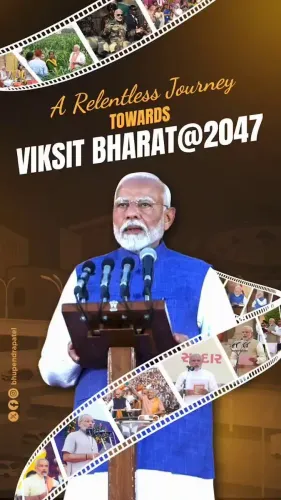
The Viksit Bharat vision targets developed-nation status by 2047 , linking diplomatic standing to domestic economic growth.
Upcoming SCO and BRICS summits are expected to be the next platforms for India to articulate this foreign-policy posture.
Gujarat Chief Minister Bhupendra Patel on Friday, 19 June 2026, lauded Prime Minister Narendra Modi's foreign-policy record over the past 12 years, asserting that India has established an indelible mark on the global stage by embracing the principles of 'Nation First' and Vasudhaiva Kutumbakam ('the world is one family').
Posting in Hindi on X under the hashtags #12YearsOfIndiaFirst and #ViksitBharat, Patel wrote that India today stands before the world as a 'Vishwa Bandhu' — a 'friend of the world' — one that 'paves the path of solutions in international crises.' He described India's rising diplomatic voice as 'the greatest proof of the growing strength of Viksit Bharat.'
Context
The post marks the completion of 12 years of the Bharatiya Janata Party-led government at the Centre, which came to power in May 2014. Patel, who has served as Chief Minister of Gujarat since 2021, is among the senior BJP leaders who regularly amplify the central government's governance narrative on digital platforms.
The twin principles cited — Rashtra Hit Sarvopari ('national interest above all') and Vasudhaiva Kutumbakam — have been recurring anchors of Prime Minister Modi's addresses at the United Nations General Assembly and other multilateral forums since 2014.
Policy Backdrop
India's 2023 G20 presidency, held under the theme 'One Earth, One Family, One Future,' formally positioned the country as Vishwa Bandhu and placed Global South priorities — including debt relief, climate finance, and food security — at the centre of the summit agenda. The presidency is widely cited within BJP communications as a landmark of Modi-era diplomacy.
Over the same period, India has pursued a strategy of multi-alignment: deepening its engagement with the Quad (India, the United States, Japan, and Australia), maintaining its role within BRICS, and expanding development partnerships and vaccine diplomacy across Africa, South Asia, and the Pacific. These moves have been framed by the government as expressions of strategic autonomy rather than alignment with any single bloc.
Stakeholders and Impact
The statement is directed at multiple audiences: India's diplomatic corps, partner nations in the Global South, and the domestic electorate ahead of a period of active multilateral engagement. The Viksit Bharat vision — a government framework targeting developed-nation status by 2047 — explicitly links India's international standing to its domestic economic trajectory.
For Gujarat, which hosts major international trade corridors and the GIFT City international financial hub, an assertive foreign policy has direct implications for investment flows and bilateral trade agreements. CM Patel's post reinforces the state's positioning as a gateway for India's global economic ambitions.
What's Next
Foreign-policy priorities articulated in posts like this one are expected to be reflected in India's posture at forthcoming multilateral summits, including sessions of the Shanghai Cooperation Organisation (SCO) and BRICS. The next Union Budget is also watched for allocations that signal the government's commitment to development diplomacy and the Viksit Bharat agenda. How India balances its multi-alignment strategy amid evolving geopolitical pressures will remain a key test of the foreign-policy framework CM Patel celebrated today.
Point of View
The post reflects the BJP's consistent effort to frame strategic autonomy and global solidarity as complementary rather than contradictory impulses. The Viksit Bharat hook is significant: it domesticates foreign policy, making India's diplomatic profile legible to a domestic audience as a driver of economic aspiration. The 12-year milestone framing also signals the party's intent to make governance anniversaries a recurring electoral communication tool.
NationPress
20 Sept 2026
Frequently Asked Questions
What did Gujarat CM Bhupendra Patel say about India's foreign policy?
On 19 June 2026, CM Patel praised PM Modi's 12-year foreign-policy record, saying India has made an indelible mark on the global stage as a 'Vishwa Bandhu' by following the principles of Nation First and Vasudhaiva Kutumbakam.
What does 'Vishwa Bandhu' mean in India's foreign policy?
'Vishwa Bandhu' means 'friend of the world.' India formally adopted this identity during its 2023 G20 presidency, positioning itself as a bridge-builder that champions Global South interests in international forums.
What is Vasudhaiva Kutumbakam and why does India use it in diplomacy?
Vasudhaiva Kutumbakam is a Sanskrit phrase meaning 'the world is one family.' The Modi government has used it as a guiding principle of Indian foreign policy since 2014, emphasising inclusive multilateralism and shared global welfare.
What is the Viksit Bharat vision mentioned by CM Patel?
Viksit Bharat is the government's long-term framework to make India a fully developed nation by 2047, the centenary of independence. It links India's growing diplomatic influence directly to its domestic economic and strategic capabilities.
What is the significance of the #12YearsOfIndiaFirst hashtag?
The hashtag marks 12 years of the BJP-led government at the Centre since May 2014. It is being used by party leaders to highlight what they describe as a transformation in India's global standing under PM Modi's leadership.