Piyush Goyal: India open to world trade, expects reciprocity
Synopsis
Commerce Minister Piyush Goyal restated India's foundational trade doctrine on October 14, 2026: market openness must be mutual. The statement frames ongoing India-UK and India-EU FTA negotiations and signals New Delhi will not offer unilateral concessions.
Key Takeaways
Piyush Goyal posted on October 14, 2026 that India's trade policy is built on reciprocity — open markets in both directions.
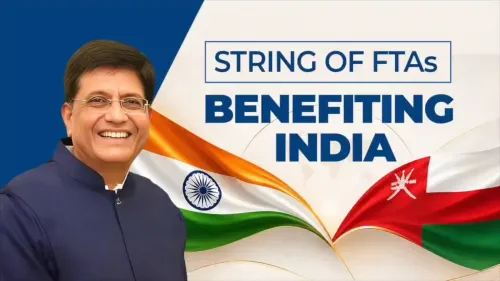
India signed the India-UAE Comprehensive Economic Partnership Agreement in 2022 , reflecting this mutual-access principle.
The Australia-India Economic Cooperation and Trade Agreement ( 2022 ) similarly protected sensitive sectors while liberalising key areas.
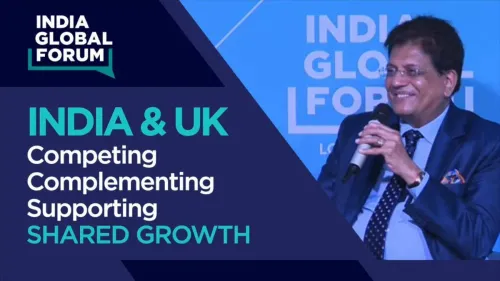
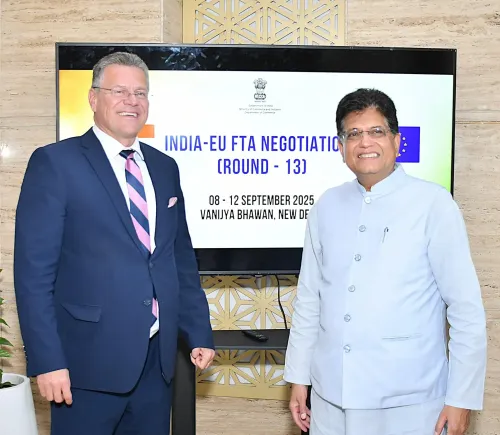
Ongoing India-UK and India-EU FTA negotiations are the most immediate arenas where this stance will be tested.
India's position at the WTO has consistently opposed unilateral liberalisation demands on developing economies.
The statement is a clear signal to global trading partners: access to India's consumer market requires genuine equivalent access in return.
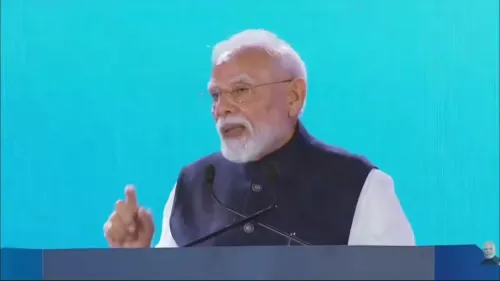
Reciprocity is the word. Union Commerce and Industry Minister Piyush Goyal staked out India's core trade philosophy on Wednesday, October 14, 2026, in a single, pointed line that doubles as both an invitation and a demand: 'Our idea is to open India's market to the world, as we wish to see other markets open to India.'
The sentence is short. The stakes are not. In one breath, Goyal anchors India's trade posture to a principle that has quietly shaped every major negotiation New Delhi has entered over the past several years — reciprocity before openness, never openness without it.
The reciprocity doctrine that drives India's FTA strategy
India has not been shy about signing deals. The India-UAE Comprehensive Economic Partnership Agreement, concluded in 2022, delivered preferential tariff access across goods and services in both directions. The Australia-India Economic Cooperation and Trade Agreement, also sealed in 2022, liberalised market entry in key sectors while explicitly protecting sensitive domestic industries. Both pacts share the same architectural logic: India will open its doors, but only if the other side opens theirs in equal measure. This calibrated approach has also defined India's posture at the WTO, where New Delhi has consistently resisted unilateral concessions and pushed back against frameworks that ask developing economies to liberalise faster than their trading partners. The message Goyal distilled into one sentence on X is, in effect, the operating manual for an entire ministry.Why this moment matters — UK, EU talks in the frame
The global backdrop amplifies the stakes of that compact formulation. Supply chains are fragmenting. Protectionism is rising in several major economies. India, positioning itself as a reliable alternative manufacturing and services hub, needs markets abroad to absorb the exports that domestic producers and foreign investors are being encouraged to generate. Two high-value negotiations sit unresolved: the India-UK Free Trade Agreement and the India-EU broad-based trade and investment agreement. Both have been in the works for several years, with market-access offers and tariff schedules still being negotiated. Goyal's public restatement of the reciprocity principle is a signal to those partners — and to Indian industry — that New Delhi will not blink first. For Indian exporters, the minister's framing is reassuring: the government is not planning asymmetric concessions. For global trading partners, it is a clear pricing signal: access to one of the world's fastest-growing consumer markets comes at the cost of genuine, equivalent access in return. A one-sentence post. A decades-long negotiating stance. The commerce minister just said the quiet part out loud — and the world's trade desks are paying attention.Point of View
Public consolidation of India's negotiating red line ahead of what are likely to be crunch rounds in the UK and EU FTA talks — a reminder to both domestic constituencies and foreign counterparts that the reciprocity doctrine is non-negotiable. The framing also serves a second purpose: insulating the government from domestic criticism that it is 'giving away' market access, by making mutuality the headline rather than the fine print. In the context of rising global protectionism, India is essentially arguing that it is the reasonable actor — willing to open up, but only for equally open partners. Whether that posture accelerates or stalls the UK and EU deals will be the real test of how far principle can be traded for strategic urgency.
NationPress
14 Oct 2026
Frequently Asked Questions
What did Piyush Goyal say about India's trade policy?
Piyush Goyal stated that India's approach is to open its market to the world, but on the condition that other countries equally open their markets to Indian goods and services — a principle of reciprocity.
What free trade agreements has India signed recently?
India signed the India-UAE Comprehensive Economic Partnership Agreement and the Australia-India Economic Cooperation and Trade Agreement, both in 2022, both built on mutual market-access commitments.
What is the status of the India-UK free trade agreement?
The India-UK FTA has been under negotiation for several years, with tariff schedules and market-access offers still being finalised as of 2026.
Why does India insist on reciprocity in trade deals?
India insists on reciprocity to balance export growth ambitions with safeguards for domestic industry, and to resist WTO frameworks that would require developing economies to liberalise faster than richer trading partners.
What does India's open-market stance mean for exporters?
For Indian exporters, the reciprocity doctrine is a commitment that the government will seek equivalent foreign market access in every trade deal, rather than making one-sided concessions that favour imports over exports.