Piyush Goyal marks Partition Remembrance Day, invokes Viksit Bharat

Synopsis
On Partition Horrors Remembrance Day, Commerce Minister Piyush Goyal honoured the survivors of the 1947 partition, calling it a 'dreadful chapter' that scarred generations, and linked the day's memory to India's resolve for unity and development under the Viksit Bharat vision.
Key Takeaways
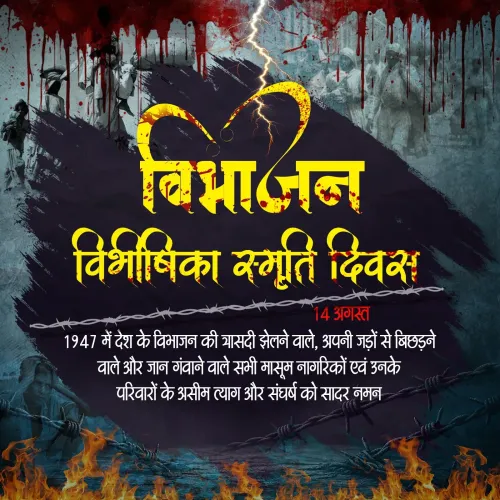
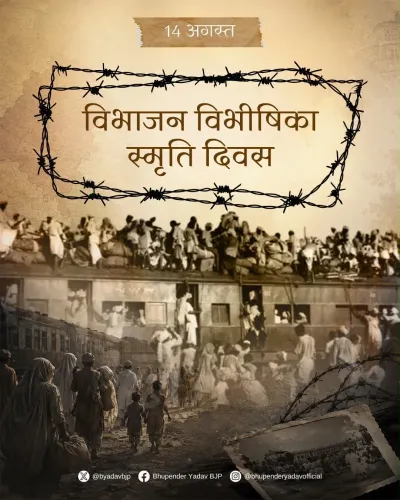
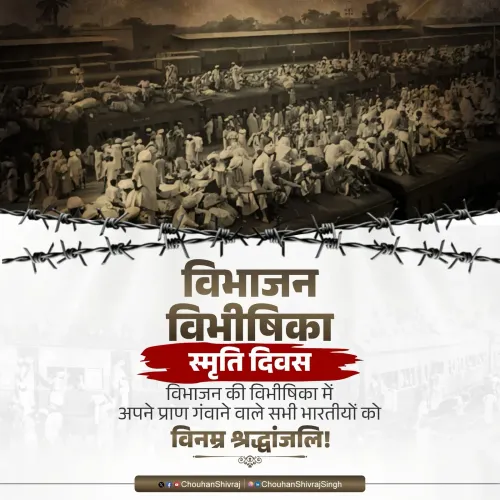
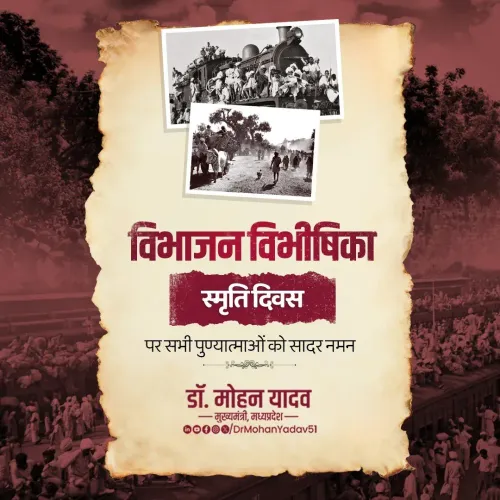
Partition Horrors Remembrance Day is observed annually on 14 August , instituted by the Government of India in 2021 .
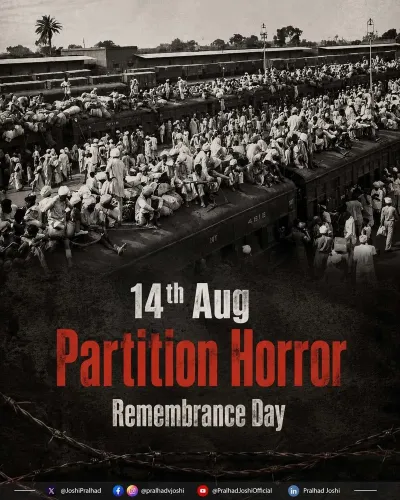
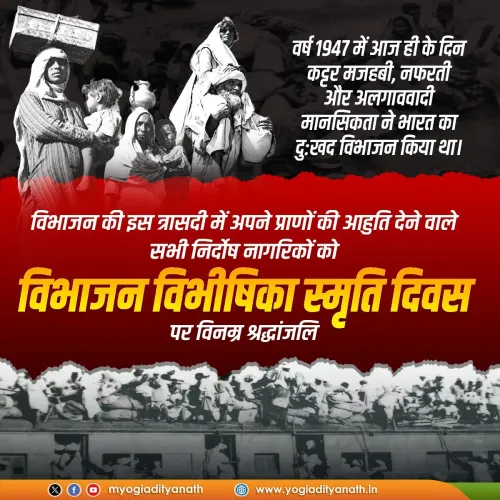
Union Minister Piyush Goyal described partition as 'a dreadful chapter' that 'left deep scars on generations.' The 1947 partition of British India triggered one of the largest forced migrations in modern history, with mass displacement and communal violence across Punjab and Bengal.
Goyal invoked the Viksit Bharat vision — India's goal of becoming a developed nation by 2047 — as the forward-looking answer to the lessons of partition.
The tribute comes on the eve of Independence Day, 15 August , placing remembrance of partition's cost alongside the celebration of freedom.
The wounds of 1947 do not fully heal — they only teach. On Partition Horrors Remembrance Day, 14 August, Union Commerce and Industry Minister Piyush Goyal paid tribute to the millions who endured the catastrophic division of British India, calling partition 'a dreadful chapter in our history' that 'left deep scars on generations.'
Goyal's message honoured those who 'rebuilt their lives with courage and upheld the spirit of humanity even in the face of unimaginable adversity' — a direct acknowledgement of the survivors and their descendants who carried the trauma of displacement across borders and decades.
A day born from the memory of mass displacement
Partition Horrors Remembrance Day was formally instituted by the Government of India in 2021 to be observed every year on 14 August — the eve of Independence Day. The choice of date is deliberate: it places the memory of partition's violence and loss in direct conversation with the celebration of freedom that follows the next morning, ensuring neither moment is read in isolation from the other. The 1947 partition of British India into India and Pakistan triggered one of the largest forced migrations in recorded history. Millions were uprooted, communal violence claimed lives across Punjab, Bengal and beyond, and entire communities were remade almost overnight. The human cost — in lives, in property, in cultural continuity — remains among the most consequential episodes in the subcontinent's modern history.Harmony and Viksit Bharat framed as partition's answer
Goyal closed his message with a forward-looking note, urging that the day be remembered 'as a testament to the strength and resilience of our people' and calling for a reaffirmation of 'harmony, brotherhood and unity as we work towards building a Viksit Bharat.' The phrase — a government vision to transform India into a fully developed nation by 2047, the centenary of independence — has become a recurring anchor in official messaging that connects historical memory to contemporary national ambition. The framing follows a well-established pattern among senior ministers: partition remembrance is positioned not merely as mourning but as a cautionary foundation, a reminder of what fracture costs and why unity must be actively sustained. With Independence Day on 15 August hours away, Goyal's tribute sets a tone of solemn reflection before the celebrations begin. The strength of a nation is measured not only by how it celebrates its freedom, but by how honestly it remembers the price paid for it.Point of View
It positions partition memory as the moral counterweight to celebration — a reminder that freedom arrived alongside catastrophe. The invocation of Viksit Bharat is significant; it completes a narrative loop the BJP has been constructing since 2021, where partition trauma is not merely mourned but conscripted into a forward-looking national-unity argument. The framing implicitly warns against communal division by citing its most devastating historical consequence. As India approaches the centenary of independence in 2047, expect this rhetorical architecture — partition horror as the cautionary past, Viksit Bharat as the aspirational future — to intensify in official discourse.
NationPress
14 Aug 2026
Frequently Asked Questions
What is Partition Horrors Remembrance Day?
Partition Horrors Remembrance Day is an annual observance on 14 August instituted by the Government of India in 2021 to commemorate the suffering caused by the 1947 division of British India into India and Pakistan.
Why is Partition Horrors Remembrance Day observed on 14 August?
The date — the eve of India's Independence Day on 15 August — is chosen deliberately so that the memory of partition's violence and displacement is held alongside the celebration of freedom, ensuring both are understood together.
What did Piyush Goyal say on Partition Remembrance Day?
Goyal called partition 'a dreadful chapter in our history' that 'left deep scars on generations,' honoured those who rebuilt their lives with courage, and called for reaffirming 'harmony, brotherhood and unity' in pursuit of a Viksit Bharat .
What is Viksit Bharat?
Viksit Bharat is the Government of India's vision to transform the country into a fully developed nation by 2047 , the centenary of independence. It is frequently cited in official messaging linking historical memory to contemporary national goals.
How many people were displaced by the 1947 partition of India?
The 1947 partition of British India triggered one of the largest forced migrations in recorded history, displacing millions across the newly drawn borders of India and Pakistan, with widespread communal violence in Punjab, Bengal, and other regions.