Piyush Goyal: NEET leak bill to be tabled in Parliament soon
Synopsis
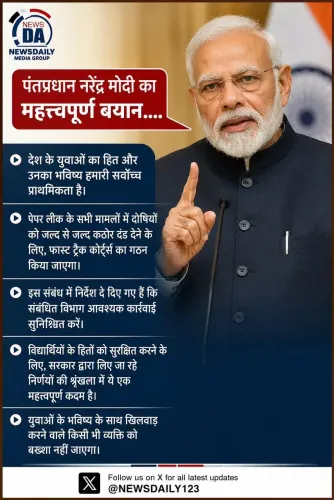
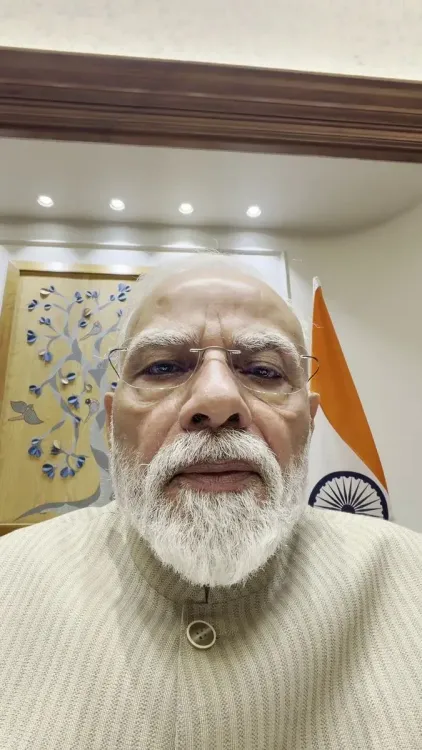
Union Minister Piyush Goyal shared PM Modi's address on the NEET paper leak, announcing that a Cabinet-ready draft bill for fast-track courts and stringent punishments has been prepared and will be tabled in Parliament during the ongoing monsoon session.
Key Takeaways
PM Modi, in a message shared by Piyush Goyal , acknowledged the NEET paper leak as deeply painful for lakhs of students and parents .
The government re-conducted the examination for 22 lakh students and declared results on the 19th of July .
Accused individuals have been arrested and are currently in jail .
A draft bill providing for fast-track courts and stringent punishments was finalised late on 24 July and will be placed before the Cabinet on 25 July .
The government intends to table and pass the bill in Parliament during the second week of the monsoon session , beginning Monday.
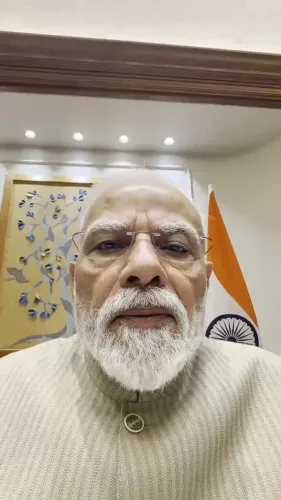
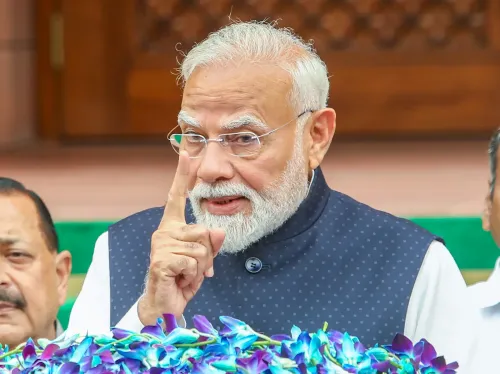
Union Commerce and Industry Minister Piyush Goyal on Friday, 24 July 2026 shared a message from Prime Minister Narendra Modi addressing the nation on the NEET paper leak crisis, stating that a draft bill providing for fast-track courts and stringent punishments has been prepared and will be placed before the Cabinet for discussion the following day.
Context
In his message shared by Goyal, Prime Minister Modi acknowledged that the paper leak is 'no ordinary matter' (koi mamuli vishay nahin hai) and described it as 'deeply painful for lakhs of students and their parents.' He noted that over the past two-and-a-half months since the leak incident, multiple steps have been taken, accused individuals have been arrested and are in jail, and the government mobilised its full resources to conduct fresh examinations for 22 lakh students in the shortest possible time.
The Prime Minister further stated that results were declared on the 19th — five to six days prior to this post — and that news of successful students celebrating across the country has been coming in. Despite this, he said the government does not consider the matter closed.
Policy Backdrop
India's national medical entrance examination, NEET, conducted by the National Testing Agency (NTA), has faced repeated allegations of paper leaks and malpractice since the mid-2010s. The candidate pool has grown to over 20 lakh aspirants annually, making the integrity of the process a matter of national consequence. Parliament had previously enacted the Public Examinations (Prevention of Unfair Means) Act, 2024 in response to earlier integrity failures in NEET and UGC-NET, prescribing penalties for malpractice. The new draft bill signals that the government views existing provisions as insufficient and seeks a dedicated fast-track judicial mechanism.
NEET was introduced in 2013 and made the sole undergraduate medical entrance examination from 2016, replacing a patchwork of state-level tests. Centralisation was intended to reduce malpractice, but the scale of the examination has also made it a high-value target for organised paper leak networks.
Stakeholders and Impact
The most immediate stakeholders are the 22 lakh students who appeared in the re-conducted examination and their families, many of whom have spent years and significant financial resources preparing for NEET. Fast-track courts, if constituted, would expedite trials against those accused of orchestrating or facilitating the leak, providing a faster path to accountability than ordinary criminal courts. Stringent punishment provisions are intended to deter future attempts.
The National Testing Agency itself faces institutional scrutiny, with calls from multiple quarters for structural reforms to its examination delivery model, including greater use of technology-based proctoring and decentralised paper-setting mechanisms.
What's Next
The draft bill was delivered to Prime Minister Modi late on the night of 24 July after sustained inter-departmental work. Cabinet discussion is scheduled for 25 July, after which the bill will be given its final form incorporating suggestions from Cabinet colleagues. With the second week of the Parliament's monsoon session commencing on Monday, the government has stated it will make every effort to pass the bill in the House at the earliest. The passage of legislation establishing fast-track courts for examination fraud would mark a significant escalation in the legal framework governing national competitive examinations in India.
Point of View
Which mobilised student protests across multiple states and tested public confidence in centralised testing infrastructure. By framing the bill as a direct response from the Prime Minister rather than a bureaucratic measure, the BJP signals that it views exam integrity as a core governance credibility issue ahead of state election cycles. The invocation of fast-track courts echoes the legislative playbook used after high-profile crimes in earlier years, prioritising visible speed of justice over systemic reform of the NTA. Whether the bill addresses structural vulnerabilities in paper-setting and distribution — or focuses primarily on punitive deterrence — will determine its long-term effectiveness.
NationPress
24 Jul 2026
Frequently Asked Questions
What did PM Modi say about the NEET paper leak?
PM Modi, in a message shared by Union Minister Piyush Goyal, called the NEET paper leak deeply painful for lakhs of students and parents, confirmed that accused persons are in jail, and announced that a draft bill for fast-track courts and strict punishments will be discussed in Cabinet on 25 July before being tabled in Parliament.
What is the new NEET paper leak bill about?
The draft bill proposes the establishment of fast-track courts specifically to try cases of examination paper leaks and prescribes stringent punishments for those found guilty, aimed at deterring future malpractice in national competitive examinations.
When will the NEET paper leak bill be tabled in Parliament?
The government has stated it will make every effort to table and pass the bill during the second week of the monsoon session of Parliament, which begins on Monday following Cabinet approval on 25 July.
How many students appeared in the re-conducted NEET exam?
According to PM Modi's message shared by Piyush Goyal, the government organised the re-conducted NEET examination for 22 lakh students, with results declared approximately five to six days before 24 July 2026.
What law already exists for NEET paper leak cases?
Parliament enacted the Public Examinations (Prevention of Unfair Means) Act, 2024 after earlier integrity failures in NEET and UGC-NET. The new proposed bill goes further by providing for dedicated fast-track courts to expedite trials.