Nadda: PM-JAY Reaches West Bengal, 1.43 Cr Families to Benefit
Synopsis
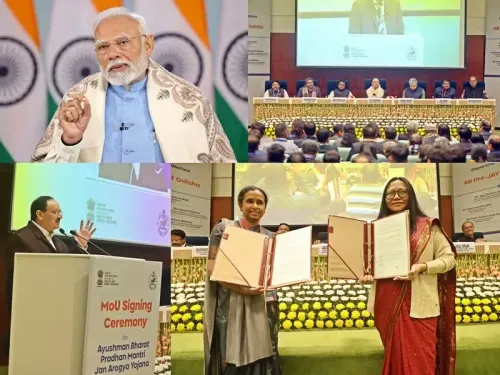
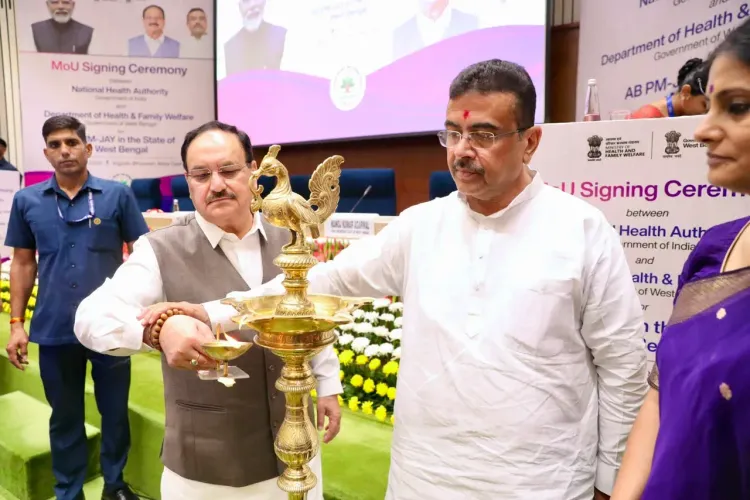
West Bengal has signed an MoU with the National Health Authority to implement Ayushman Bharat PM-JAY, Union Health Minister J. P. Nadda announced on June 8, 2026. Around 1.43 crore families in the state will gain cashless health coverage, with portability benefits extending to migrant workers across India.
Key Takeaways
West Bengal has signed an MoU with the National Health Authority to implement Ayushman Bharat PM-JAY , the world's largest government-funded health assurance scheme.
Approximately 1.43 crore families in West Bengal will become eligible for cashless hospitalisation under the scheme.
The portability feature of PM-JAY will allow West Bengal beneficiaries to access cashless treatment at empanelled hospitals in any state across India.
Migrant workers from West Bengal living or working in other states are a specific target group expected to benefit significantly from the portability provision.
The scheme provides coverage of up to Rs 5 lakh per family per year for secondary and tertiary care hospitalisation.
West Bengal's inclusion continues the central government's push to bring all states under a unified national health coverage framework, reducing fragmentation in public health delivery.
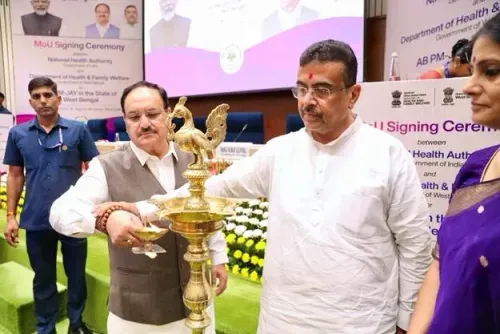
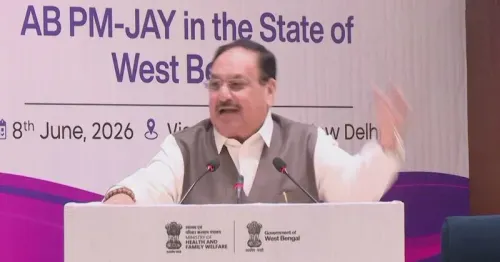
Union Health Minister J. P. Nadda on Monday, June 8, 2026, announced that West Bengal has joined the Ayushman Bharat Pradhan Mantri Jan Arogya Yojana (PM-JAY) framework after the Government of West Bengal and the National Health Authority (NHA) signed a Memorandum of Understanding, marking a significant expansion of the world's largest government-funded health assurance scheme.
Context
Announcing the development on X, Nadda wrote that 'a new chapter in healthcare delivery begins in West Bengal' with the MoU, describing it as 'a transformative step towards ensuring comprehensive healthcare access for millions of families.' He added that approximately 1.43 crore families in the state would now be eligible to benefit from the scheme.
A key feature highlighted by the minister is the portability provision of PM-JAY, which allows beneficiaries to avail cashless treatment at any empanelled hospital across the country — a benefit he specifically noted for migrant workers from West Bengal living or working in other states.
Policy Backdrop
Ayushman Bharat PM-JAY was launched nationally in September 2018 under the government of Prime Minister Narendra Modi as a flagship health coverage scheme targeting economically vulnerable families, providing coverage of up to Rs 5 lakh per family per year for secondary and tertiary hospitalisation.
The National Health Authority, an autonomous body under the Ministry of Health and Family Welfare, is responsible for implementing and regulating PM-JAY across states. West Bengal had previously operated its own state-run Swasthya Sathi health scheme, making its integration with the central programme a notable convergence in India's public health architecture.
The development continues a broader push by the central government to bring all states under the unified PM-JAY framework, reducing fragmentation in public health delivery and enabling seamless inter-state portability — a gap that had long affected internal migrants seeking cashless care away from their home states.
Stakeholders and Impact
The most immediate beneficiaries are the estimated 1.43 crore families in West Bengal who will gain access to cashless hospitalisation under the scheme. For migrant workers from the state — a significant population employed in industries and construction sites across Maharashtra, Delhi, Gujarat, and other states — the portability feature removes a critical barrier to accessing quality care far from home.
Hospitals empanelled under PM-JAY across the country will be obligated to extend cashless services to West Bengal beneficiaries, expanding the effective healthcare network available to the state's residents well beyond its own borders. The NHA will oversee the integration and empanelment processes in the state in the months ahead.
What's Next
Attention will now turn to the pace of hospital empanelment in West Bengal and the mechanisms through which the state's existing Swasthya Sathi infrastructure will be aligned or integrated with the national PM-JAY platform. The scale of outreach to eligible families — particularly in rural districts and among migrant communities — will determine how quickly the announced coverage translates into on-ground access.
If implementation proceeds on track, West Bengal's inclusion could set a template for other states that have maintained parallel health schemes, reinforcing the central government's long-term goal of a unified, portable national health coverage system for every citizen.
Point of View
Given the state's long-standing preference for its own Swasthya Sathi scheme and its historically arm's-length relationship with several central programmes. The MoU signals a pragmatic convergence that the central government will likely present as validation of PM-JAY's universal appeal and administrative superiority at scale. The emphasis on migrant worker portability is a pointed policy argument — it addresses a real gap that state-only schemes structurally cannot fill. Watching how smoothly the dual-scheme state transitions to the national platform will be a litmus test for India's broader ambition of a seamless, portable public health safety net.
NationPress
22 Sept 2026
Frequently Asked Questions
What is Ayushman Bharat PM-JAY and how does it work?
Ayushman Bharat PM-JAY is India's flagship government-funded health assurance scheme, launched in September 2018, that provides cashless hospitalisation coverage of up to Rs 5 lakh per family per year for secondary and tertiary care at empanelled public and private hospitals across the country.
How many families in West Bengal will benefit from PM-JAY?
According to Union Health Minister J. P. Nadda's announcement, approximately 1.43 crore families in West Bengal will be eligible to benefit from the Ayushman Bharat PM-JAY scheme following the MoU signed between the state government and the National Health Authority.
What is the portability feature of PM-JAY and why does it matter for West Bengal?
The portability feature allows PM-JAY beneficiaries to access cashless treatment at any empanelled hospital anywhere in India, regardless of their home state. This is particularly significant for migrant workers from West Bengal who live or work in other states and previously faced barriers to accessing cashless care away from home.
What is the National Health Authority and what role does it play in PM-JAY?
The National Health Authority is an autonomous body under India's Ministry of Health and Family Welfare. It is responsible for implementing, regulating, and overseeing the Ayushman Bharat PM-JAY scheme across all participating states, including managing hospital empanelment and beneficiary verification.
Did West Bengal have its own health scheme before joining PM-JAY?
Yes, West Bengal operated its own state-run Swasthya Sathi health scheme before signing the MoU to implement the central Ayushman Bharat PM-JAY programme. The integration of the two frameworks and the empanelment of hospitals in the state will be a key process to watch in the coming months.