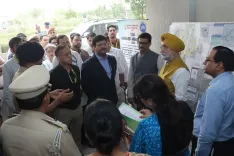
PM Modi addresses Bharat Renewable Energy Summit in Delhi
Synopsis
Prime Minister Narendra Modi addressed the Bharat Renewable Energy Summit in New Delhi on 2 November 2026. The summit focuses on India's clean-energy expansion, underpinned by a COP26 pledge to achieve 500 GW of non-fossil fuel capacity by 2030.
Key Takeaways
Prime Minister Narendra Modi spoke at the Bharat Renewable Energy Summit in New Delhi on 2 November 2026 .
India has pledged to reach 500 GW of non-fossil fuel capacity by 2030 , a commitment made at COP26 in 2021 .
India ranks among the world's top five countries for installed solar and wind power capacity.
The National Solar Mission , launched in 2010 , kick-started India's large-scale clean-energy push.
The Ministry of New and Renewable Energy oversees quarterly progress on capacity addition targets.
The summit draws renewable energy developers, state utilities, and policymakers to align investment and manufacturing strategy.
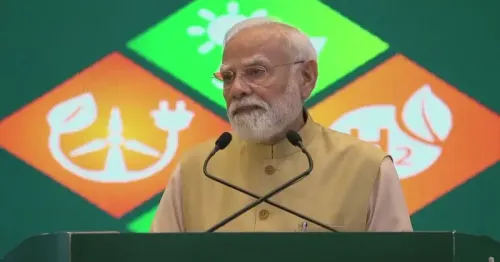
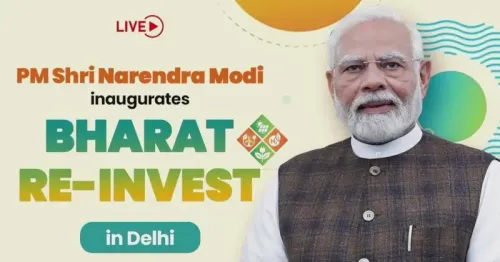
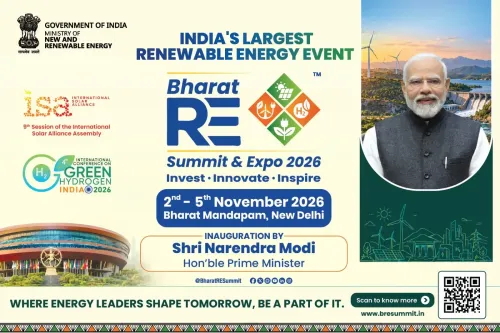
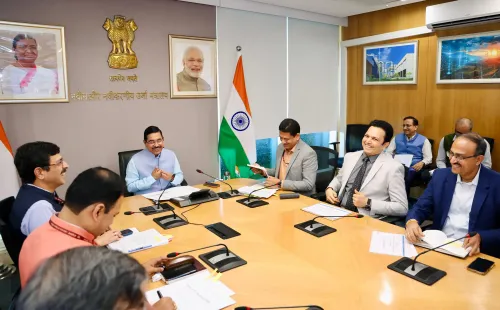
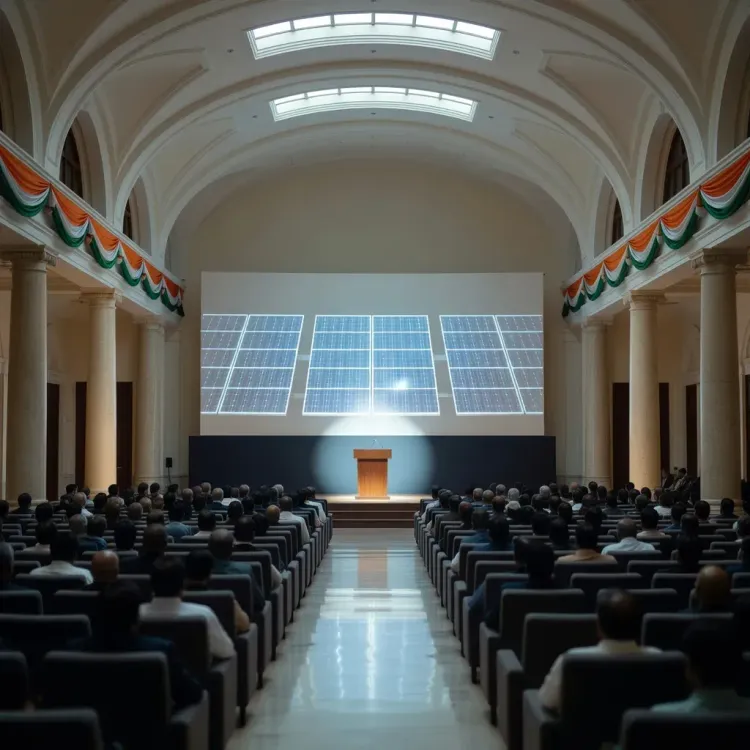
India's renewable energy ambitions took centre stage in the capital on Monday, 2 November 2026, as Prime Minister Narendra Modi delivered an address at the Bharat Renewable Energy Summit in New Delhi — a gathering convened to shape the country's next chapter in clean power.
India's climb to the top of the clean-power ladder
India has quietly become one of the world's top five nations in installed solar and wind capacity, a transformation years in the making. The foundation was laid with the National Solar Mission in 2010, which began scaling up both generation capacity and domestic manufacturing. That ambition hardened into a global pledge at COP26 in 2021, when India's updated Nationally Determined Contributions committed to reaching 500 GW of non-fossil fuel capacity by 2030.
That 500 GW target is not a distant abstraction — it is a quarterly race against time, tracked by the Ministry of New and Renewable Energy and scrutinised by developers, state utilities, and international climate monitors alike.
Why a summit, why now
The Bharat Renewable Energy Summit brings together renewable energy developers, state electricity utilities, and policymakers under one roof to align on investment pipelines, grid integration challenges, and manufacturing strategy under the broader Make in India push. For Prime Minister Modi, who has consistently framed clean energy as inseparable from national security and economic self-reliance, such a platform is both a policy instrument and a signal to global capital.
Any follow-up measures or capacity targets announced at the summit will be closely watched in the next quarterly reporting cycle from the Ministry of New and Renewable Energy.
Point of View
Making progress — or slippage — politically consequential at home and abroad. Convening such a summit signals the government wants to accelerate private and state-level alignment, not just celebrate existing gains. The announcements that follow, if any, will reveal whether this is a course-correction moment or a confidence-building exercise.
NationPress
2 Nov 2026
Frequently Asked Questions
What is the Bharat Renewable Energy Summit?
The Bharat Renewable Energy Summit is a conference held in New Delhi that brings together policymakers, renewable energy developers, and state utilities to discuss India's clean-energy policies, investment opportunities, and progress toward national capacity targets.
What is India's renewable energy target by 2030?
India committed at COP26 in 2021 to achieving 500 GW of non-fossil fuel-based electricity capacity by 2030, as part of its updated Nationally Determined Contributions under the Paris Agreement.
Why did PM Modi speak at the Renewable Energy Summit in 2026?
As Prime Minister, Narendra Modi has consistently championed renewable energy as central to India's energy security, climate commitments, and manufacturing goals. Addressing the summit underscores the government's continued focus on meeting the 2030 clean-power target.
What is the National Solar Mission?
The National Solar Mission was launched in 2010 to rapidly scale up India's solar power generation capacity and domestic manufacturing, forming the backbone of the country's renewable energy expansion.
Which ministry oversees India's renewable energy policy?
The Ministry of New and Renewable Energy is the central government body responsible for formulating and implementing policies on solar, wind, and other renewable energy sources, and it publishes quarterly capacity addition reports.