PM Modi announces Green Energy Corridor Phase-III Cabinet nod
Synopsis
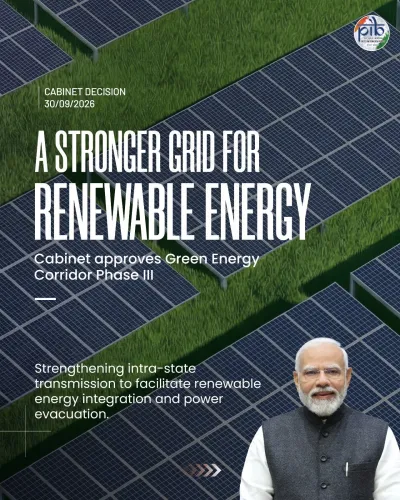
The Union Cabinet has approved Green Energy Corridor Phase-III, committing to 135 GW of renewable energy evacuation infrastructure and 50 GWh of battery storage. PM Modi announced the decision on September 30, 2026, framing it as a boost to cleaner power, stronger grids, and jobs in manufacturing and construction across states and union territories.
Key Takeaways
135 GW of renewable energy evacuation capacity is the headline target of the Cabinet-approved Green Energy Corridor Phase-III .
50 GWh of battery storage will be built alongside the transmission infrastructure to manage grid intermittency.
The corridor spans multiple states and union territories , addressing the geographic mismatch between renewable generation hubs and consumption centres.
Phase-I was approved in 2015 for renewable-rich states including Rajasthan , Gujarat , and Tamil Nadu ; Phase-III is the programme's largest expansion yet.
Power Grid Corporation of India Ltd is the principal central transmission utility for inter-state corridor components.
The decision directly supports India's 500 GW non-fossil capacity target by 2030 by closing the gap between generation ambition and grid delivery.
India's power grid just got a mandate to handle the renewable future. Prime Minister Narendra Modi on Wednesday, September 30, 2026 announced that the Union Cabinet has approved the Green Energy Corridor Phase-III, a landmark transmission infrastructure decision targeting 135 GW of renewable energy evacuation capacity and 50 GWh of battery storage — numbers that signal a grid being built for the next generation of clean power, not the last.
What Phase-III actually delivers
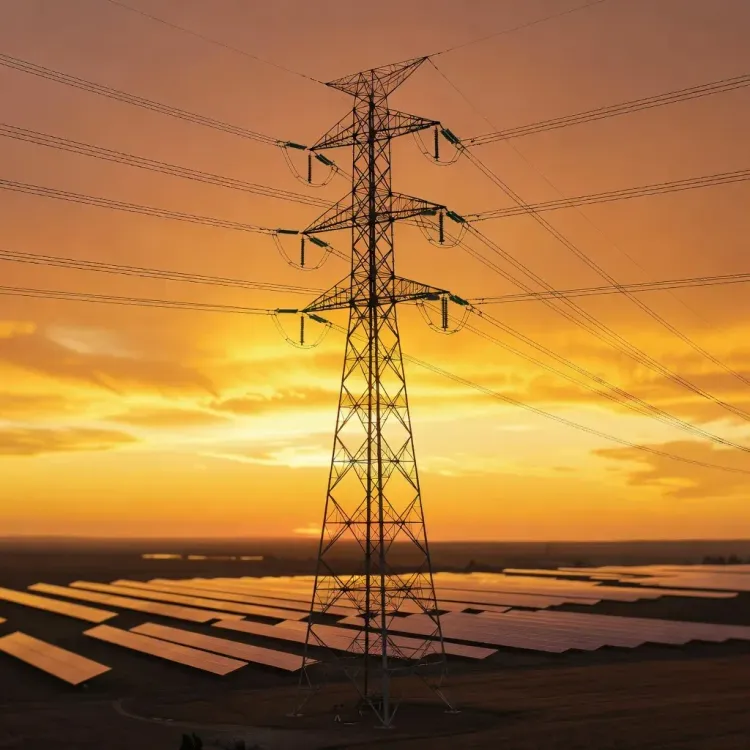
The Cabinet decision commits to building high-voltage transmission lines capable of evacuating 135 gigawatts of renewable energy — enough to move power equivalent to roughly half of India's current total installed capacity — from generation hubs to consumption centres across states and union territories. Alongside the transmission build-out, 50 GWh of battery storage will anchor the system, smoothing the intermittency that has long been renewable energy's Achilles heel on the grid.
The Prime Minister's post distilled the stakes plainly: 'Cleaner power. Stronger grids. More opportunities.' The third pillar — jobs in manufacturing and construction — underscores that this is as much an industrial policy move as an energy one, channelling grid investment into domestic supply chains at scale.
A corridor two decades in the making
The Green Energy Corridor programme was conceived to solve a structural problem: India's best renewable resources — the solar-rich deserts of Rajasthan, the wind corridors of Tamil Nadu and Gujarat — sit far from where the electricity is actually consumed. Phase-I, approved by the Cabinet in 2015, began building dedicated high-voltage transmission spines through these states. Phase-II extended coverage to additional regions. Phase-III is the programme's most ambitious chapter, scaling both capacity and storage in a single sweep.
Power Grid Corporation of India Ltd, the central transmission utility, has been the principal executing agency for inter-state components of the corridor. The Ministry of New and Renewable Energy, the nodal body for clean energy policy, has coordinated the corridor architecture with the power ministry throughout all three phases.
India's 500 GW deadline and the transmission gap
India has committed to 500 GW of non-fossil fuel capacity by 2030, a target that was always as much a wiring challenge as a generation challenge. Building solar farms and wind parks at gigawatt scale is one problem; getting that power reliably onto the national grid is another entirely. Every major renewable push — from the original 175 GW target by 2022 to the current 500 GW goal — has bumped against the same bottleneck: transmission infrastructure that lagged generation ambition. Phase-III is a direct answer to that gap, and the inclusion of 50 GWh of storage moves the conversation from 'can we generate it' to 'can we dispatch it reliably'.
State power utilities and independent renewable energy generators stand to benefit most immediately, as stranded generation — plants producing power that cannot reach buyers — has been a persistent drag on project economics and investor confidence.
Jobs, manufacturing, and the grid-build economy
The Prime Minister specifically flagged employment in manufacturing and construction as a Phase-III deliverable. Projects of this scale require transformers, conductors, switchgear, towers, and cables — a supply chain that, if sourced domestically, feeds directly into India's broader industrial push. The construction phase alone typically mobilises tens of thousands of workers across right-of-way clearance, tower erection, and substation commissioning. Whether procurement norms mandate domestic content will shape how much of that manufacturing benefit stays onshore — a detail that stakeholders in the sector will watch closely as project tenders emerge.
Point of View
Not just a generation problem. By bundling 50 GWh of battery storage into the same Cabinet decision as the transmission build-out, the government is signalling a shift from reactive grid upgrades to proactive dispatchability planning — a design philosophy that has been missing from earlier phases. The jobs-in-manufacturing angle also plants this squarely within the 'Make in India' industrial frame, suggesting the government intends to use grid capex as an industrial policy lever. The real test will be execution velocity: previous Green Energy Corridor phases have faced land acquisition and approval delays that stretched timelines well beyond initial projections.
NationPress
30 Sept 2026
Frequently Asked Questions
What is the Green Energy Corridor Phase-III?
Green Energy Corridor Phase-III is a Union Cabinet-approved scheme to build dedicated high-voltage transmission infrastructure capable of evacuating 135 GW of renewable energy and deploying 50 GWh of battery storage across Indian states and union territories.
What is the 135 GW renewable energy evacuation target?
The 135 GW figure refers to the transmission capacity — the ability to move up to 135 gigawatts of renewable power from generation sites to the national grid — that Phase-III infrastructure is designed to handle once built.
How does Phase-III differ from Phase-I and Phase-II of the Green Energy Corridor?
Phase-I, approved in 2015, focused on building transmission spines in renewable-rich states like Rajasthan, Gujarat, and Tamil Nadu. Phase-II extended regional coverage. Phase-III is the largest expansion, adding both significantly higher evacuation capacity and a dedicated 50 GWh battery storage component.
Which agency will execute the Green Energy Corridor Phase-III?
Power Grid Corporation of India Ltd, the central transmission utility, has been the principal executing agency for inter-state components of the Green Energy Corridors and is expected to lead Phase-III inter-state transmission work.
How does this Cabinet decision relate to India's 2030 renewable energy target?
India has committed to 500 GW of non-fossil fuel capacity by 2030. Phase-III directly addresses the transmission bottleneck — the gap between where renewable energy is generated and where it needs to be consumed — that has constrained progress toward that goal.