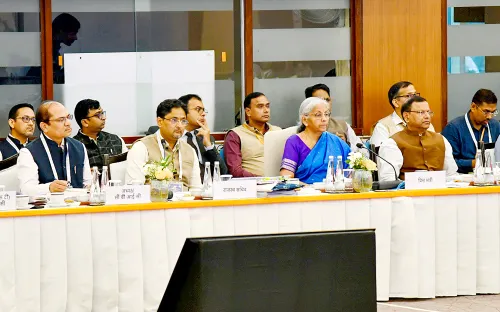
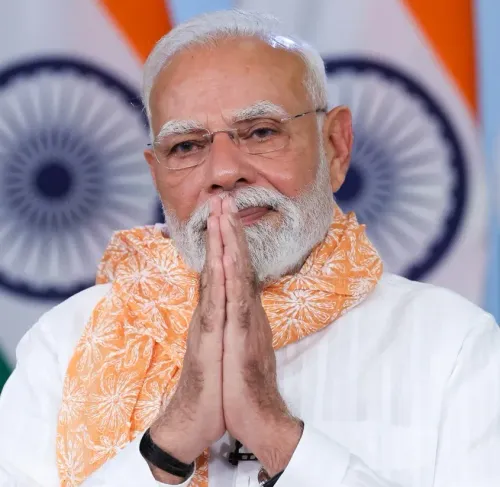
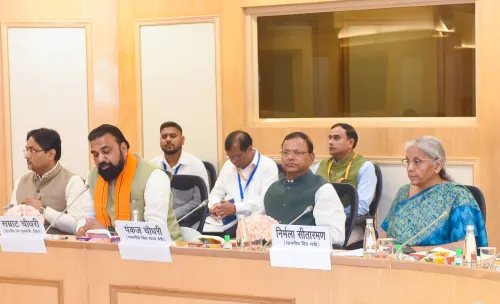
PM Modi welcomes GST Council's decriminalisation push
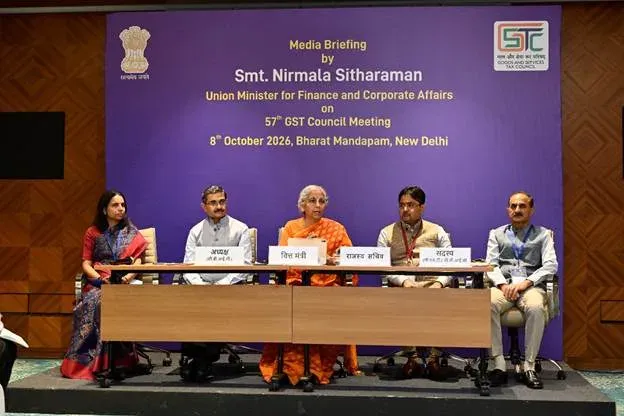
Synopsis
The GST Council approved sweeping reforms on October 8, 2026 — removing arrest provisions, decriminalising procedural violations, and automating refunds. PM Modi endorsed the changes as a shift toward faster, cheaper, trust-based tax administration for Indian businesses.
Key Takeaways
The GST Council approved a new reform package on October 8, 2026 covering decriminalisation, arrest-provision removal, and simpler procedures.
Arrest provisions for a broader class of GST offences are being removed, reducing coercive enforcement risk for businesses.
Automated refunds are a centrepiece of the package, aimed at unlocking working capital frozen in the refund pipeline.
PM Modi framed the reforms around four pillars: faster decisions, lower compliance costs, automated refunds, and trust-based administration.
The changes build on nearly a decade of iterative GST simplification since the tax's 2017 launch.
The Council's cross-party, Centre-plus-states structure gives the reforms strong political durability.
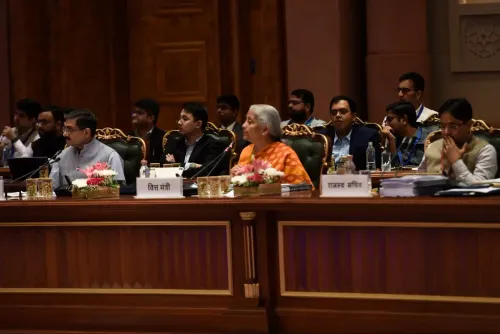
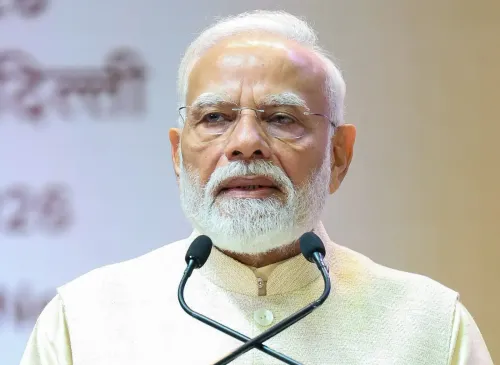
A major shift in how India taxes its businesses arrived quietly on Thursday, October 8, 2026 — and Prime Minister Narendra Modi moved quickly to underline its significance. The GST Council approved a new round of reforms centred on removing arrest provisions, widening decriminalisation, and streamlining compliance procedures, and the Prime Minister hailed the changes as a decisive step toward a 'trust-based administration.'
What the GST Council actually decided
The Council's package targets three pain points that businesses — especially small and mid-sized traders — have flagged since the Goods and Services Tax launched in 2017. First, the removal of arrest provisions for a broader class of offences eases the coercive edge that critics said made GST enforcement feel punitive rather than regulatory. Second, greater decriminalisation of procedural violations means fewer taxpayers face criminal liability for what are, in practice, paperwork errors. Third, simpler procedures and automated refunds aim to cut the lag time that has long tied up working capital for exporters and manufacturers.
Modi framed the intent in four sharp lines: 'Faster decisions. Lower compliance costs. Automated refunds. Trust-based administration.' That sequence is deliberate — it moves from speed to cost to cash-flow to the overarching philosophy, signalling that the reform is systemic, not piecemeal.
The arc of GST simplification since 2017
The GST Council, a constitutional body chaired by the Union Finance Minister and comprising state finance ministers, has convened dozens of times since GST's rollout, steadily filing down the rough edges of what was, at launch, an unwieldy multi-rate structure. Rate rationalisation, the near-elimination of the anti-profiteering authority, and successive threshold increases for small businesses have each marked a chapter in that story. The October 2026 decisions on decriminalisation and arrest provisions represent the most significant behavioural shift in enforcement philosophy yet — moving the tax administration from a presumption of guilt to a presumption of compliance.
For the business community, the practical upshot is material. Automated refunds, if implemented at scale, could unlock working capital that currently sits frozen for weeks or months. Lower compliance costs reduce the overhead that disproportionately burdens smaller firms lacking large finance teams. And the removal of arrest-level deterrents for procedural lapses should reduce the anxiety that has kept some businesses operating in the informal economy rather than registering under GST.
Why the timing matters
The reforms land at a moment when India is pressing hard on its 'ease of doing business' metrics. Decriminalising tax procedures is increasingly seen internationally as a marker of a mature, investor-friendly tax regime — a signal to both domestic entrepreneurs and foreign investors that the state is a partner in commerce, not an adversary. The Council's unanimous or near-unanimous character — it brings together the Centre and all states — also gives these changes political durability that a purely central notification would not carry.
The test, as always, will be in implementation: whether automated refund systems are actually deployed at the pace promised, and whether field-level enforcement culture shifts to match the reformed legal framework. India's GST story has never lacked ambition — what these reforms add is accountability to the taxpayer's clock.
Point of View
' the Prime Minister is signalling to the business lobby that the state acknowledges past overreach. The political calculus is shrewd: decriminalisation costs little in revenue terms while generating substantial goodwill among the MSME and trader communities that form a core BJP constituency. The real test of intent will be whether the 'automated refund' promise translates into measurable turnaround-time targets — without those benchmarks, the reform risks being remembered as announcement rather than achievement.
NationPress
8 Oct 2026
Frequently Asked Questions
What did the GST Council decide on October 8 2026?
The GST Council approved removal of arrest provisions for a wider category of offences, greater decriminalisation of procedural violations, simpler compliance procedures, and automated refunds for taxpayers.
What does GST decriminalisation mean for businesses?
Decriminalisation means businesses will no longer face criminal liability — including potential arrest — for procedural or paperwork errors under GST, reducing risk and compliance anxiety especially for smaller firms.
How will automated GST refunds help taxpayers?
Automated refunds are designed to release working capital faster, cutting the weeks-long delays that exporters and manufacturers currently face when claiming GST refunds.
What is the GST Council and who chairs it?
The GST Council is a constitutional body comprising the Union Finance Minister as chair and state finance ministers as members; it sets GST rates, rules, and policy for the entire country.
What is 'trust-based GST administration' as mentioned by PM Modi?
Trust-based administration refers to a shift in enforcement philosophy — presuming taxpayer compliance rather than suspicion, reducing coercive tools like arrest, and using data and automation to verify claims rather than manual scrutiny.