PM Modi Greets Nation on Ayurveda Day, Calls It a Way of Life
Synopsis
Prime Minister Narendra Modi greeted the nation on Ayurveda Day 2026, calling Ayurveda a powerful medium for healthy and balanced living. He quoted a classical Sanskrit verse and urged citizens to deepen their commitment to India's ancient healing heritage, observed annually on Dhanwantari Jayanti since 2016.
Key Takeaways
PM Narendra Modi extended greetings on Ayurveda Day 2026 , observed on Dhanwantari Jayanti .
He described Ayurveda as 'a powerful means of a healthy and balanced lifestyle,' not merely a treatment method.
Modi quoted a foundational verse from the Charaka Samhita defining life in terms of benefit, harm, happiness, and suffering.
The Ministry of AYUSH was established in November 2014 to mainstream traditional Indian medicine systems.
National Ayurveda Day was formally instituted in 2016 , anchored to Dhanwantari Jayanti.
The government has consistently positioned AYUSH as complementary to modern medicine, with a focus on preventive and lifestyle-linked care.
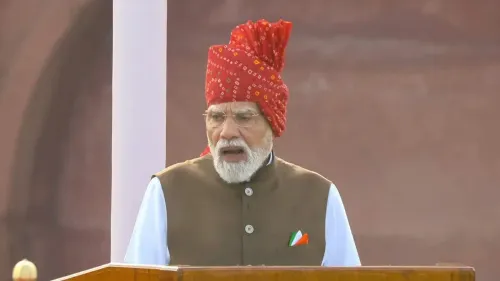
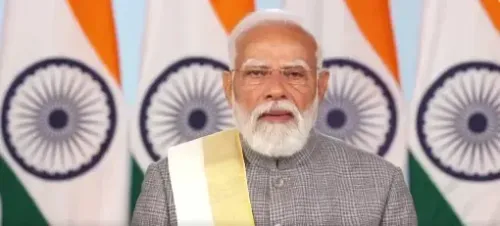
Ancient wisdom, modern relevance — and a Prime Minister reminding 1.4 billion Indians that their oldest healing tradition is also their most practical one. On Ayurveda Day 2026, Prime Minister Narendra Modi extended warm greetings to the nation and made a pointed case for Ayurveda not merely as medicine, but as a blueprint for balanced living.
In his post on X, the Prime Minister wrote — 'Ayurveda Divas ki sabhi deshawasiyon ko hardik shubhkamnayein!' — 'Heartfelt greetings to all countrymen on Ayurveda Day!' He added that Ayurveda is not merely a method of treatment, but 'a powerful means of a healthy and balanced lifestyle,' and called on citizens to strengthen their resolve to embrace this rich heritage.
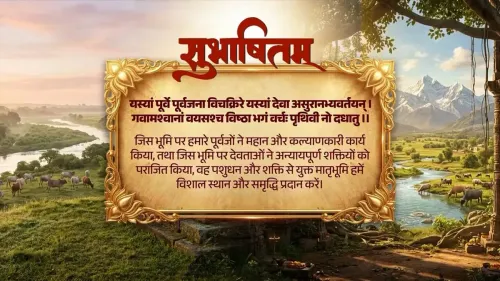
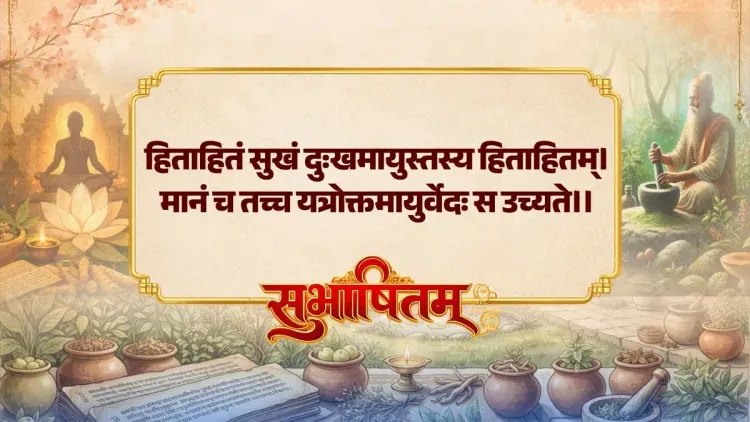
He also quoted a classical Sanskrit shloka: 'Hitahitam sukham duhkham ayus tasya hitahitam' — a foundational verse from the Charaka Samhita that defines life (ayu) in terms of what is beneficial and harmful to it, what brings happiness and what brings suffering. The choice of verse was deliberate: it frames Ayurveda as a philosophy of living, not a shelf of remedies.
From a Government Department to a National Movement
The occasion has institutional roots that run directly back to the current government. The Ministry of AYUSH — covering Ayurveda, Yoga, Unani, Siddha, and Homeopathy — was carved out as a full ministry in November 2014, signalling a shift from treating traditional medicine as a footnote to mainstreaming it as policy. National Ayurveda Day was formally instituted in 2016, pegged to Dhanwantari Jayanti — the birth anniversary of the divine physician of Hindu tradition — to anchor the celebration in cultural memory.
The annual observance has since grown into a platform for public health messaging, practitioner outreach, and the broader positioning of AYUSH systems as complementary to modern medicine — particularly for preventive and lifestyle-linked care.
Prevention Over Prescription — The Recurring Pitch
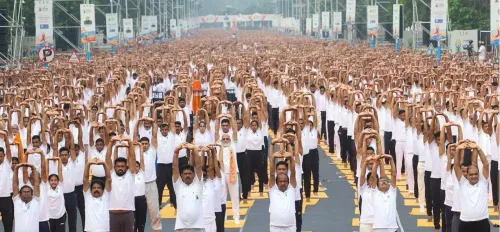
The Prime Minister's framing — Ayurveda as a 'lifestyle' rather than a last resort — echoes a consistent government line: that the tradition's greatest value lies upstream of illness, in diet, routine, and mind-body balance. This argument gained significant traction during the COVID-19 pandemic, when AYUSH protocols entered mainstream public health discourse and Yoga was promoted globally as a wellness tool alongside conventional medicine.
The government has also pushed for integration of Ayurveda into primary healthcare, with state-level initiatives and AYUSH health and wellness centres forming part of the broader Ayushman Bharat infrastructure. How deeply these integrations take root — and what the coming health budget allocates to AYUSH — remains the live policy question.
On a day named for the god of medicine, India's Prime Minister is making the oldest argument in the book: that the best cure is the life you build before you fall sick. The question is whether policy muscle will keep pace with the cultural pride.
Point of View
Lending it intellectual weight alongside political momentum. The real test, however, will be whether AYUSH integration into primary healthcare receives sustained budgetary commitment in the cycles ahead.
NationPress
23 Sept 2026
Frequently Asked Questions
When is Ayurveda Day celebrated in India?
Ayurveda Day is celebrated annually on Dhanwantari Jayanti, the birth anniversary of the divine physician Dhanwantari from Hindu tradition. It has been observed as a national day since 2016.
What did PM Modi say on Ayurveda Day 2026?
PM Modi extended greetings to all citizens and stated that Ayurveda is not merely a method of treatment but a powerful means of a healthy and balanced lifestyle. He also quoted a classical Sanskrit verse from the Charaka Samhita and urged citizens to strengthen their resolve to embrace this heritage.
What is the Ministry of AYUSH and when was it formed?
The Ministry of AYUSH — covering Ayurveda, Yoga, Unani, Siddha, and Homeopathy — was established in November 2014 by elevating the earlier Department of AYUSH to a full ministry, with the aim of mainstreaming traditional Indian medicine systems.
What is the Sanskrit shloka PM Modi quoted on Ayurveda Day?
PM Modi quoted 'Hitahitam sukham duhkham ayus tasya hitahitam,' a verse from the Charaka Samhita that defines life (ayu) in terms of what is beneficial and harmful, and what brings happiness or suffering — framing Ayurveda as a philosophy of living.
How has the Indian government promoted Ayurveda in recent years?
The government created the Ministry of AYUSH in 2014, instituted National Ayurveda Day in 2016, and has promoted AYUSH protocols for preventive care, including during the COVID-19 pandemic. It has also worked to integrate Ayurveda into primary healthcare through AYUSH health and wellness centres under the Ayushman Bharat framework.