PM Modi Highlights Sea as Bridge Between India and Indonesia
Synopsis
Prime Minister Narendra Modi on July 7, 2026, invoked India and Indonesia's maritime proximity of roughly 150 km and deep historical ties, framing the sea as a vital bridge between the two nations and signalling continued strategic engagement under India's Act East and SAGAR policies.
Key Takeaways
PM Modi stated that India and Indonesia are separated by only about 150 km of sea, despite their capitals being thousands of kilometres apart by land.
He described the sea as 'a vital bridge' and 'at the core of our shared future' between the two nations.
The Andaman and Nicobar Islands form India's closest geographic frontier to Indonesia's Aceh province .
India and Indonesia elevated ties to a Comprehensive Strategic Partnership during Modi's 2018 Jakarta visit , focusing on maritime security and connectivity.
The post aligns with India's Act East Policy (launched 2014 ) and the SAGAR vision for Indo-Pacific engagement.
Analysts will watch the next ASEAN-India Summit for concrete bilateral announcements on defence or connectivity.
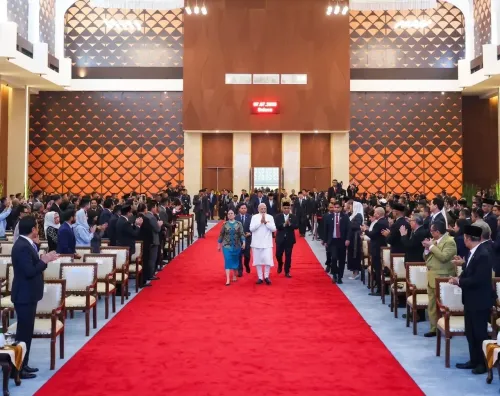
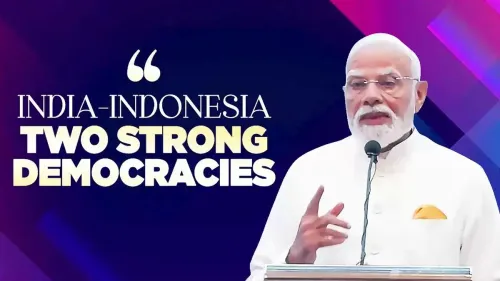
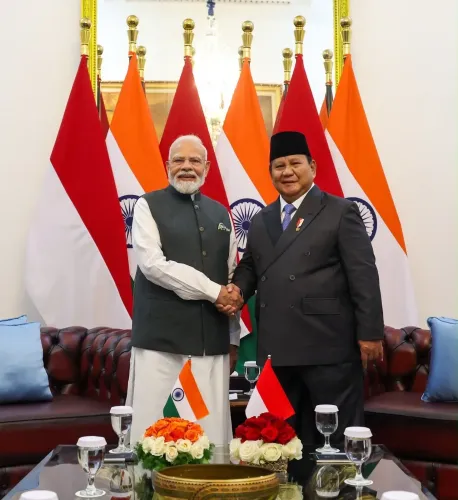
Prime Minister Narendra Modi on Tuesday, July 7, 2026, underscored the deep maritime and historical bonds between India and Indonesia, noting that despite the two capitals being thousands of kilometres apart by land, the two nations are separated by only about 150 kilometres of sea — a proximity he described as central to their shared future.
Context
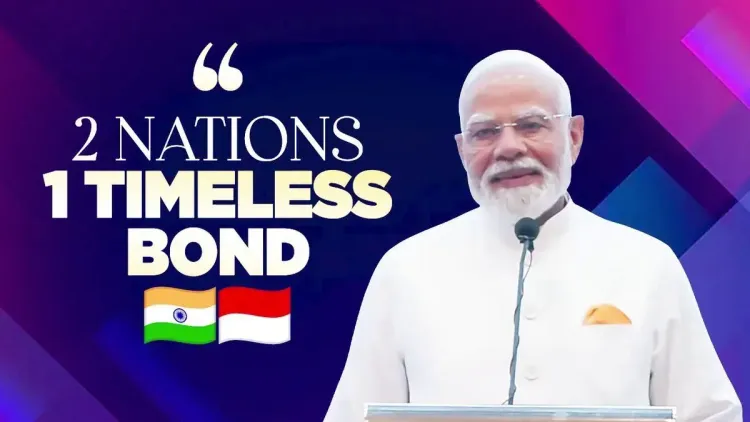
In his post on X, Modi wrote: 'Delhi and Jakarta may be thousands of kilometres apart, but by sea, the distance between our nations is only about 150 kms. For India and Indonesia, the sea serves as a vital bridge, which is at the core of our shared future.' He added that 'equally noteworthy is the shared bonds of history,' accompanied by a video.
The geographic reference points to the Andaman and Nicobar Islands, India's union territory whose southernmost reaches lie in close proximity to Indonesia's Aceh province across the Strait of Malacca and surrounding waters. This maritime corridor has historically served as a passage for trade, culture, and people between the two civilisations.
Policy Backdrop
India's engagement with Indonesia has deepened considerably since the launch of the Act East Policy in 2014, which sought to strengthen economic, strategic, and cultural linkages with Southeast Asia. Indonesia, as the largest economy in the region and a fellow democracy, has been a central pillar of this outreach.
During Modi's visit to Jakarta in 2018, the two countries elevated their relationship to a Comprehensive Strategic Partnership, with a particular focus on maritime security and connectivity. India's broader SAGAR (Security and Growth for All in the Region) vision also frames Indonesia as a key Indo-Pacific partner, emphasising shared interests in open sea lanes and regional stability.
The two nations share ancient civilisational links — from the spread of Hindu and Buddhist traditions across the archipelago to shared maritime trade routes that predate colonial-era borders. These historical threads form the cultural underpinning of modern diplomatic messaging.
Stakeholders and Impact
Maritime communities on both sides — including fishing populations in the Andaman and Nicobar Islands and Aceh — stand to benefit from stronger bilateral frameworks on maritime safety, search and rescue, and fisheries management. Defence forces of both nations have periodically engaged in joint naval exercises, and closer ties could expand such cooperation.
For India, a stronger partnership with Jakarta also carries strategic weight in the context of evolving power dynamics in the Indo-Pacific, where both nations share interests in freedom of navigation and multilateral engagement through platforms such as ASEAN and the East Asia Summit. Trade and investment corridors, particularly in digital infrastructure and energy, also stand to gain from elevated political signalling.
What's Next
Diplomatic observers will watch the next ASEAN-India Summit and any forthcoming bilateral maritime security dialogue for concrete announcements on connectivity projects, joint defence exercises, or new trade frameworks. Modi's emphasis on both geographic proximity and historical kinship signals that India is positioning the India-Indonesia relationship as one of strategic depth, not merely transactional diplomacy.
As India continues to build its Indo-Pacific architecture, sustained high-level messaging of this kind is likely to precede or accompany formal diplomatic engagements — making the sea not just a metaphor, but a policy frontier.
Point of View
Using geographic and civilisational framing to reinforce Indonesia's centrality in India's Indo-Pacific calculus ahead of likely diplomatic activity. The '150 km sea bridge' imagery is not incidental — it echoes the language India uses to assert natural, pre-political connectivity with neighbours, a rhetorical device that has accompanied every major Act East Policy milestone. By pairing maritime proximity with historical bonds, New Delhi is signalling continuity between ancient ties and modern strategic interests, a formula that tends to precede formal summit-level engagements or defence cooperation announcements. The timing and tone suggest this is scene-setting, not a standalone gesture.
NationPress
7 Jul 2026
Frequently Asked Questions
How far is India from Indonesia by sea?
According to PM Modi's post , the sea distance between India and Indonesia is approximately 150 kilometres , referring to the proximity of the Andaman and Nicobar Islands to Indonesia's Aceh province .
What is India's relationship with Indonesia?
India and Indonesia share a Comprehensive Strategic Partnership established during PM Modi's 2018 visit to Jakarta , covering maritime security, trade, and connectivity. The relationship is also anchored in ancient cultural and historical links.
What is India's Act East Policy and how does Indonesia fit in?
India's Act East Policy , launched in 2014 , aims to deepen economic, strategic, and cultural ties with Southeast Asia . Indonesia , as the region's largest economy, is a key partner under this framework and under India's SAGAR vision for the Indo-Pacific .
Why did PM Modi post about India-Indonesia ties?
PM Modi posted on July 7, 2026 to highlight the maritime proximity and shared history between India and Indonesia , reinforcing bilateral engagement consistent with India's broader Act East Policy and Indo-Pacific strategy.
What is the SAGAR vision in India's foreign policy?
SAGAR stands for Security and Growth for All in the Region and is India's framework for maritime cooperation in the Indo-Pacific . It emphasises open sea lanes, regional stability, and partnerships with nations like Indonesia .