PM Modi Inaugurates CG Semi OSAT Facility in Sanand, Meets Women Workers
Synopsis
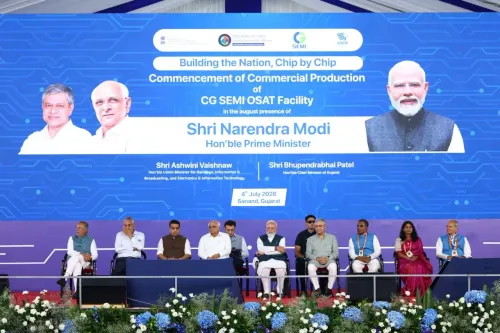
Prime Minister Narendra Modi inaugurated the CG Semi OSAT semiconductor facility in Sanand, Gujarat on 5 July 2026. He highlighted interactions with the plant's young workforce, a large share of whom are women from remote areas, underscoring the India Semiconductor Mission's employment and self-reliance goals.
Key Takeaways
PM Modi inaugurated the CG Semi OSAT facility in Sanand, Gujarat on 5 July 2026 .
A large proportion of the plant's workforce comprises women drawn from remote regions.
The facility is backed by the India Semiconductor Mission , which carries a central outlay of Rs 76,000 crore .
The PLI scheme for electronics was expanded in 2022 to cover semiconductor assembly and testing, enabling incentives for projects like this one.
Sanand has emerged as a leading destination for backend semiconductor investment alongside Assam under the national mission.
Commissioning timelines and further ISM approvals in 2026–27 are the key developments to watch.
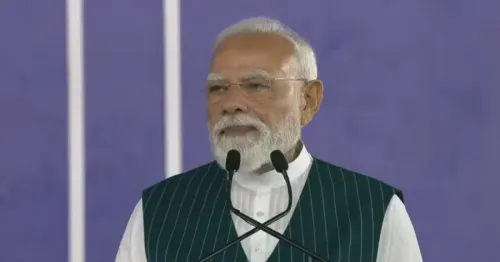
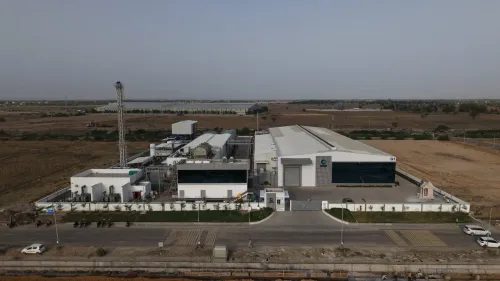
Prime Minister Narendra Modi inaugurated the CG Semi Outsourced Semiconductor Assembly and Test (OSAT) facility in Sanand, Gujarat, on Sunday, 5 July 2026, marking a significant milestone in India's push toward domestic semiconductor manufacturing. The Prime Minister highlighted his interaction with the facility's young workforce, noting that a large number of employees are women drawn from remote regions.
Context
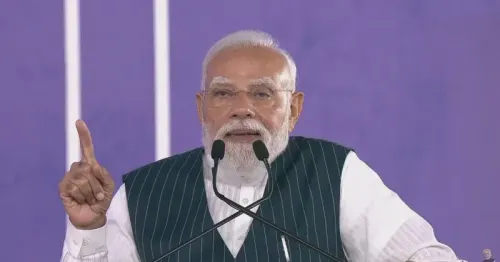
Posting on X, PM Modi described the moment as 'one of the most special' during the inauguration, emphasising his engagement with the youth working at the plant. The post noted that the workforce includes a significant proportion of women who 'hail from remote' areas — a detail that underscores the facility's role in creating employment beyond urban centres.
Sanand has steadily grown into one of India's premier electronics and automotive manufacturing corridors, with the state government actively courting high-technology investments to anchor the region's industrial identity.
Policy Backdrop
The CG Semi OSAT unit is part of India's broader semiconductor self-reliance drive anchored by the India Semiconductor Mission (ISM), approved by the Union Cabinet in December 2021 with an outlay of Rs 76,000 crore. The mission targets the full spectrum of chip manufacturing, from fabrication to backend assembly, testing, and packaging — the segment that OSAT facilities specialise in.
The Production Linked Incentive (PLI) scheme for electronics was subsequently expanded in 2022 to explicitly cover semiconductor assembly, testing, and packaging, making projects like the Sanand plant eligible for central incentives. Gujarat has emerged alongside Assam as a key destination for these backend semiconductor investments under the mission.
Stakeholders and Impact
The facility's workforce composition is among its most politically and socially significant aspects. The employment of women from remote areas in a high-technology manufacturing environment aligns with the government's stated goals of skilling rural youth and expanding female labour-force participation in the formal economy.
Semiconductor MSMEs, component suppliers, and logistics firms in Gujarat's industrial belt stand to benefit from the downstream activity generated by an operational OSAT unit. India's integration into global chip supply chains — currently dominated by facilities in Taiwan, South Korea, and Malaysia — depends on demonstrating reliable, scalable backend capacity of precisely this kind.
What's Next
Attention will now turn to the commissioning timelines and capacity utilisation of the Sanand facility, as well as further project approvals under the India Semiconductor Mission expected through 2026–27. The government is widely anticipated to greenlight additional OSAT and chip-design investments as it seeks to position India as a credible node in the global semiconductor supply chain.
The inauguration of the CG Semi plant signals that India's semiconductor ambitions are moving from policy documents to factory floors — and that the human dividend of that transition, particularly for women and rural youth, is becoming a central part of the political narrative.
Point of View
Which has faced scrutiny over the pace of on-ground execution since its 2021 announcement. By foregrounding the women and rural youth employed at the plant, PM Modi is weaving a social-equity narrative into what is fundamentally a strategic industrial policy — a pattern consistent with how the government has communicated schemes from PLI to PM Vishwakarma. Gujarat's continued centrality in flagship industrial projects also reinforces the state's positioning as a model for national replication. The political salience of this inauguration will ultimately be tested by whether the facility achieves scale and whether further OSAT approvals follow in quick succession.
NationPress
5 Jul 2026
Frequently Asked Questions
What is the CG Semi OSAT facility in Sanand?
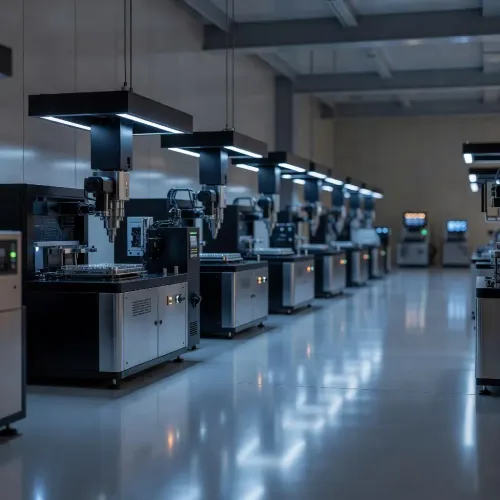
The CG Semi Outsourced Semiconductor Assembly and Test (OSAT) facility in Sanand, Gujarat is a backend semiconductor plant focused on assembling, testing, and packaging chips. It was inaugurated by PM Modi on 5 July 2026 and is supported under the India Semiconductor Mission .
What is the India Semiconductor Mission?
The India Semiconductor Mission (ISM) is a central government programme approved in December 2021 with an outlay of Rs 76,000 crore to build a domestic semiconductor ecosystem, covering fabrication, assembly, testing, and packaging facilities across India.
Why is Sanand important for semiconductor manufacturing in India?
Sanand in Gujarat has developed into a major electronics and automotive manufacturing hub, making it an attractive location for high-technology investments. It is one of the key destinations for backend semiconductor projects under the India Semiconductor Mission , alongside Assam .
What is an OSAT facility and what does it do?
An Outsourced Semiconductor Assembly and Test (OSAT) facility handles the backend stages of chip production — assembling individual dies into packaged chips and testing them for functionality. These facilities are a critical link in the global semiconductor supply chain.
How does the CG Semi plant benefit women and rural youth?
According to PM Modi , a large share of the CG Semi plant's workforce consists of women from remote areas, providing formal, skilled employment in a high-technology sector to communities that have historically had limited access to such opportunities.