PM Modi urges heatwave care for elderly amid summer peak

Synopsis
Prime Minister Narendra Modi on 27 May 2026 issued a social media advisory urging Indians to check on elderly relatives during the heatwave, stressing hydration, avoiding peak afternoon hours and adequate rest — continuing an established pattern of prime-ministerial public health communication during extreme heat events.
Key Takeaways
PM Narendra Modi posted a heatwave advisory on 27 May 2026 urging families to check on elderly parents and grandparents.
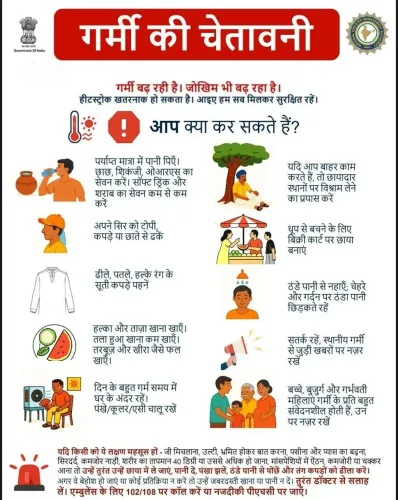
Key recommendations: stay hydrated, avoid stepping out during peak afternoon hours , and take rest whenever possible.
Elderly citizens are among the most vulnerable to heat-related illness including dehydration and heatstroke.
India's heatwave management framework, anchored by NDMA national guidelines , was strengthened after the deadly 2015 heatwave .
State-level Heat Action Plans and IMD colour-coded alerts form the institutional backbone of India's summer preparedness response.
The advisory is part of a broader pattern of prime-ministerial social media communication during climate-related health risks.
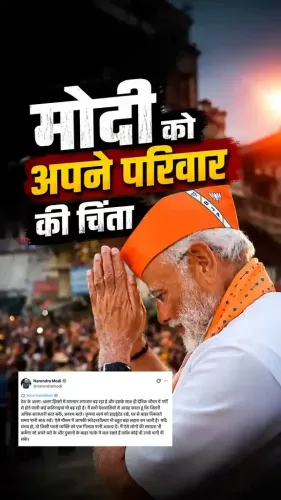
Prime Minister Narendra Modi on Wednesday, 27 May 2026 issued a public advisory urging Indians to check on elderly parents, grandparents and loved ones during the ongoing heatwave, calling for vigilance around hydration, outdoor activity and rest.
Context
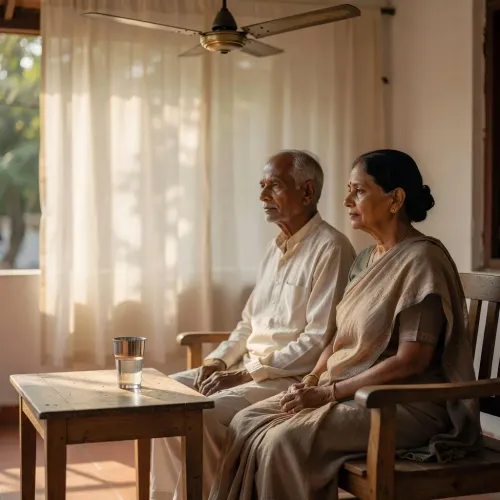
In his post, Modi wrote: 'Whenever possible, call and check on elderly parents, grandparents and loved ones during this heatwave. Remind them to stay hydrated, avoid stepping out in peak afternoon hours and take rest whenever possible.' The message is directed at urban and semi-urban families whose older relatives may be living alone or in areas with limited access to cooling facilities.
The advisory comes as large parts of India experience intense summer heat, a seasonal pattern that has grown more pronounced in recent years. Elderly citizens are among the most vulnerable to heat-related illness, including dehydration, heat exhaustion and heatstroke.
Policy Backdrop
India's formal framework for heatwave management traces back to the aftermath of the 2015 heatwave, one of the deadliest on record, which prompted the National Disaster Management Authority (NDMA) to issue national guidelines covering prevention, public awareness and emergency response. Since then, state governments have developed Heat Action Plans (HAPs) that prescribe cooling centres, early-warning systems and community outreach.
The India Meteorological Department (IMD) issues colour-coded heatwave alerts each summer, coordinating with district administrations to trigger ground-level responses. Prime-ministerial social media advisories have become a complementary layer of this communication architecture, reaching millions of citizens directly and reinforcing official guidance.
Stakeholders and Impact
Elderly citizens face disproportionate risk during heatwaves because of reduced capacity to regulate body temperature, pre-existing health conditions and, in many cases, social isolation. Families with older members living in Tier 2 and Tier 3 cities or in poorly ventilated housing are particularly exposed.
Public health officials and civil society groups have long advocated for community-level check-in systems during extreme heat events. A message from the Prime Minister's office amplifies that call, potentially prompting state health departments and local bodies to intensify outreach to vulnerable populations. Employers and resident welfare associations are also implicit stakeholders, as workplace and neighbourhood networks can serve as informal safety nets.
What's Next
Attention will now turn to whether state governments update or activate their Heat Action Plans in response to current conditions, and whether the NDMA or IMD issues fresh seasonal preparedness advisories. Community health workers and ASHA volunteers in high-risk districts are expected to be at the front line of any ground-level response.
With Indian summers projected to grow hotter and longer, the institutionalisation of heatwave preparedness — from prime-ministerial messaging down to neighbourhood-level care networks — is increasingly seen as a public health imperative rather than a seasonal precaution.
Point of View
Actionable and targeted at a specific vulnerable group, amplifying official public health guidance through the highest-profile social media account in Indian politics. It signals that the government is alert to the human cost of extreme heat without committing to specific policy announcements. The messaging fits a broader arc in which climate-linked disasters — floods, cyclones, heatwaves — have become routine occasions for prime-ministerial digital outreach, blurring the line between governance and public communication. The real test, as always, lies in whether state machinery translates the advisory into on-ground action for those without family safety nets.
NationPress
10 Oct 2026
Frequently Asked Questions
What did PM Modi say about the heatwave?
PM Modi urged Indians to call and check on elderly parents, grandparents and loved ones during the heatwave, reminding them to stay hydrated, avoid going out during peak afternoon hours and rest whenever possible.
What are the heatwave safety tips for elderly people in India?
Key precautions include drinking water regularly even without feeling thirsty, staying indoors between roughly 12 noon and 4 pm when temperatures peak, wearing light cotton clothing, and using fans or coolers. Family members are advised to check in by phone if they cannot visit in person.
What is India's official heatwave management framework?
The National Disaster Management Authority (NDMA) issued national heatwave guidelines after the 2015 disaster. State governments have since developed Heat Action Plans that include early-warning systems, cooling centres and community outreach, coordinated with IMD alerts.
Why are elderly people more at risk during heatwaves?
Older adults have a reduced ability to regulate body temperature, are more likely to have chronic health conditions that worsen in heat, and may be socially isolated, making timely intervention harder. These factors make them disproportionately vulnerable to heatstroke and dehydration.
Which states in India are most affected by heatwaves?
States in the Indo-Gangetic plain and central India — including Rajasthan , Uttar Pradesh , Madhya Pradesh , Bihar , Odisha and Telangana — historically record the highest heatwave frequency and intensity, according to IMD data.