PM Modi marks 8 years of Ayushman Bharat, cites 60 crore beneficiaries
Synopsis
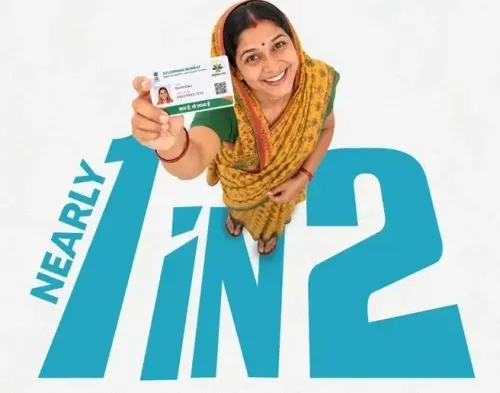
Prime Minister Narendra Modi marked the eighth anniversary of Ayushman Bharat PM-JAY on 23 September 2026, highlighting that the scheme now covers more than 60 crore beneficiaries with up to Rs. 5 lakh in annual health insurance — positioning it as the world's largest publicly funded health protection scheme.
Key Takeaways
Ayushman Bharat PM-JAY completed eight years on 23 September 2026 , having been formally launched on the same date in 2018 .
The scheme now covers more than 60 crore beneficiaries with up to Rs.
5 lakh in annual health insurance for secondary and tertiary hospitalisation.
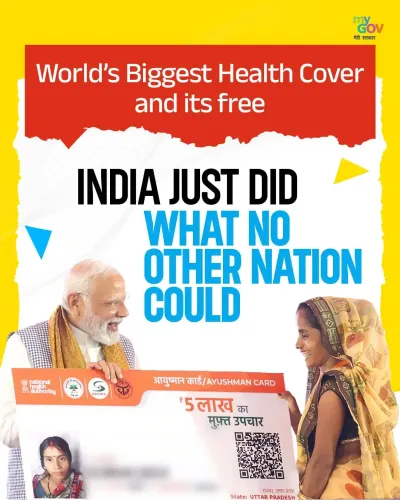
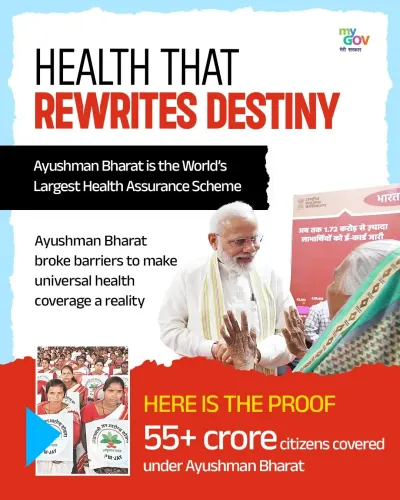
It is positioned as the world's largest publicly funded health protection scheme by beneficiary numbers.
The scheme targets economically weaker families identified via Socio-Economic Caste Census (SECC) data.
Its policy lineage runs from the Rashtriya Swasthya Bima Yojana (2008) through the National Health Policy 2017 to its Union Budget 2018 announcement.
Key watchpoints going forward include state-level utilisation rates and the depth of the empanelled hospital network in tier-2 and tier-3 cities.
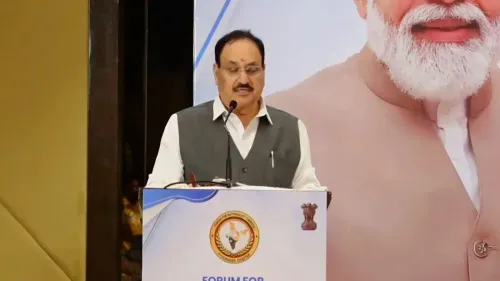
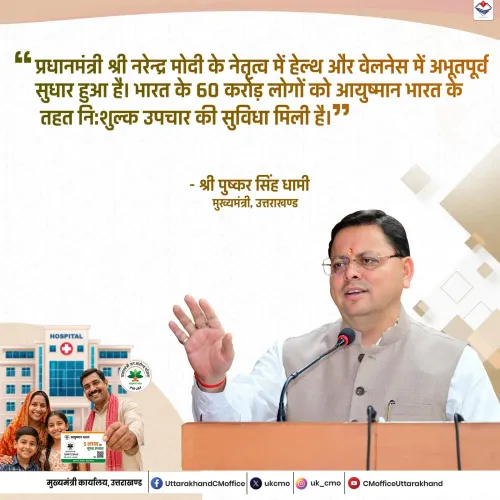
Eight years after it reshaped the promise of public healthcare in India, Ayushman Bharat Pradhan Mantri Jan Arogya Yojana is celebrating an anniversary that its architects could only have dreamed about in 2018. Prime Minister Narendra Modi marked the occasion on Wednesday, 23 September 2026, pointing to a beneficiary base that now exceeds 60 crore Indians — each covered for up to Rs. 5 lakh in annual health expenses.
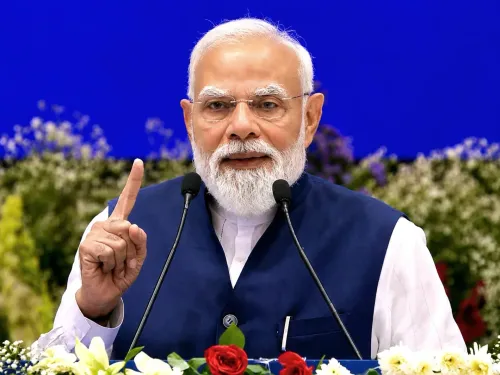
Posting on X, the Prime Minister wrote: 'Eight years ago, Ayushman Bharat was rolled out with the idea that every Indian should have access to top-quality and affordable healthcare. Today, more than 60 crore beneficiaries have access to Rs. 5 lakh annual health cover, making it the largest healthcare scheme in the world.'
From a budget speech to 60 crore lives
The scheme did not arrive overnight. Its roots trace back to the National Health Policy 2017, which set the framework for a national health protection programme, and further back to the Rashtriya Swasthya Bima Yojana (RSBY) launched in 2008 to insure unorganised-sector workers below the poverty line. Ayushman Bharat was formally announced in the Union Budget of February 2018 and rolled out on 23 September 2018 — exactly eight years before this anniversary post. The scheme targets economically weaker families identified through Socio-Economic Caste Census (SECC) data, covering secondary and tertiary hospitalisation costs. The design was deliberate: catastrophic out-of-pocket medical spending had long been one of the fastest routes to poverty for Indian families, and a cashless, paperless insurance model at empanelled hospitals was meant to break that cycle.Why 'largest in the world' is more than a slogan
The scale claim is the headline. By beneficiary count, PM-JAY has been positioned as the world's largest publicly funded health protection scheme — a distinction that matters in global health-policy circles, where India's experiment is closely watched as a model for low-and-middle-income countries attempting to move toward universal health coverage without a full tax-funded system. Successive Union budgets have gradually widened the scheme's scope — adding procedures, encouraging state governments to integrate their own health insurance programmes, and expanding the empanelled hospital network. The result is a layered architecture that now touches families across urban slums and remote rural districts alike.What the anniversary signals for health policy
Anniversary milestones for flagship schemes are rarely just commemorative — they are also political positioning ahead of the next policy cycle. The Union Health Ministry's annual reports on state-level utilisation rates and the depth of the empanelled hospital network will be the real scorecards to watch. Analysts tracking the scheme point to two pressure points: whether hospitalisation claims are keeping pace with the growing beneficiary base, and whether tier-2 and tier-3 cities have enough empanelled private hospitals to make the cover meaningful in practice. For 60 crore Indians, the card in their pocket represents a guarantee that a medical emergency need not also be a financial one. Eight years in, the question is no longer whether the scheme can scale — it already has. The question is whether the quality of care behind the card is scaling just as fast.Point of View
Not just beneficiary breadth, is keeping pace; enrollment numbers and actual claims rates can diverge sharply in government health insurance programmes. The anniversary also signals that health insurance, rather than a fully tax-funded NHS-style system, remains the BJP government's chosen architecture for universal coverage — a structural choice with long-term fiscal and equity implications.
NationPress
23 Sept 2026
Frequently Asked Questions
What is Ayushman Bharat PM-JAY?
Ayushman Bharat Pradhan Mantri Jan Arogya Yojana (PM-JAY) is a government-funded health insurance scheme launched on 23 September 2018 that provides up to Rs. 5 lakh in annual cover per family for secondary and tertiary hospitalisation, targeting economically weaker sections identified through SECC data.
How many people are covered under Ayushman Bharat?
As of the eighth anniversary on 23 September 2026, Prime Minister Modi stated that more than 60 crore beneficiaries have access to the scheme's Rs. 5 lakh annual health cover.
When was Ayushman Bharat launched?
Ayushman Bharat was formally rolled out on 23 September 2018, after being announced in the Union Budget speech of February 2018.
Is Ayushman Bharat really the largest health scheme in the world?
By beneficiary count, PM-JAY is consistently positioned as the world's largest publicly funded health protection scheme, a distinction recognised in global health-policy discussions.
Who is eligible for Ayushman Bharat?
Eligibility is based on Socio-Economic Caste Census (SECC) data, covering economically weaker families for cashless hospitalisation at empanelled government and private hospitals.