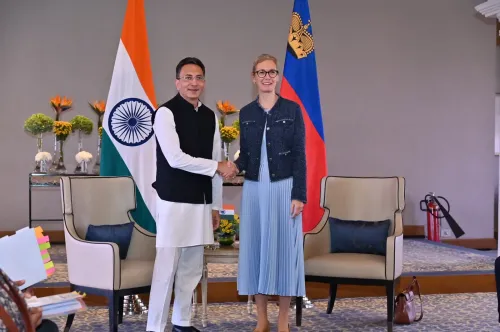
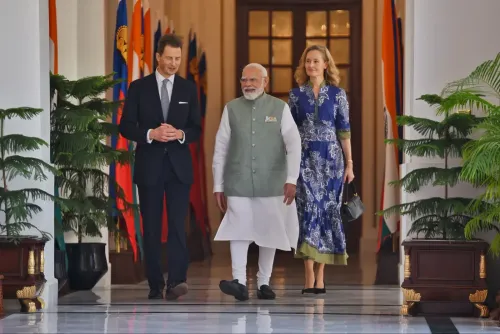
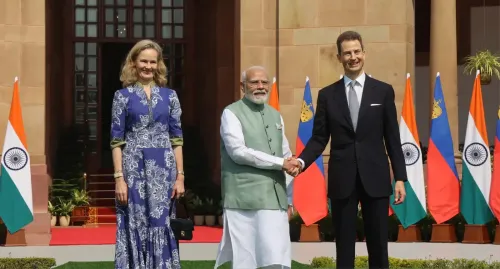
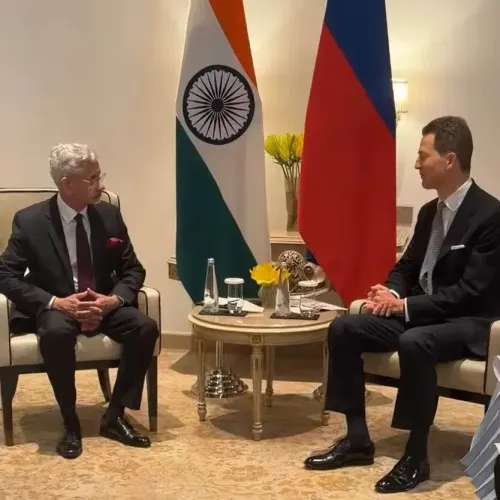
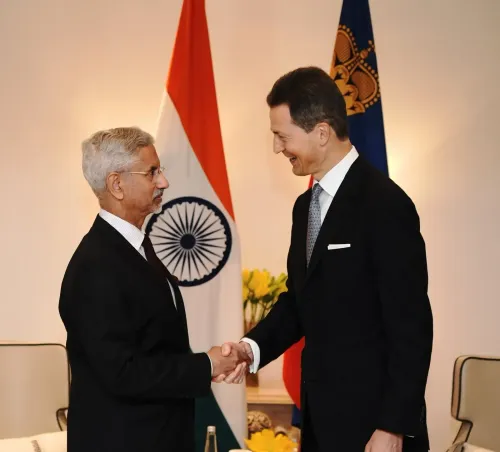
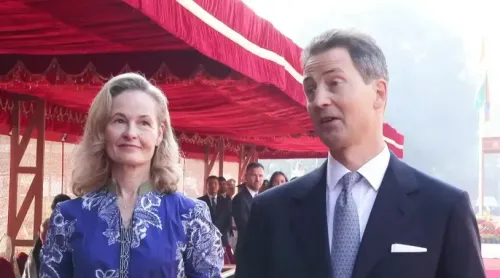
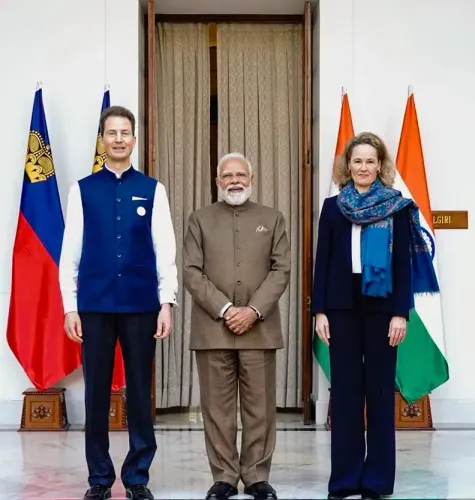
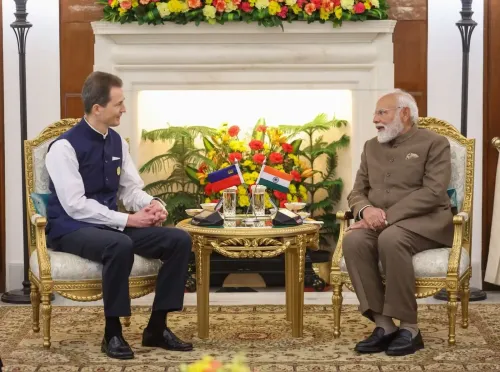
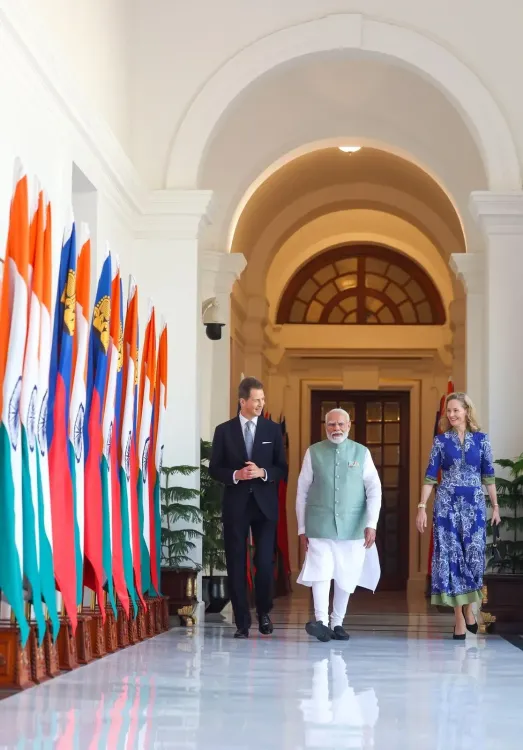
PM Modi meets Liechtenstein's Hereditary Prince Alois, reviews TEPA's first year
Synopsis
Prime Minister Narendra Modi met Liechtenstein's Hereditary Prince Alois on 27 October 2026, reviewing the first year of the India-EFTA TEPA and identifying new avenues for investment and economic cooperation between the two sides.
Key Takeaways
PM Modi held a bilateral meeting with Hereditary Prince Alois of Liechtenstein on 27 October 2026 .
Discussions centred on the India-EFTA Trade and Economic Partnership Agreement (TEPA) , which completed its first year in operation.
The TEPA was signed in March 2024 — India's first comprehensive trade pact with the four-nation EFTA bloc (Iceland, Liechtenstein, Norway, Switzerland).
Hereditary Prince Alois serves as Liechtenstein's regent and its primary diplomatic representative for foreign and economic affairs.
Both sides discussed opportunities for greater investment flows and deeper economic cooperation across multiple sectors.
Official TEPA utilisation statistics and future bilateral investment events are the key indicators to watch as the agreement matures.
A small European principality with an outsized financial footprint just moved closer to India. Prime Minister Narendra Modi held a wide-ranging meeting with His Serene Highness Hereditary Prince Alois of Liechtenstein on Tuesday, 27 October 2026, with the two sides reviewing the first full year of the landmark India-EFTA Trade and Economic Partnership Agreement (TEPA) and mapping out fresh ground for investment and economic cooperation.
TEPA turns one — and the spotlight falls on Liechtenstein
Signed in March 2024, the India-EFTA TEPA was India's first comprehensive trade pact with the European Free Trade Association — the four-nation bloc comprising Iceland, Liechtenstein, Norway and Switzerland. The agreement was designed to reduce tariffs, open services markets and, crucially, catalyse structured investment flows into India from one of Europe's wealthiest corners. Marking its first anniversary in live operation, Tuesday's discussions gave both sides a chance to go beyond ribbon-cutting language and take stock of what is actually moving.
Hereditary Prince Alois serves as regent and effectively conducts Liechtenstein's foreign and diplomatic engagements, making him the principality's most consequential interlocutor on trade and investment matters. His presence in the meeting signals that Liechtenstein — despite its tiny geography — is treating the India relationship as a priority, not a courtesy call.
Why a microstate with 38,000 people matters to India's trade strategy
Liechtenstein punches dramatically above its demographic weight. Its financial services industry, precision manufacturing sector and favourable investment regime make it a meaningful source of capital flows rather than a symbolic partner. Within the EFTA framework, the principality participates fully in the TEPA's investment-promotion provisions — the very provisions India's negotiators fought hardest for when the deal was being structured.
India's broader push to conclude free-trade agreements with non-EU European partners is a deliberate diversification play — spreading trade and investment links beyond traditional partners and building inroads into sectors such as pharmaceuticals, engineering goods and financial services. A deepened Liechtenstein relationship fits neatly into that architecture.
What both sides will be watching next
The diplomatic signal is clear; the proof will arrive in the data. Analysts and exporters will be watching for the release of official TEPA utilisation statistics from Indian and EFTA authorities — the hard numbers that show whether tariff preferences are actually being claimed and whether investment commitments are materialising on the ground. Bilateral investment promotion events flagged during the conversation could serve as the next concrete marker of momentum.
One year in, the pact has graduated from a diplomatic achievement to an economic instrument. Today's meeting is a reminder that keeping it sharp requires attention at the highest levels — on both sides of the continent.
Point of View
New Delhi is signalling that every EFTA member, however small, carries weight in its investment courtship. The first-anniversary framing is also deliberate: it moves the conversation from 'deal signed' to 'deal performing,' raising the accountability bar for both sides. If TEPA utilisation numbers disappoint when they are published, this high-profile meeting will make that gap politically harder to ignore.
NationPress
27 Oct 2026
Frequently Asked Questions
What is the India-EFTA TEPA agreement?
The India-EFTA Trade and Economic Partnership Agreement (TEPA) is a comprehensive trade pact signed in March 2024 between India and the four EFTA member states — Iceland, Liechtenstein, Norway and Switzerland . It covers tariff reductions, services trade and investment promotion, and was India's first such deal with the European Free Trade Association.
Who is Hereditary Prince Alois of Liechtenstein?
Hereditary Prince Alois is the regent of Liechtenstein , effectively conducting the principality's day-to-day governance and foreign engagements including diplomatic and economic discussions on its behalf.
Why is Liechtenstein significant for India's trade strategy?
Despite having a population of roughly 38,000 , Liechtenstein hosts a major financial services industry and precision manufacturing sector. As an EFTA member, it participates in the TEPA's investment-promotion provisions, making it a meaningful source of capital for India.
What was the outcome of PM Modi's meeting with Prince Alois?
PM Modi and Hereditary Prince Alois reviewed progress under the India-EFTA TEPA after its first year and discussed expanding investment and economic cooperation across several sectors. Specific outcome details from the 27 October 2026 meeting are yet to be officially released.
What should I watch for next in India-EFTA trade relations?
Key indicators include the release of official TEPA utilisation statistics by Indian and EFTA authorities, and any bilateral investment promotion events announced following the meeting between PM Modi and Prince Alois .