PM Modi Meets Slovak Scholar Who Translated Upanishads
Synopsis
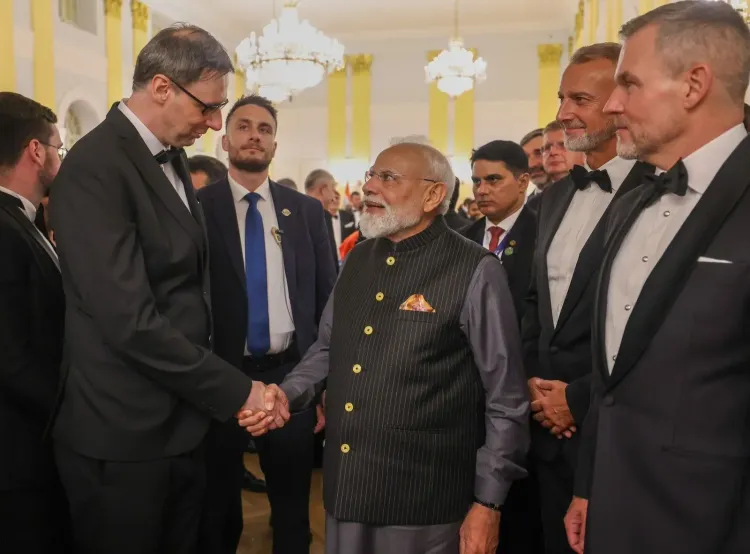
Prime Minister Narendra Modi met Dr. Róbert Gáfrik, the Slovak scholar leading the translation of the Upanishads into Slovak, during his visit to Bratislava on 15 June 2026, underscoring India's cultural diplomacy in Central Europe.
Key Takeaways
Prime Minister Narendra Modi met Slovak scholar Dr.
Róbert Gáfrik in Bratislava on the evening of 15 June 2026 .
Gáfrik has spearheaded the translation of the Upanishads — foundational texts of Indian philosophy — into the Slovak language .
Gáfrik's passion for Indian history, culture, and spirituality as 'commendable.' The meeting reflects India's broader cultural diplomacy strategy in Central and Eastern Europe , supported historically by the ICCR since 1950 .
The Slovak Upanishads translation and potential ICCR -backed follow-on programmes are expected to be watched closely.
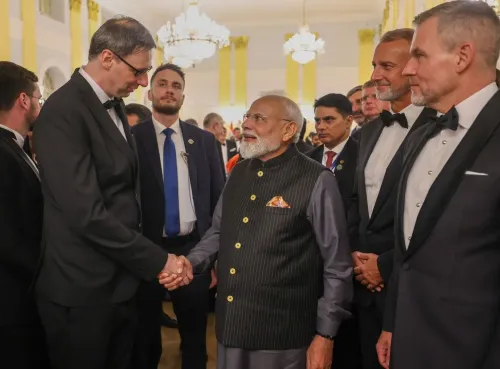
Prime Minister Narendra Modi met Dr. Róbert Gáfrik, a Slovak scholar who has led the effort to translate the Upanishads into the Slovak language, during his visit to Bratislava on the evening of Monday, 15 June 2026. The Prime Minister shared details of the meeting on Tuesday, 16 June 2026, describing Dr. Gáfrik's commitment to Indian philosophy and culture as commendable.
Context
Prime Minister Modi, posting on X, said: 'In Bratislava yesterday evening, I met Dr. Róbert Gáfrik, who has spearheaded the effort to translate the Upanishads into Slovak. His passion for Indian history, culture and spirituality is commendable.' The meeting took place on the sidelines of Modi's engagements in Slovakia, making it one of the more culturally significant moments of the visit. The Upanishads are among the foundational texts of Indian philosophical tradition, forming the doctrinal core of Vedanta.
Policy Backdrop
India's cultural outreach to Central and Eastern Europe has been a consistent strand of its foreign policy. The Indian Council for Cultural Relations (ICCR), established in 1950, has long supported the translation of Indian philosophical and literary works into foreign languages as a tool of soft power. Slovakia, a Central European nation, has been expanding its cultural and diplomatic ties with India, and scholarly projects such as Dr. Gáfrik's translation represent the kind of people-to-people links that Indian diplomacy actively seeks to highlight during high-level visits.
Translation of classical Indian texts into European languages carries particular symbolic weight for New Delhi. It positions India not merely as an economic partner but as a civilisational interlocutor — a framing that recurs across Modi government engagements in Europe.
Stakeholders and Impact
Dr. Gáfrik is a scholar whose work bridges Indological research and Slovak literary culture, bringing ancient Indian thought to readers who may have had no prior access to it in their native language. For Slovak readers, a translation of the Upanishads opens a direct engagement with texts that have influenced global philosophy, spirituality, and literature. For India, such a project offers a durable cultural footprint in a country where political and economic ties are still developing.
Indologists and academic communities across Europe are also stakeholders, as high-profile endorsements from a visiting head of government can raise the profile of such scholarly endeavours and attract further institutional support.
What's Next
Attention will now turn to the publication timeline of the Slovak Upanishads translation and whether the meeting leads to any formal follow-on support — such as an ICCR-backed cultural programme or collaboration between Indian and Slovak academic institutions. Modi's public acknowledgement of Dr. Gáfrik's work is itself a signal that New Delhi regards this kind of cultural scholarship as diplomatically valuable, and similar engagements across Central and Eastern Europe are likely to continue as India deepens its European outreach.
Point of View
Projecting India's civilisational identity alongside its political and economic interests in Europe. The gesture fits a well-established pattern: during overseas visits, the Modi government consistently spotlights foreign scholars and artists engaged with Indian heritage to build soft-power narratives. For Slovakia, a relatively smaller partner in India's European engagement, the Prime Minister's personal endorsement of a local academic project carries outsized diplomatic signal value. It also reinforces the ICCR's long-standing mandate of using cultural translation as a bridge — now amplified by social media reach.
NationPress
19 Sept 2026
Frequently Asked Questions
Who is Dr. Róbert Gáfrik and what did he do?
Dr. Róbert Gáfrik is a Slovak scholar who has led the effort to translate the Upanishads, ancient Indian philosophical texts, into the Slovak language. Prime Minister Modi met him in Bratislava and praised his passion for Indian culture and spirituality.
Why did PM Modi visit Bratislava?
Prime Minister Modi visited Bratislava, the capital of Slovakia, as part of an overseas diplomatic engagement. During the visit, he met Dr. Róbert Gáfrik on the evening of 15 June 2026 to acknowledge the scholar's work on translating the Upanishads into Slovak.
What are the Upanishads?
The Upanishads are a collection of ancient Indian texts that form the philosophical and doctrinal foundation of Vedanta, one of the major schools of Hindu philosophy. They are considered among the most important works in Indian spiritual and intellectual tradition.
How does India promote its culture abroad?
India promotes its culture abroad through institutions such as the Indian Council for Cultural Relations (ICCR), established in 1950, which supports translation of Indian philosophical and literary works into foreign languages, funds cultural programmes, and facilitates people-to-people exchanges.
What is the significance of translating Indian texts into European languages?
Translating classical Indian texts like the Upanishads into European languages makes them accessible to new audiences and strengthens India's soft power. It positions India as a civilisational partner in addition to a political and economic one, a framing central to Indian foreign policy under the current government.