PM Modi Pays Tribute to Quit India Movement Heroes
Synopsis
On Quit India Movement Day, 9 August 2026, Prime Minister Narendra Modi honoured the participants of the historic 1942 agitation, crediting Mahatma Gandhi's leadership for infusing new energy into India's freedom struggle and reflecting the nation's resolve to end colonial rule.
Key Takeaways
Prime Minister Narendra Modi posted a tribute on 9 August 2026 marking Quit India Movement Day .
The Quit India Movement was launched on 8 August 1942 when the All India Congress Committee passed the resolution demanding immediate British withdrawal.
Modi credited Mahatma Gandhi's leadership for the movement's energy and moral force.
The British colonial administration arrested Gandhi and the Congress leadership the very next morning, triggering mass uprisings across India.
PM Modi's tribute is part of a consistent official pattern of commemorating independence-era milestones on national anniversaries.
Further commemorations are expected leading up to Independence Day on 15 August .
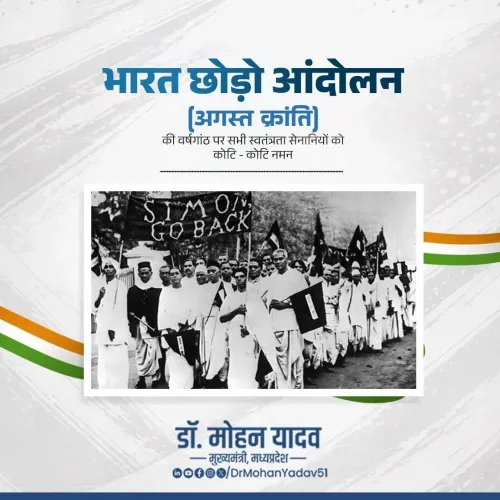
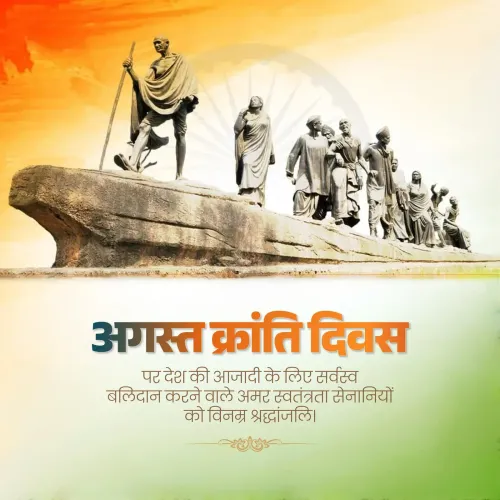
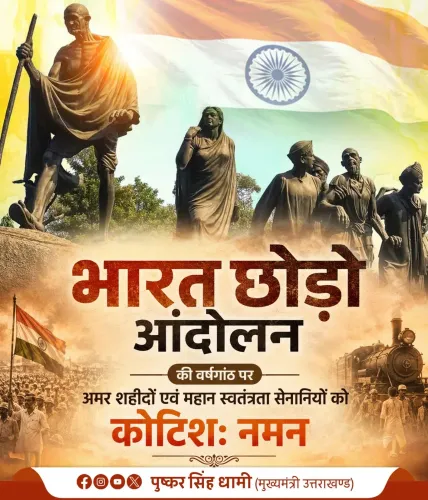
Eighty-four years after Mahatma Gandhi issued his electrifying 'Karo ya Maro' ('Do or Die') call at the All India Congress Committee session in Bombay, the spirit of that defiant August still echoes in India's national memory. On Sunday, 9 August 2026 — Quit India Movement Day — Prime Minister Narendra Modi paid tribute to the millions who answered that call, reminding the nation that their courage remains a living inheritance.
Posting on X, the Prime Minister wrote: 'Remembering all those who participated in the historic Quit India Movement. Their courage will always remain an inspiration for every Indian. Inspired by the leadership of Mahatma Gandhi Ji, the clarion call of Quit India infused new energy into our freedom struggle and reflected the unwavering determination of our people to break free from colonial rule.'The night that changed the freedom struggle
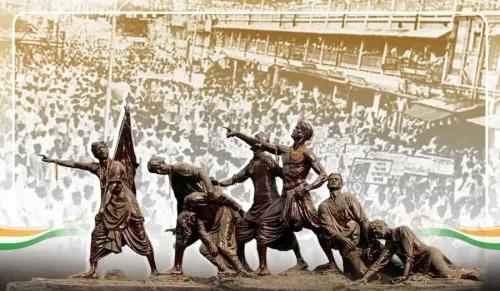
8 August 1942 was the pivot. The All India Congress Committee passed the Quit India resolution in Bombay, and by dawn the British colonial administration had arrested Gandhi and the entire Congress leadership. They miscalculated. Instead of snuffing out the movement, the mass arrests ignited it. Workers, students, and farmers across the subcontinent — many with no formal political organisation — took to the streets, cut telegraph lines, and paralysed railway junctions. The British response was swift and severe: tens of thousands were imprisoned, and the crackdown stretched for months. Yet the message had already gone out. Colonial rule in India had a clock ticking against it.Gandhi's leadership and the moral force behind the demand
What made Quit India different from earlier agitations was its moral absolutism. Gandhi did not ask for negotiations or partial concessions. The demand was total: immediate British withdrawal. His philosophy of non-violent civil disobedience gave the movement a disciplined moral core even as spontaneous uprisings flared across the country. The movement is remembered not just as a political milestone but as proof that mass popular will — unarmed, uncoordinated, and facing state repression — could bend the arc of history.A recurring August ritual in New Delhi
Prime Minister Modi's tribute fits a consistent pattern. Each year, the government marks independence-era anniversaries — Quit India Day on 9 August, Independence Day on 15 August, and other movement milestones — with official commemorations and social media messages that frame the freedom struggle as a shared national inheritance. The framing is deliberate: by invoking the 'unwavering determination' of the freedom fighters, the messaging connects historical resolve to contemporary national identity. The weeks ahead, culminating in Independence Day on 15 August, will bring further commemorations. But today belongs to those who, in the summer of 1942, chose to act — and changed everything.Point of View
Anchoring the BJP-led government's identity in the broader anti-colonial legacy that all Indians share. By foregrounding Gandhi's leadership, Modi signals an inclusive reading of the freedom struggle rather than a partisan one, a choice that softens ideological edges on a day of genuine national consensus. The consistency of these anniversary posts builds a cumulative narrative: that the current government sees itself as the custodian of the republic's founding sacrifice. With Independence Day a week away, the tribute also functions as the opening note of a patriotic fortnight that the government uses to reinforce national cohesion.
NationPress
9 Aug 2026
Frequently Asked Questions
When was the Quit India Movement launched?
The Quit India Movement was launched on 8 August 1942 , when the All India Congress Committee passed the Quit India resolution in Bombay, with Mahatma Gandhi issuing his famous 'Do or Die' call.
Why is 9 August celebrated as Quit India Day?
9 August is observed as Quit India Day because it was on this date in 1942 that the movement effectively began in earnest, following the passage of the resolution the previous evening and the immediate arrest of the Congress leadership by British authorities.
What did PM Modi say about the Quit India Movement in 2026?
Prime Minister Narendra Modi said the participants' courage 'will always remain an inspiration for every Indian' and credited Mahatma Gandhi's leadership for infusing new energy into the freedom struggle and reflecting the nation's determination to end colonial rule.
What was the significance of the Quit India Movement?
The Quit India Movement was significant because it was the most forceful demand for immediate British withdrawal from India. Despite mass arrests and repression, it demonstrated that popular will could not be suppressed indefinitely, accelerating the timeline toward Indian independence in 1947.
Does PM Modi regularly commemorate freedom struggle anniversaries?
Yes. Prime Minister Modi follows a consistent pattern of posting tributes on major independence-era anniversaries, including Quit India Day on 9 August and Independence Day on 15 August , framing the freedom struggle as a source of national inspiration.