PM Modi pays tribute to Shyamji Krishna Varma on birth anniversary
Synopsis
Prime Minister Narendra Modi on October 4, 2026, honoured Shyamji Krishna Varma on his birth anniversary, saluting the Kutch-born revolutionary who founded India House in London and dedicated his life to ending British colonial rule over India.
Key Takeaways
PM Modi paid tribute to Shyamji Krishna Varma on his birth anniversary, 4 October 2026 .
Varma was born on 4 October 1857 in Mandvi, Kutch, Gujarat — the year of India's First War of Independence.
He founded India House in London in 1905 , a crucible for revolutionary nationalists including Veer Savarkar.
Varma published The Indian Sociologist , arguing against the moral legitimacy of British colonial rule.
He died in exile in Geneva in 1930 ; his ashes were returned to Mandvi in 2003 and a memorial was built in his honour.
Modi called him a 'great revolutionary' whose courage in defending India's self-respect 'a grateful nation can never forget.'
On the birth anniversary of one of India's most daring revolutionary voices, Prime Minister Narendra Modi on Sunday, October 4, 2026, offered his reverence to Shyamji Krishna Varma — the freedom fighter who chose exile over submission and waged a relentless intellectual war against colonial rule from the soil of Europe.
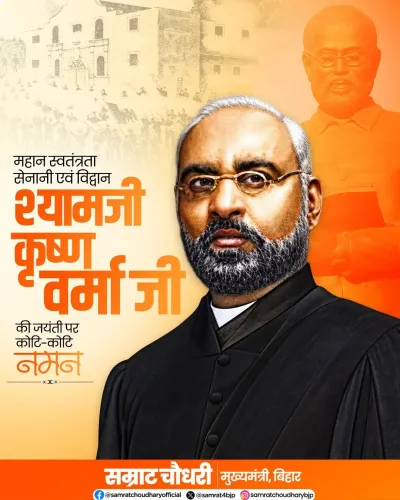
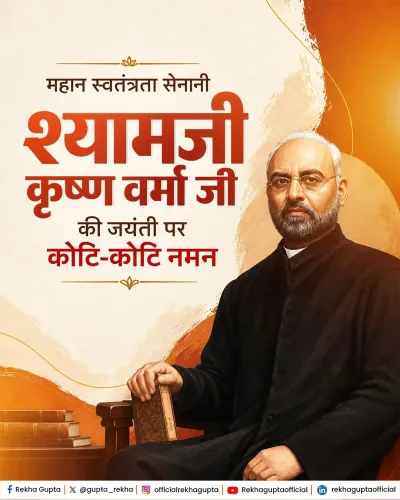
In a post in Hindi, PM Modi wrote: 'Mahan krantikari aur swatantrata senani Shyamji Krishna Varma ko unki jayanti par sadar naman.' ('Respectful salutations to the great revolutionary and freedom fighter Shyamji Krishna Varma on his birth anniversary.') He added that Varma dedicated his entire life to breaking the chains of subjugation binding Maa Bharati (Mother India), and that a grateful nation can never forget the courage and resolve he displayed in defending the self-respect of the motherland.
The revolutionary who built India House in London
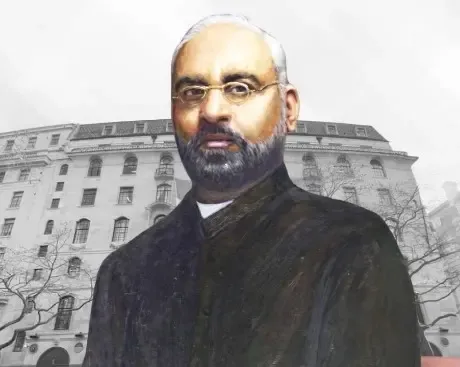
Shyamji Krishna Varma was born on 4 October 1857 in Mandvi, Kutch — the very year the First War of Indian Independence erupted. A Sanskrit scholar of extraordinary range, he won the admiration of Western academics before turning that platform into a launchpad for anti-colonial activism. He founded India House in London in 1905, a hub that sheltered and inspired a generation of revolutionary nationalists, including Veer Savarkar. His journal, The Indian Sociologist, argued with cold clarity that British rule had no moral legitimacy in India.
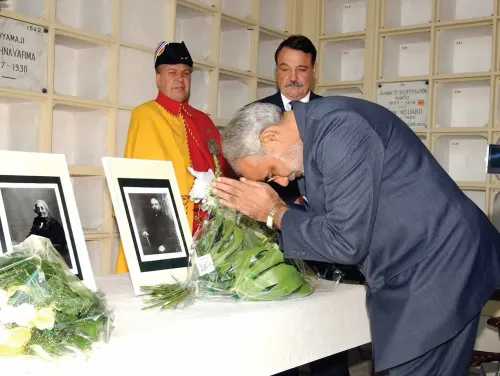
Facing prosecution in Britain, Varma moved to Paris and later to Geneva, where he lived until his death in 1930 — an unreturned exile who refused to recant. His ashes, long held in Geneva, were finally brought back to his birthplace in Mandvi, Gujarat in 2003, fulfilling a wish he had expressed in his will.
Gujarat's claim on a forgotten giant
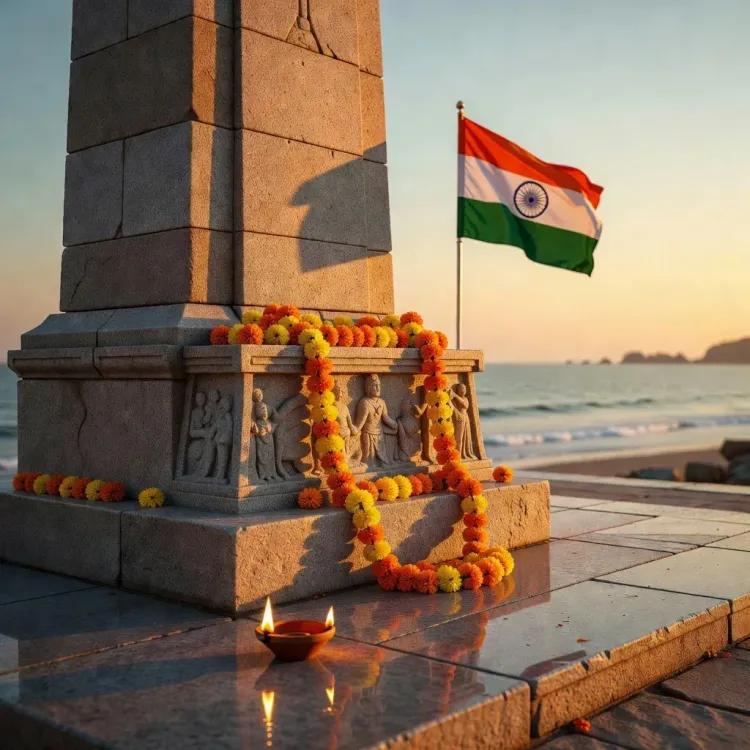
The return of Varma's ashes and the construction of a memorial in Mandvi have anchored him firmly in Gujarat's pantheon of revolutionary heroes. A Shyamji Krishna Varma Memorial was inaugurated in Mandvi, keeping his legacy visible in his home state. For BJP governments at both the state and national level, honouring figures like Varma — revolutionary nationalists who operated outside the Congress-led mainstream — has been a consistent thread in reframing India's freedom struggle as broader and more plural than the Nehruvian canon allowed.
On a birth anniversary that falls on the centenary year of Indian independence's approach, Modi's tribute is less a formality than a signal: that the stories of those who fought from the margins of empire, in the reading rooms of London and the cafés of Geneva, belong at the centre of the national memory.
Point of View
Using radical methods and ideas — the BJP positions itself as the custodian of a more expansive, and more muscular, patriotism. Varma's story, rooted in Gujarat and validated by the return of his ashes under BJP stewardship, gives this project a powerful regional and emotional anchor. The tribute is ceremonial in form but quietly argumentative in intent.
NationPress
4 Oct 2026
Frequently Asked Questions
Who was Shyamji Krishna Varma?
Shyamji Krishna Varma was an Indian revolutionary and freedom fighter born on 4 October 1857 in Mandvi, Kutch, Gujarat. He founded India House in London in 1905 and published 'The Indian Sociologist', becoming a key figure in the armed and intellectual resistance against British colonial rule.
Why is Shyamji Krishna Varma remembered today?
October 4 marks his birth anniversary. Prime Minister Modi and other leaders pay tribute to him each year for his lifelong sacrifice in pursuit of Indian independence, much of which was spent in exile in Europe.
What was India House in London?
India House was a centre founded by Shyamji Krishna Varma in London in 1905. It served as a gathering point and intellectual hub for Indian revolutionary nationalists abroad, including Veer Savarkar, who used it to organise and spread anti-colonial ideas.
Where are Shyamji Krishna Varma's ashes kept?
Varma died in Geneva in 1930 and his ashes were held there for decades. They were finally repatriated to his birthplace in Mandvi, Gujarat in 2003, and a memorial has been built there in his honour.
What did PM Modi say about Shyamji Krishna Varma?
PM Modi said Varma dedicated his entire life to breaking the chains of India's subjugation and that a grateful nation can never forget the courage and resolve he showed in defending the self-respect of the motherland.