PM Modi pays tribute to Deendayal Upadhyay on birth anniversary
Synopsis
Prime Minister Narendra Modi marked Pandit Deendayal Upadhyay's birth anniversary on 25 September 2026 with a tribute invoking the philosopher's Antyodaya doctrine — upliftment of the last person — as the bedrock of India's nation-building vision.
Key Takeaways
PM Modi paid homage to Pandit Deendayal Upadhyay on his birth anniversary on 25 September 2026 .
Modi invoked Upadhyay's Antyodaya philosophy — the upliftment of the person at the very last row of society — as the foundation of nation-building.
Upadhyay was the principal ideologue of the Bharatiya Jana Sangh and articulated the doctrine of Integral Humanism .
The Antyodaya Anna Yojana (launched 2000 ) provides subsidised foodgrains to the poorest households as a direct policy expression of his philosophy.
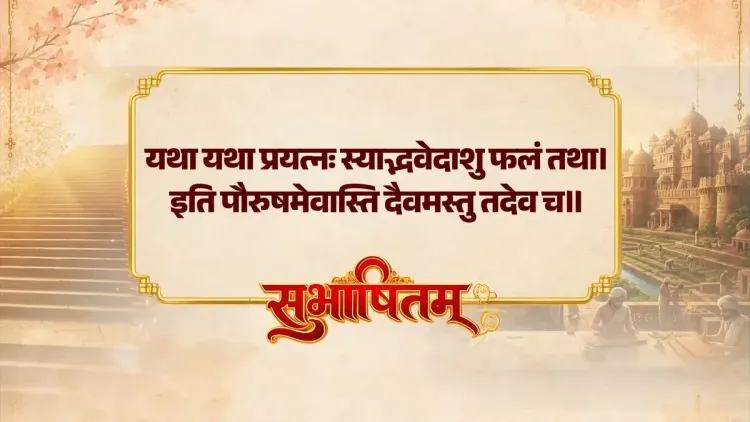
Modi closed his post with a Sanskrit couplet emphasising that human effort, not fate, determines outcomes.
The tribute continues an annual pattern of the BJP anchoring its welfare agenda within Upadhyay's ideological lineage.
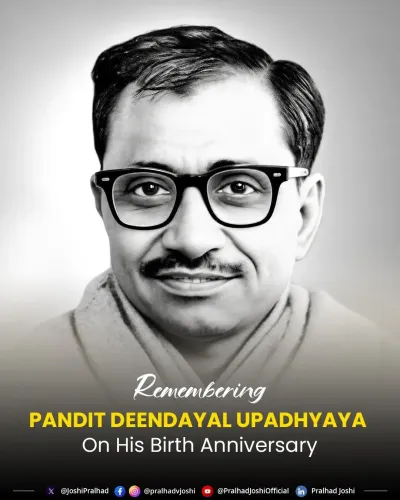
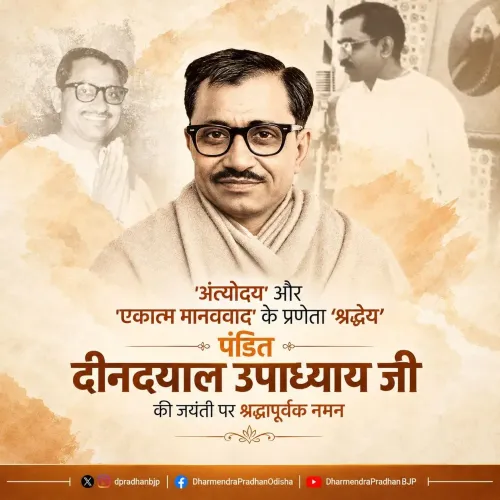
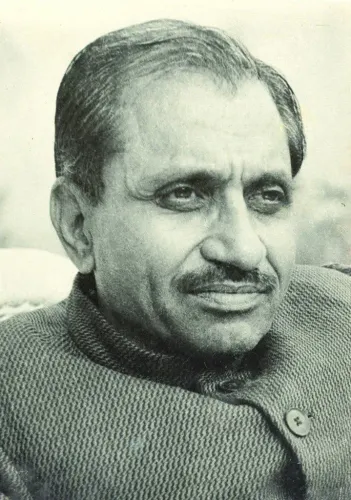
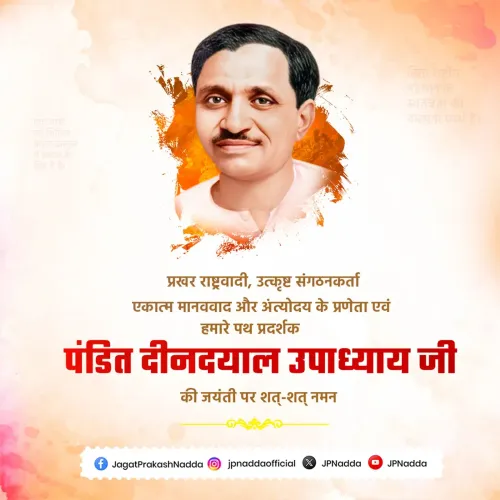
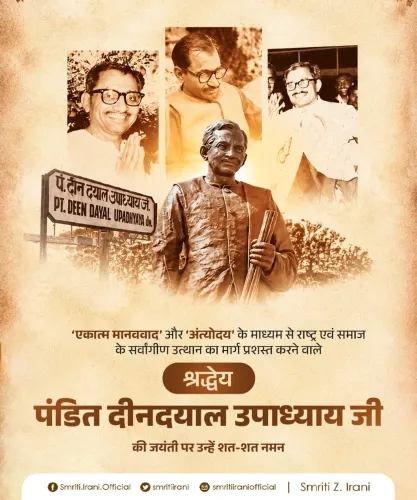
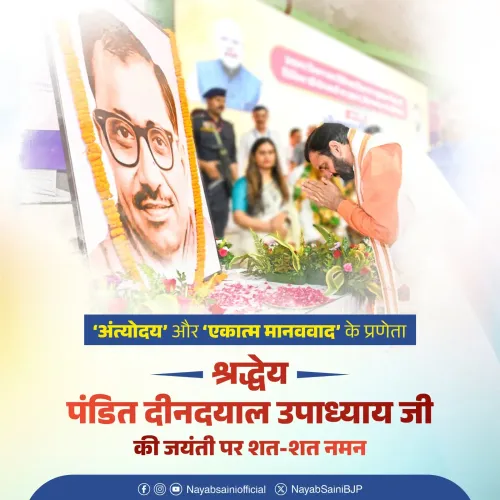
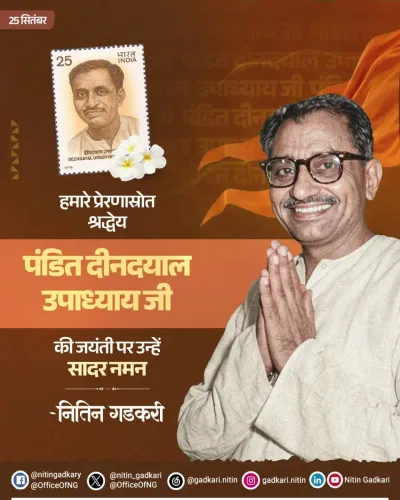
On the birth anniversary of one of independent India's most influential political philosophers, Prime Minister Narendra Modi on Friday, 25 September 2026 paid homage to Pandit Deendayal Upadhyay, invoking his foundational doctrine of Antyodaya — the upliftment of the very last person in society — as an enduring compass for national welfare.
In a post on X, Modi wrote: 'Rashtra seva ke sachche sadhak Pandit Deendayal Upadhyay ji ko unki jayanti par sadar naman' — 'Respectful salutations to Pandit Deendayal Upadhyay, a true seeker of national service, on his birth anniversary.' He described Upadhyay's belief that the upliftment of the person standing in the last row of society is the very foundation of nation-building, and called on citizens to internalise his ideals and renew their commitment to social and national responsibilities.
Modi closed with a Sanskrit couplet: 'Yatha yatha prayatnah syad bhaved ashu phalam tatha / Iti paurusham evasti daivam astu tad eva cha' — broadly, 'As great as the effort, so swift and certain the fruit; human endeavour is supreme, and fortune follows it.'
The philosopher who shaped BJP's welfare vocabulary
Pandit Deendayal Upadhyay was the principal ideologue of the Bharatiya Jana Sangh, the BJP's organisational predecessor, and articulated the philosophy of Integral Humanism — a framework that rejected both Western capitalism and Soviet collectivism in favour of a distinctly Indian model centred on the individual, the family, and the community. His concept of Antyodaya, literally 'rise of the last,' argued that a nation's moral progress must be measured by what it does for its most marginalised citizens, not its most prosperous.
That idea migrated directly into governance: the Antyodaya Anna Yojana, launched in 2000, provides heavily subsidised foodgrains to the poorest rural and urban households in India, and stands as one of the most concrete policy expressions of his philosophy. Multiple centrally sponsored schemes invoke Upadhyay's name or principles, embedding his legacy into the architecture of India's welfare state.
An annual ritual with live policy resonance
Modi has marked Upadhyay's birth anniversary with similar tributes each year, consistently linking the thinker's 'last person' emphasis to the government's ongoing anti-poverty priorities. The repetition is deliberate: it anchors the BJP's contemporary welfare agenda — from subsidised housing to direct-benefit transfers — within an ideological lineage that predates the party itself, lending those programmes a philosophical coherence beyond electoral calculus.
The Sanskrit verse Modi chose sharpens that framing: effort, not fate, determines outcomes. It is a note of activist optimism — the state must act, and act decisively, for those at the bottom. Whether that philosophy translates into fresh Antyodaya-linked budget allocations in the current financial year is the question policymakers and welfare economists will now watch.
Seventy-plus years after Upadhyay first articulated it, his doctrine of the last person still sets the terms of the debate — and a sitting prime minister is making sure that is not forgotten.
Point of View
The BJP constructs a narrative in which its governance is not policy improvisation but the fulfilment of a 70-year-old philosophical mandate. The Sanskrit verse on human effort over divine fate carries an implicit electoral argument: that outcomes for the poor are the result of deliberate state action, not accident. Watch whether a scheme announcement or budget revision follows in the weeks ahead — the tribute rarely travels alone.
NationPress
25 Sept 2026
Frequently Asked Questions
Who was Pandit Deendayal Upadhyay?
Pandit Deendayal Upadhyay was a leading Indian political philosopher and organiser of the Bharatiya Jana Sangh, the BJP's predecessor party. He is best known for articulating the doctrines of Integral Humanism and Antyodaya, which emphasise uplifting the poorest and most marginalised members of society as the cornerstone of national development.
What is the Antyodaya philosophy Modi referred to?
Antyodaya, meaning 'rise of the last,' is Upadhyay's principle that a nation's progress must be measured by what it achieves for its most vulnerable citizens. It holds that the person standing in the very last row of society should be the first priority of governance and welfare policy.
What is the Antyodaya Anna Yojana?
The Antyodaya Anna Yojana is a central government scheme launched in 2000 that provides heavily subsidised foodgrains to the poorest rural and urban households in India. It is one of the most concrete policy applications of Upadhyay's Antyodaya philosophy.
Why does PM Modi tribute Deendayal Upadhyay every year?
Modi marks Upadhyay's birth anniversary annually to reinforce the BJP's ideological continuity from the Jana Sangh era to the present. The tributes link contemporary welfare schemes to Upadhyay's philosophical framework, framing the party's anti-poverty agenda as the fulfilment of a longstanding ideological commitment rather than electoral strategy.
What does the Sanskrit verse in Modi's post mean?
The couplet Modi quoted translates broadly as: 'As great as the effort, so swift and certain the fruit; human endeavour is supreme, and fortune is nothing but that.' It underscores the value of determined action over passive reliance on fate or chance.