PM Modi Releases 3 Solar Publications at Bharat RE Summit 2026
Synopsis
Prime Minister Modi released three solar publications — 'Surya Shakti', 'Ease of Doing Solar 2026' and the RE-SAF framework — at the Bharat RE Summit 2026, coinciding with the 9th ISA Assembly, to guide India's and the world's clean-energy transition.
Key Takeaways
PM Modi released three publications at the Bharat RE Summit 2026 on 2 November 2026 . 'Surya Shakti — From Reverence to Self-Reliance' documents India's solar journey and its cultural and strategic dimensions. 'Ease of Doing Solar 2026' benchmarks the regulatory environment for solar developers in India.
The RE-SAF (Renewable Energy State Assessment Framework) provides a standardised tool to evaluate and strengthen state-level renewable energy efforts.
The summit also hosted the 9th Assembly of the International Solar Alliance (ISA) , co-founded by India and France at COP21 in 2015.
India's solar capacity has grown from under 3 GW in 2014 to over 70 GW by the mid-2020s, with a 500 GW non-fossil fuel target set for 2030.
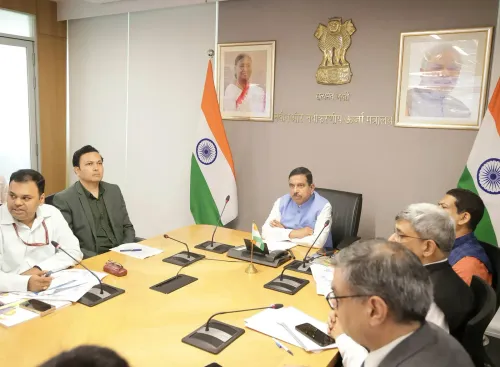
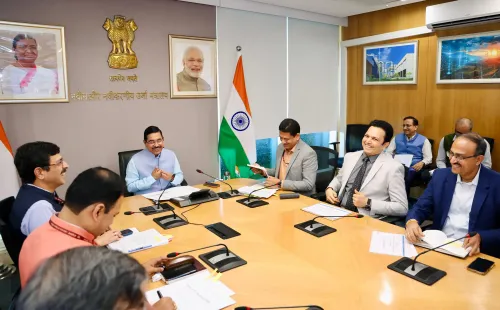
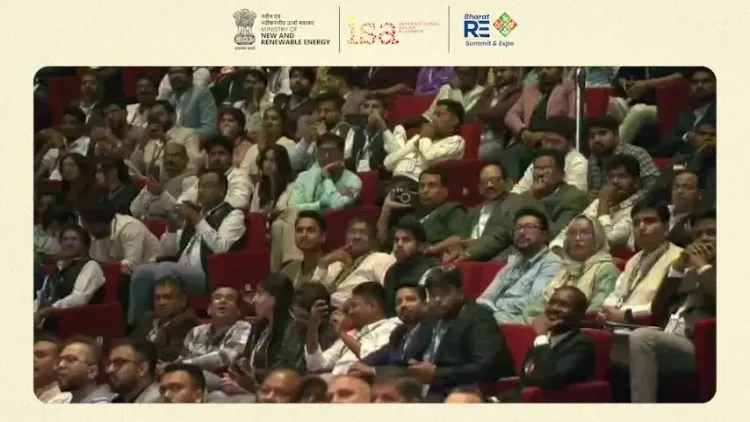
Three knowledge resources that could shape how India — and the world — deploys solar energy landed at one summit on Monday, 2 November 2026, when Prime Minister Narendra Modi released a triad of publications at the Bharat RE Summit 2026. Union Minister Pralhad Joshi, who holds charge of New and Renewable Energy, announced the development on X, calling the releases important milestones in India's clean-energy journey.
The three publications are: 'Surya Shakti — From Reverence to Self-Reliance', a chronicle of India's solar journey framed through the country's ancient reverence for the sun and its modern push for energy independence; 'Ease of Doing Solar 2026', an updated business-environment assessment for the solar sector; and the Renewable Energy State Assessment Framework (RE-SAF), a structured tool to evaluate and accelerate state-level renewable energy rollout across India.
What the RE-SAF framework means for state governments
The RE-SAF is the most operationally significant of the three. By providing a standardised scoring framework, it gives the Ministry of New and Renewable Energy (MNRE) and state governments a common yardstick — tracking policy ambition, regulatory ease, and on-ground capacity addition in a single assessment. With India targeting 500 GW of non-fossil fuel capacity by 2030, the gap between states that lead and those that lag has direct consequences for that national goal. RE-SAF is designed to close that gap by surfacing both best practices and bottlenecks.
Bharat RE Summit 2026 and the 9th ISA Assembly
The summit doubled as the venue for the 9th Assembly of the International Solar Alliance (ISA), the treaty-based body India co-launched with France at COP21 in Paris in 2015. That heritage gives the publications an immediate global audience: ISA member countries looking to accelerate their own solar deployment can treat 'Ease of Doing Solar 2026' and the 'Surya Shakti' narrative as ready-made policy and outreach material. Joshi's post explicitly identifies 'pathways for accelerating global solar adoption' as one of the core purposes of the releases.
From 3 GW to 70 GW — the arc behind the publications
The story these publications document is striking in scale. India's installed solar capacity stood at under 3 GW in 2014; by the mid-2020s it had crossed 70 GW, driven by successive policy nudges — competitive auctions, domestic manufacturing incentives, and federal coordination schemes. The 'Ease of Doing Solar' series, of which the 2026 edition is the latest, has tracked the regulatory environment through much of that journey. Each edition has effectively served as a report card for India's solar governance, pushing states and the Centre to reduce procedural friction for developers and investors.
What to watch next: how state governments respond to their RE-SAF scores in 2026–27, whether lagging states accelerate capacity addition, and any new ISA project commitments that emerge from the 9th Assembly deliberations.
India's sun-powered ambition just got a new set of maps. The question now is whether states — and allies — follow them.
Point of View
In particular, fits a pattern of the Modi government using federal benchmarking tools to drive competitive state-level performance, echoing the logic of schemes like the SDG India Index. For the ISA's member countries, especially energy-hungry economies in Africa and South Asia, the 'Ease of Doing Solar 2026' report offers a replicable regulatory template. The broader arc is India converting its scale of solar deployment into geopolitical influence within the clean-energy order.
NationPress
2 Nov 2026
Frequently Asked Questions
What is the Bharat RE Summit 2026?
The Bharat RE Summit 2026 is a renewable energy summit in India that also hosted the 9th Assembly of the International Solar Alliance. It served as the venue where PM Modi released three significant solar publications on 2 November 2026.
What is RE-SAF in renewable energy?
RE-SAF stands for Renewable Energy State Assessment Framework. It is a structured tool released by the Ministry of New and Renewable Energy to evaluate and strengthen state-level renewable energy development across India.
What is 'Ease of Doing Solar 2026'?
'Ease of Doing Solar 2026' is a publication released by the MNRE that benchmarks the regulatory and business environment for solar energy deployment in India, tracking progress and identifying areas needing reform.
What is the International Solar Alliance and when was it launched?
The International Solar Alliance (ISA) is a treaty-based intergovernmental organisation co-founded by India and France at COP21 in Paris in 2015. It promotes solar energy adoption among member countries.
What is India's renewable energy target for 2030?
India has committed to achieving 500 GW of non-fossil fuel based electricity capacity by 2030, a target announced at COP26. The country's installed solar capacity has grown from under 3 GW in 2014 to over 70 GW by the mid-2020s.