PM Modi shares Sanskrit verse on truth, wisdom, and action
Synopsis
Prime Minister Narendra Modi shared a classical Sanskrit subhashita on June 18, 2026, stating that wealth follows truth, fame follows sacrifice, knowledge follows practice, and wisdom follows righteous action — part of his ongoing effort to bring ancient Indian wisdom to a mass digital audience.
Key Takeaways
Prime Minister Narendra Modi posted a Sanskrit subhashita on June 18, 2026 , linking prosperity, fame, knowledge, and wisdom to truth, sacrifice, practice, and righteous action respectively.
The verse — 'Satyanusarini Lakshmih' — is a widely cited classical aphorism drawn from India's ancient literary tradition.
The post aligns with the government's cultural diplomacy agenda and the value-based education framework embedded in the National Education Policy 2020 .
The Ministry of Education and Ministry of Culture run parallel programmes promoting Sanskrit and classical texts in schools and universities.
Students and youth are the primary audience, with the post serving to mainstream classical Indian thought on a mass digital platform.
Further such posts are anticipated around Sanskrit Diwas and upcoming NEP 2020 implementation reviews.
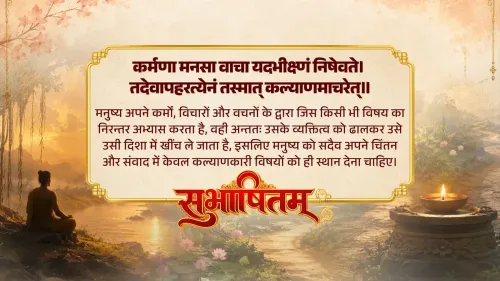
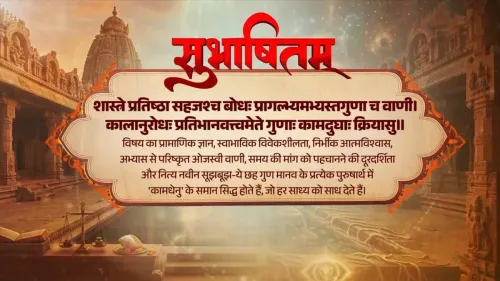
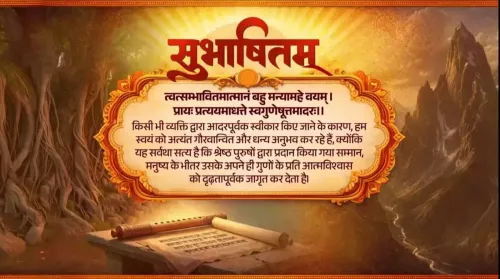
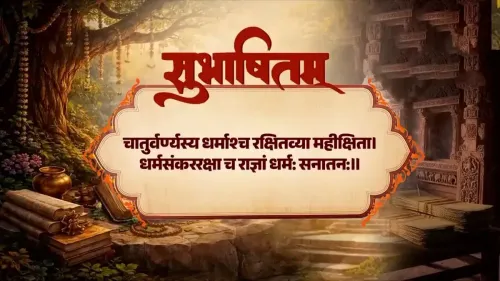
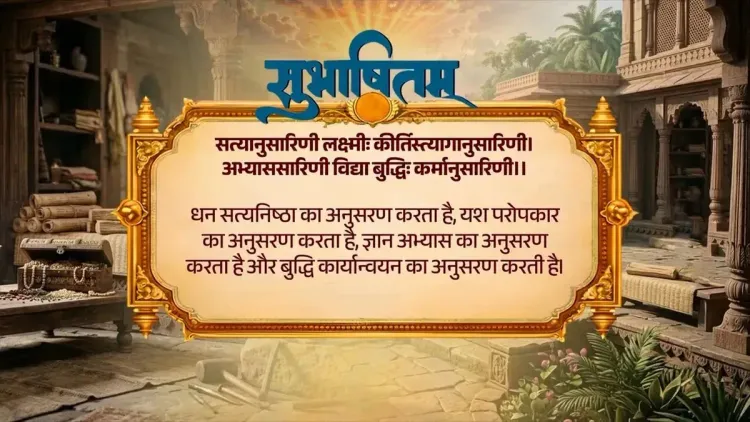
Prime Minister Narendra Modi on Thursday, June 18, 2026, shared a classical Sanskrit subhashita on X, invoking ancient wisdom on the relationship between truth, sacrifice, practice, and righteous action as foundations of prosperity and knowledge.
The verse, rendered in Sanskrit, reads: 'Satyanusarini Lakshmih, kirtistyaganusarini. Abhyasasarini vidya, buddhih karmanusarini.' In English: 'Wealth follows truth; fame follows sacrifice; knowledge follows practice; and wisdom follows righteous action.' The post was accompanied by a video.
Context
Prime Minister Modi has a well-established practice of sharing classical Sanskrit verses — known as subhashitas, meaning 'well-spoken sayings' — on social media. These four-line aphorisms draw from texts spanning Chanakya's Arthashastra, the Hitopadesha, the Mahabharata, and other pillars of the Indian knowledge tradition. The verse shared on June 18 encapsulates a core ethical framework: that material and intellectual attainments are not ends in themselves but outcomes of moral conduct.
The subhashita is widely cited in classical Sanskrit literature and is taught in traditional gurukul (residential school) settings across India. Its emphasis on satya (truth), tyaga (sacrifice), abhyasa (practice), and karma (action) maps directly onto values that Indian philosophical traditions — from Vedanta to Buddhist ethics — have long foregrounded.
Policy Backdrop
The post sits within a broader government effort to integrate classical Indian knowledge systems into contemporary public life. The National Education Policy (NEP) 2020 explicitly called for value-based education rooted in India's intellectual heritage, including greater exposure to Sanskrit literature, classical texts, and ethical frameworks drawn from ancient sources.
The Ministry of Education and the Ministry of Culture have both run programmes to promote Sanskrit learning and the study of subhashitas in schools and universities. Annual observances such as Sanskrit Diwas — celebrated on the full moon of the Shravana month — serve as focal points for these initiatives. Prime Minister Modi's social media posts amplify these institutional efforts by bringing classical content to a mass digital audience.
Stakeholders and Impact
The primary audience for such posts is students and youth, who constitute a large share of India's social media users. By framing ancient aphorisms as directly relevant to personal conduct and professional life, the posts function as a form of soft cultural diplomacy — reinforcing the government's position that India's civilisational heritage is a living resource, not merely a historical artefact.
Educators, Sanskrit scholars, and cultural organisations have previously welcomed such posts as a means of mainstreaming classical literature. Critics, however, have occasionally noted that selective citation of ancient texts can flatten the complexity of those traditions. The verse itself, being non-partisan in content, is unlikely to generate significant political controversy.
What's Next
Further posts referencing classical literature are likely around upcoming cultural milestones, including Sanskrit Diwas and any government-convened reviews of NEP 2020 implementation. The government's push to position India as a Vishwaguru — a teacher to the world — means classical knowledge content will remain a recurring feature of official communication. The broader question is whether such outreach translates into measurable uptake of Sanskrit and classical studies among younger Indians.
Point of View
Not incidental cultural commentary. By anchoring abstract values — truth, sacrifice, practice, action — in classical verse, the posts reinforce the government's larger civilisational narrative that positions India's ancient intellectual heritage as a practical guide for modern life. This sits neatly alongside the NEP 2020's value-education mandate, giving the cultural messaging an institutional anchor. The cumulative effect is a soft-power exercise conducted at scale, using the reach of social media to do what formal curricula do slowly.
NationPress
19 Sept 2026
Frequently Asked Questions
What Sanskrit verse did PM Modi post on June 18 2026?
PM Modi posted the subhashita 'Satyanusarini Lakshmih, kirtistyaganusarini. Abhyasasarini vidya, buddhih karmanusarini,' which translates to: wealth follows truth, fame follows sacrifice, knowledge follows practice, and wisdom follows righteous action.
What is a subhashita?
A subhashita is a classical Sanskrit aphorism, literally meaning 'well-spoken saying.' These short verses distil ethical and philosophical wisdom and have been compiled in texts such as the Hitopadesha and Subhashitaratnabhandagara for centuries.
Why does PM Modi post Sanskrit verses on social media?
PM Modi regularly shares Sanskrit subhashitas to promote India's classical knowledge heritage and to frame ancient ethical principles as relevant to contemporary life, in line with the government's cultural diplomacy and the value-education goals of NEP 2020.
How does NEP 2020 relate to Sanskrit promotion?
The National Education Policy 2020 explicitly emphasises value-based education drawing from Indian knowledge systems, including greater exposure to Sanskrit literature and classical ethical frameworks in schools and universities.
When is Sanskrit Diwas celebrated in India?
Sanskrit Diwas is celebrated on the full moon day of the Hindu month of Shravana, typically falling in July or August, and is a key occasion for government-backed Sanskrit promotion activities.