PM Modi shares Vedic verses on nature, sun and rain
Synopsis
Prime Minister Narendra Modi shared Hindi and Sanskrit Vedic verses on X on 25 May 2026, invoking the sun god and rain deity Parjanya, and wishing for enduring greenery and prosperity on earth. The post reflects his consistent practice of linking India's Vedic heritage to themes of nature, agriculture, and national well-being.
Key Takeaways
Prime Minister Narendra Modi posted a message in Hindi and Sanskrit on 25 May 2026 celebrating nature, the sun, and rain.
He quoted Vedic shlokas invoking Savita (the sun deity) and Parjanya (the rain deity) for the well-being of all people and the fields.
The post expressed his wish that 'greenery and well-being always remain on this earth.' The cultural messaging aligns with government policy initiatives including the International Solar Alliance , launched in 2015 .
Farmers are among the key stakeholders, given the agricultural resonance of Vedic prayers for rain and fertile land.
The post may foreshadow communication around monsoon preparedness or solar irrigation scheme updates ahead of the 2026 monsoon season .
Prime Minister Narendra Modi on Monday, 25 May 2026 shared a message on X invoking Vedic Sanskrit shlokas to celebrate the bounty of nature, the energy of the sun, and the blessing of rain, expressing his wish for the earth to remain green and prosperous.
Context
The post, written in Hindi and Sanskrit, opens with a reflection: 'प्रकृति की असीम कृपा, सूर्यदेव की ऊर्जा और वर्षा का पावन आशीर्वाद हम सभी के जीवन को सुख-सौभाग्य से समृद्ध करता है' ('The infinite grace of nature, the energy of Suryadev, and the sacred blessing of rain enriches all our lives with happiness and prosperity'). Modi added: 'My wish is that greenery and well-being always remain on this earth.'
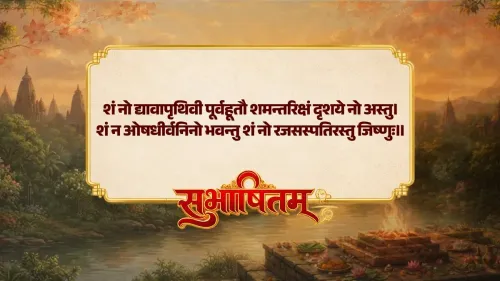
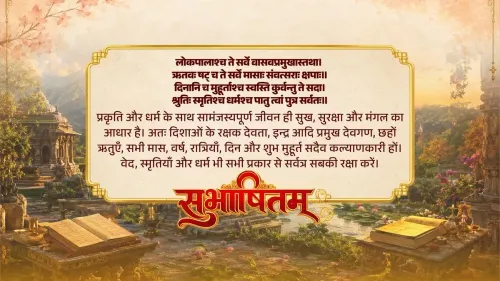
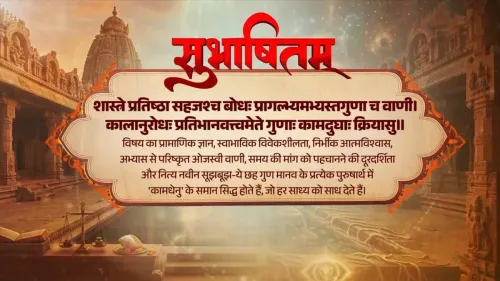
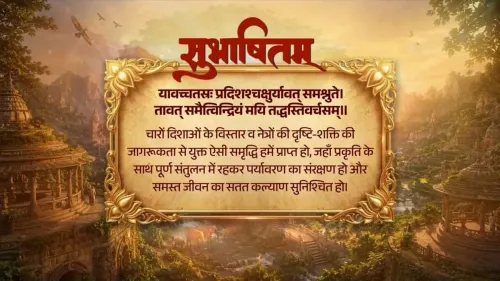
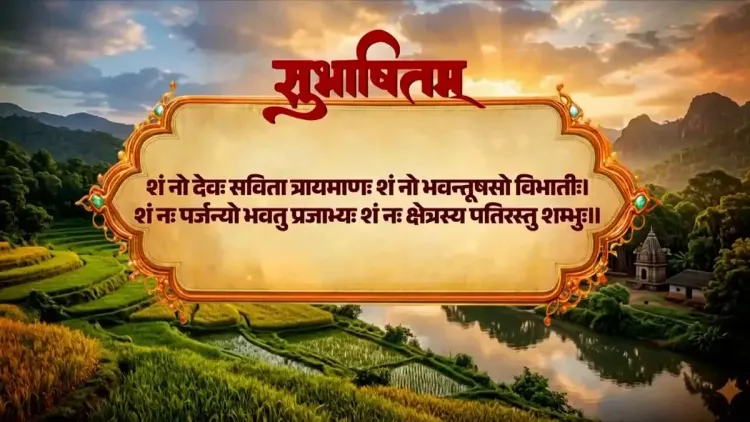
He then quoted two Sanskrit shlokas from the Vedic tradition. The first, 'शं नो देवः सविता त्रायमाणः शं नो भवन्तूषसो विभातीः', translates broadly as: 'May the divine Savita (the sun) be auspicious and protective for us; may the dawns that shine forth be auspicious for us.' The second, 'शं नः पर्जन्यो भवतु प्रजाभ्यः शं नः क्षेत्रस्य', invokes Parjanya, the Vedic deity of rain: 'May Parjanya be auspicious for all people; may the field be auspicious for us.'
Policy Backdrop
Modi has maintained a consistent practice of sharing Vedic shlokas on X, particularly those linking natural forces — the sun, rain, and earth — with themes of collective well-being. This cultural framing runs alongside several government policy initiatives. India's International Solar Alliance, launched in 2015, was built on a stated ambition to harness the power of the sun for sustainable development, an idea that resonates with the post's invocation of Suryadev.
Agriculture remains central to this cultural-policy intersection. Farmers are among the primary stakeholders when the government links Vedic traditions around rain and soil fertility to schemes promoting solar-powered irrigation and monsoon preparedness. The references to prajabhyah ('for all people') and kshetrasya ('of the field') carry a direct agricultural resonance that policy observers have noted in similar past posts.
Stakeholders and Impact
The message carries symbolic weight for farmers across India, particularly as the country moves into the pre-monsoon period. Vedic prayers to Parjanya, the rain deity, are traditionally associated with hopes for a good agricultural season. By amplifying these verses on a national platform, the Prime Minister signals cultural continuity between ancient agrarian traditions and contemporary rural welfare concerns.
For the broader public, the post reinforces a recurring theme in Modi's communication: that India's civilisational heritage — its texts, its reverence for natural forces — remains a living guide for modern life. The accompanying video shared in the post adds a visual dimension to this message, though its specific content could not be independently verified.
What's Next
Observers will watch whether this cultural messaging precedes any formal policy announcements linked to the 2026 monsoon season — such as updates to solar irrigation schemes, crop insurance frameworks, or monsoon preparedness reviews. Modi's pattern of pairing Vedic communication with subsequent policy action has been noted across previous years. The invocation of both solar energy and rain in a single post may signal a broader environmental or agricultural communication campaign in the weeks ahead.
Point of View
Long-running communication strategy that weaves India's civilisational heritage into the fabric of everyday political messaging. By choosing shlokas that speak directly to solar energy and agricultural rainfall, he simultaneously addresses cultural sentiment and policy priorities — from the International Solar Alliance to rural farm welfare — without making a formal announcement. This dual register allows the post to resonate across constituencies: the culturally inclined urban voter and the rain-dependent farmer alike. The timing, as India approaches the monsoon season, amplifies the message's practical undertone even within its devotional framing.
NationPress
10 Oct 2026
Frequently Asked Questions
What did PM Modi post on X on 25 May 2026?
PM Modi shared a message in Hindi and Sanskrit quoting Vedic shlokas that invoke the sun deity Savita and the rain deity Parjanya, expressing his wish for the earth to remain green and prosperous.
What do the Sanskrit shlokas in Modi's post mean?
The first shloka asks that the divine sun (Savita) be protective and auspicious, and that the dawning mornings be auspicious. The second asks that Parjanya, the rain deity, be auspicious for all people and that the fields be blessed.
Why does PM Modi regularly post Sanskrit shlokas?
Modi has consistently used Vedic and Sanskrit verses on social media to connect India's ancient civilisational heritage with contemporary themes such as nature, sustainability, and collective well-being, a practice that spans multiple years.
How does this post relate to India's solar energy policy?
The invocation of Suryadev (the sun) echoes the philosophy behind India's International Solar Alliance, launched in 2015, which aims to harness solar power for sustainable development globally.
What is the significance of Parjanya in Indian tradition?
Parjanya is the Vedic deity associated with rain and thunderstorms, and prayers to Parjanya are traditionally linked to hopes for a good agricultural season, making the reference particularly relevant for farmers ahead of the monsoon.