PM Modi warns of 'ideological Naxals' on Independence Day
Synopsis
On Independence Day 2026, PM Modi declared the armed Naxal threat largely defeated but warned that 'ideological Naxals' are now the live front, calling for social isolation of such elements and youth integration into India's Viksit Bharat development mission.
Key Takeaways
PM Modi posted on 15 August 2026 — Independence Day — distinguishing between armed Naxals and what he termed 'ideological Naxals' ( dmaagi naxal ).
He called for identifying and isolating ideological Naxal elements while mainstreaming youth into the Viksit Bharat development vision.
The armed Naxal movement has seen a documented decline in violence and affected districts since the 2010s under sustained security and development operations.
The government's SAMADHAN doctrine (2017) combined security pressure with rehabilitation — Modi's statement extends that framework to the ideological domain.
Key questions remain around implementation of youth programmes in former LWE districts and how 'ideological' support for Naxalism will be defined and addressed.
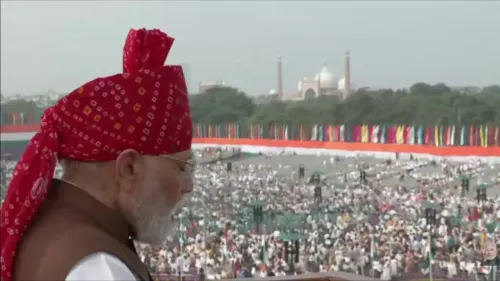
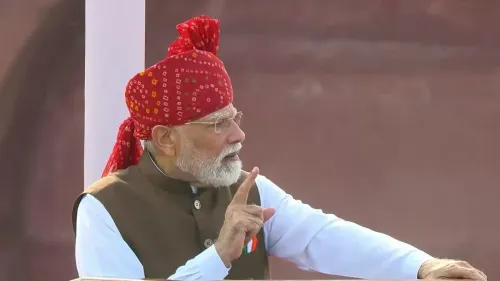
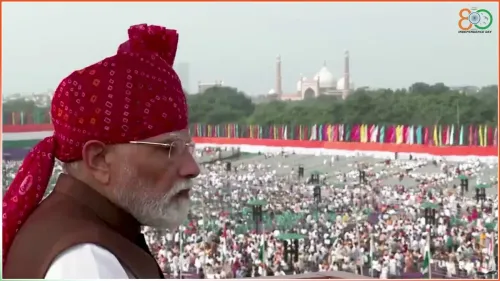
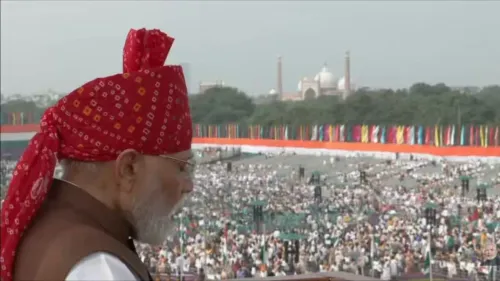
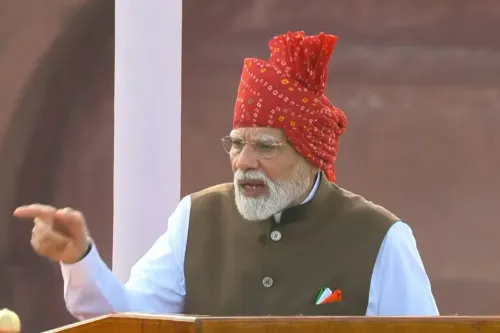
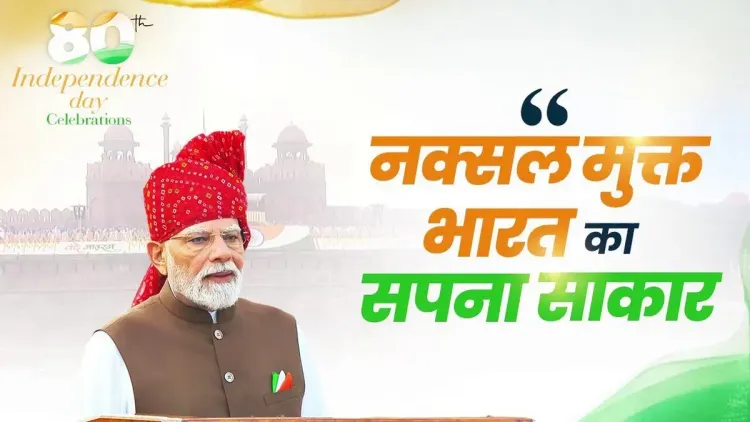
On Independence Day, 15 August 2026, Prime Minister Narendra Modi drew a sharp line between a fading armed insurgency and what he called a more insidious threat — those who wage ideological war from within society's mainstream. The warning landed with the weight of a national occasion behind it.
Writing in Hindi, PM Modi said: 'हथियारी नक्सल तो गए, लेकिन दिमागी नक्सल समाज को गलत राह पर घसीटने के लिए भांति-भांति के दांव आजमा रहे हैं।' ('The armed Naxals are gone, but the ideological Naxals are trying every trick to drag society down the wrong path.') He called for identifying and isolating such elements while connecting India's youth to the mission of building a developed nation.
From the Red Corridor to the ideological front
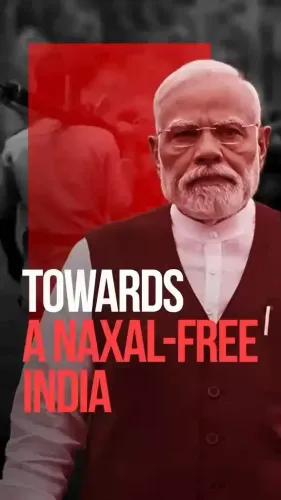
The armed Naxal movement — rooted in Maoist insurgency that erupted in the late 1960s — once held a sprawling grip across central and eastern India's so-called Red Corridor. Decades of combined security operations and development drives have steadily shrunk both the geography and the violence. Government data across the 2010s documented a consistent fall in Left Wing Extremism (LWE)-affected districts and casualty counts.
Modi's framing on 15 August signals that the government now considers the kinetic battle largely won — and the ideological contest the live front. The phrase 'dmaagi naxal' (ideological or 'brain' Naxal) has featured in BJP political discourse before, used to describe urban intellectuals or civil-society voices seen as providing cover for Maoist ideology without bearing arms. The Prime Minister's Independence Day deployment of the term gives it fresh national salience.
SAMADHAN doctrine and the Viksit Bharat pivot
The rhetorical move fits squarely within the government's SAMADHAN doctrine, articulated in 2017, which always paired security pressure with social integration. Modi's call to link the 'youth generation' to the mainstream is a direct echo of the Viksit Bharat vision — the government's flagship goal of transforming India into a fully developed nation by 2047.
The practical question now is whether skill, employment, and infrastructure programmes in former LWE districts can deliver the integration the Prime Minister is describing — and how the state will define and respond to 'ideological' support for Naxalism in academic or civil-society spaces. Both tracks carry significant consequence for tribal communities who have lived at the intersection of insurgency and state response for generations.
The Independence Day platform ensures the message reaches every corner of the country. The next test is whether it translates into policy specifics — or remains a frame for the political season ahead.
Point of View
The BJP is now repositioning Naxalism as an ideological problem requiring social and political solutions, not just policing. The Viksit Bharat anchor is strategic: it ties counter-extremism messaging to an aspirational economic vision, making dissent from that vision easier to frame as suspect. The risk is that an elastic term like 'ideological Naxal' could be applied broadly enough to chill legitimate civil-society or academic debate — a concern that will sharpen scrutiny of any follow-on policy.
NationPress
15 Aug 2026
Frequently Asked Questions
What did PM Modi say about Naxals on Independence Day 2026?
PM Modi said the armed Naxal threat has receded but warned that 'ideological Naxals' are now using various tactics to mislead society, and called for isolating them while integrating youth into India's development mainstream.
What does 'ideological Naxal' or 'dmaagi naxal' mean?
'Dmaagi naxal' (ideological or 'brain' Naxal) refers to individuals who are seen as promoting or providing intellectual cover for Maoist ideology without engaging in armed activity — a term used in BJP political discourse to describe urban or academic sympathisers.
Has the armed Naxal threat actually reduced in India?
Government data from the 2010s onward showed a consistent decline in Left Wing Extremism-affected districts and violence incidents, attributed to combined security operations and development drives — though precise 2026 figures remain unverified.
What is the SAMADHAN doctrine on Naxalism?
The SAMADHAN doctrine, articulated in 2017, is a multi-pronged government strategy combining security operations, development investment, and rehabilitation to counter Naxalism across affected regions.
What is Viksit Bharat and how does it relate to Naxal-affected areas?
Viksit Bharat is the Modi government's vision to make India a fully developed nation by 2047. In the context of former LWE districts, it frames youth skill and employment programmes as the integration alternative to Maoist ideology.